
What Is the Triglyceride to HDL Ratio?
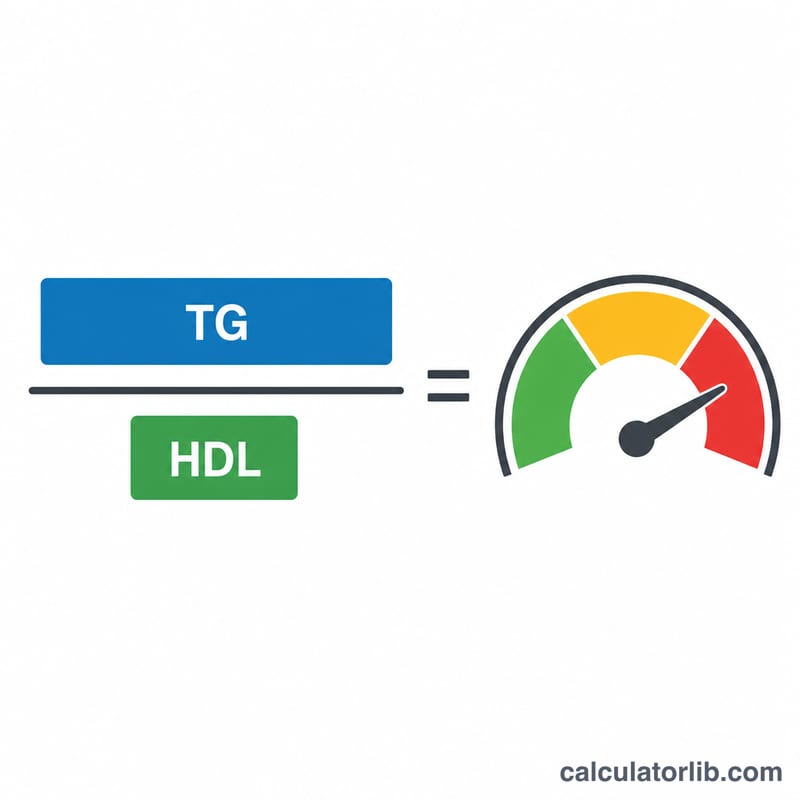
The triglyceride to HDL (TG/HDL) ratio is a simple number derived from a standard lipid panel. It is calculated by dividing your triglyceride level by your HDL (high-density lipoprotein, the "good" cholesterol) level. Research has linked a higher TG/HDL ratio to insulin resistance and increased cardiovascular risk, which is why many clinicians use it as a quick screening indicator alongside other markers. The values shown here assume both numbers are measured in mg/dL, the unit commonly used in the United States.
How to Use This Calculator
Find your most recent lipid panel results. Enter your triglycerides value and your HDL cholesterol value, both in mg/dL, then read the resulting ratio. As a general guideline, a ratio under 2 is considered ideal, 2–4 is moderate, and above 4 may indicate higher cardiometabolic risk. These thresholds are educational guidelines and not a diagnosis.
The Formula Explained
The math is straightforward: $$\text{Ratio} = \frac{\text{Triglycerides}}{\text{HDL}}$$. Because both values use the same unit, the result is a unitless ratio. A lower number means triglycerides are low relative to protective HDL, which is generally favorable.
Worked Example
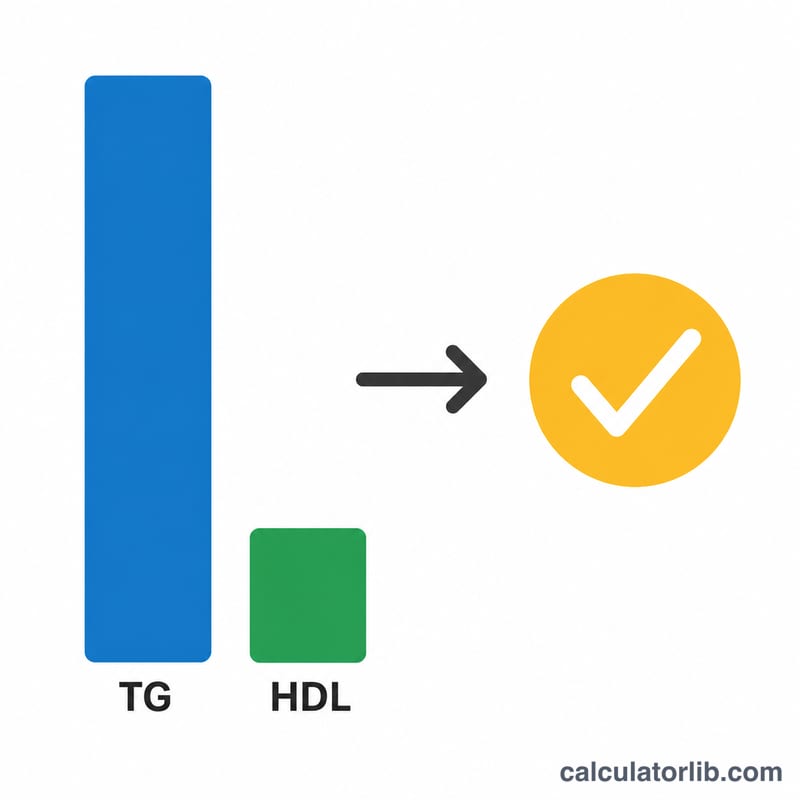
Suppose your triglycerides are 120 mg/dL and your HDL is 60 mg/dL. The ratio is $$120 \div 60 = 2.0,$$ which falls at the boundary of the ideal range. If instead your triglycerides were 200 mg/dL with an HDL of 40 mg/dL, the ratio would be \(5.0\) — in the high-risk range.
FAQ
What is a good TG/HDL ratio? Many references consider a ratio below 2 ideal, though optimal targets vary by individual and lab.
Does the unit matter? Yes. This tool assumes mg/dL. If your lab reports in mmol/L, the thresholds differ and you should convert first.
Should I rely on this alone? No. The ratio is one screening tool. Always discuss your full lipid panel and overall risk with a healthcare professional.