What Is Vineyard Planting Density?
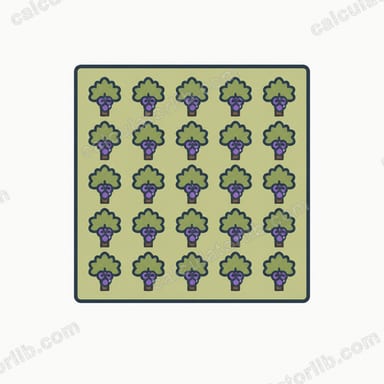
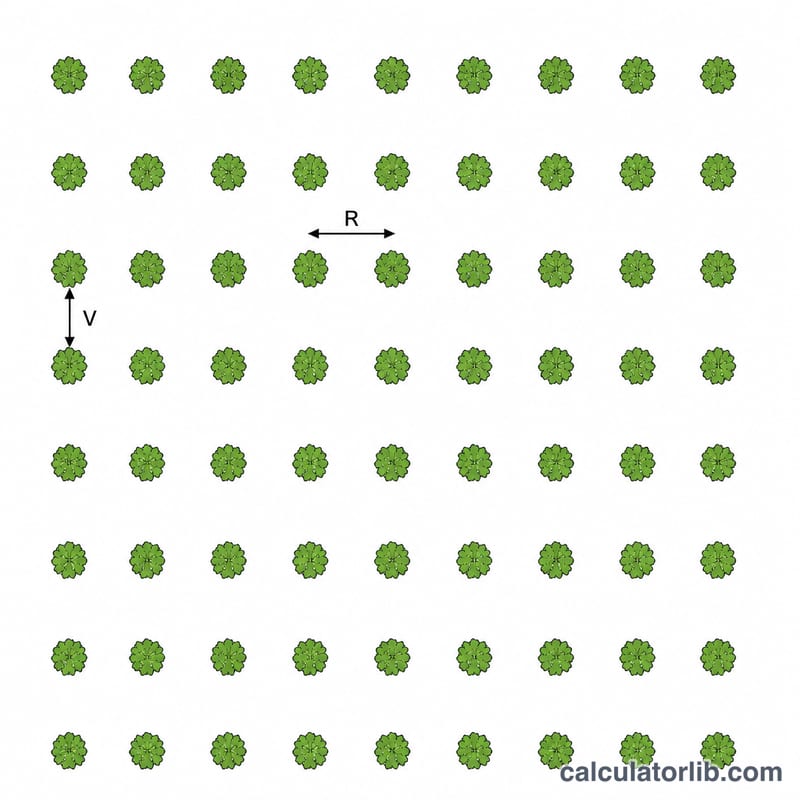
Planting density is the number of grapevines grown on each acre of land. It is set by two spacing choices: the distance between rows and the distance between vines within a row. Density affects yield per vine, canopy management, equipment access, and overall establishment cost, so getting the number right before planting is essential for both hobby growers and commercial vineyards.
The Formula Explained
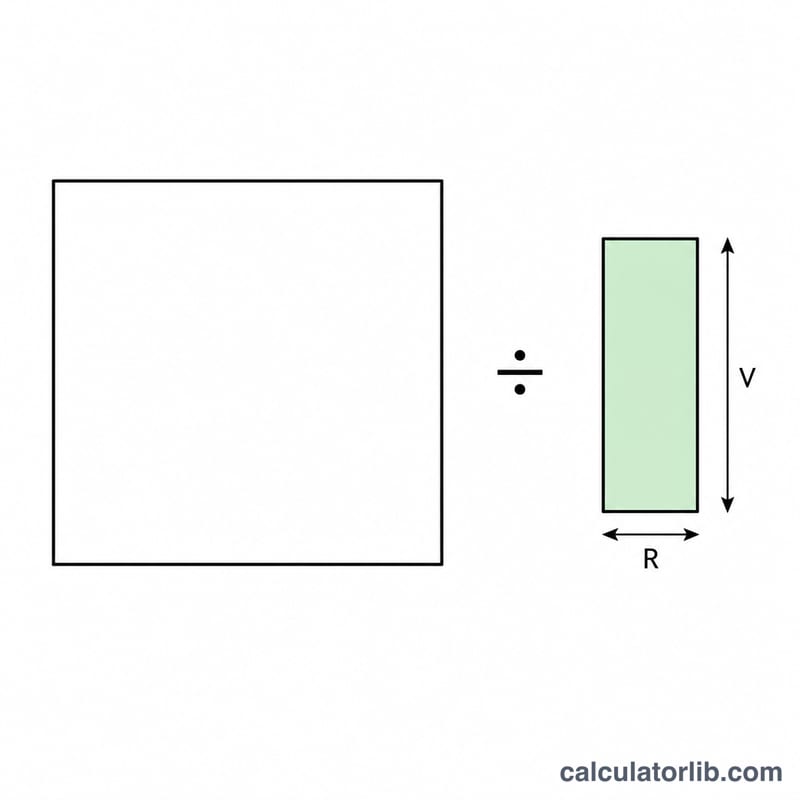
One acre contains 43,560 square feet. Each vine occupies a rectangle of ground equal to the row spacing multiplied by the vine spacing. Dividing the acre by that footprint gives the vines per acre:
$$\text{Vines per Acre} = \frac{43560}{R \times V}$$
where \(R\) = row spacing in feet and \(V\) = vine (in-row) spacing in feet. Multiplying by the planted area \(A\) in acres gives total vines: \( \text{Total} = \text{Vines/Acre} \times A \).
How to Use the Calculator
Enter your row spacing, your in-row vine spacing, and the total vineyard area in acres. The calculator returns the planting density, the total number of vines to order, and the ground area each vine occupies. Try a few spacing combinations to compare density and vine counts before you commit to a trellis layout.
Worked Example
For rows 8 ft apart, vines 4 ft apart, over 10 acres, each vine covers \(8 \times 4 = 32\) square feet:
$$\text{Vines per Acre} = \frac{43560}{32} = 1361.25$$
$$\text{Total} = 1361.25 \times 10 = 13612.5$$
So you would plant about 1,361 vines per acre and order roughly 13,613 vines for the block.
FAQ
Does closer spacing always mean higher yield? Not necessarily. Higher density raises total vines but can reduce yield per vine and increase costs; site vigor and variety matter.
What units should I use? Enter both spacings in feet, since one acre is 43,560 square feet.
Should I add extra vines? Yes, most growers order 3-5% more to cover losses and replacements during establishment.