
What Is the Blood Donation Due Date Calculator?
This calculator tells you the earliest date you can donate blood again. Most blood centers require a minimum recovery interval between donations so your body can replenish red cells, platelets, or plasma. By entering the date of your last donation and the type of donation you made, you instantly get your next eligible "due" date.
How to Use It
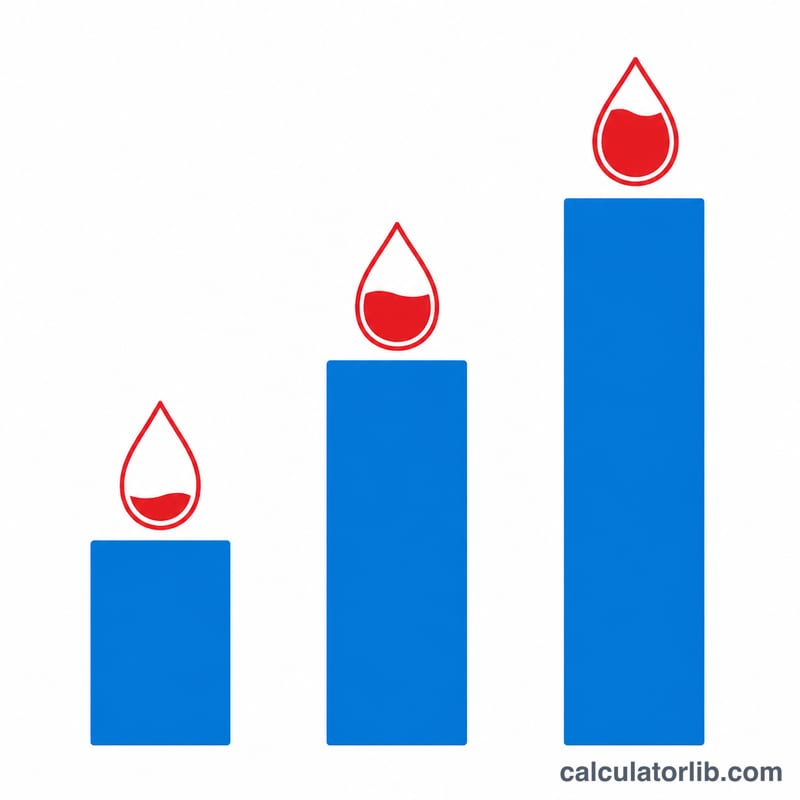
Select the date of your most recent donation, choose the donation type, and the tool adds the standard waiting period. Common intervals used here are: whole blood 56 days, platelets 7 days, plasma 28 days, and double red cells 112 days. These reflect typical guidelines (such as those used by many blood services); always confirm with your local donation center, as rules vary by country.
The Formula Explained
The math is simple date arithmetic:
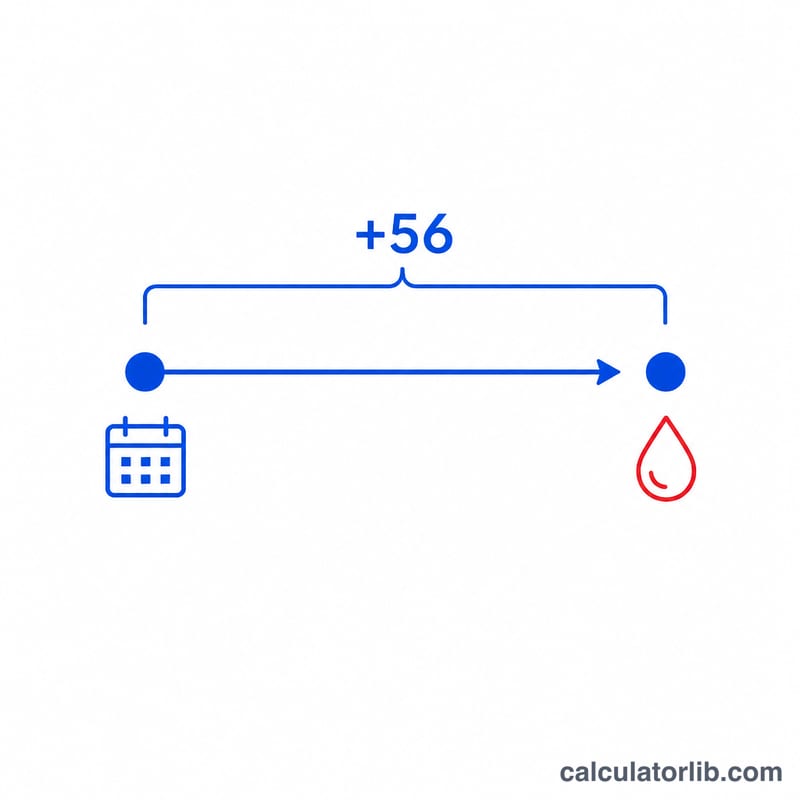
$$\text{Next Eligible Date} = \text{Last Donation Date} + \text{Interval (days)}$$For whole blood the interval is 56 days. The calculator also shows how many days remain from today until you become eligible — a negative number means you are already eligible to donate.
Worked Example
Suppose you donated whole blood on January 1, 2024. Adding 56 days lands you on February 26, 2024. January has 31 days, so 30 days remain in January after the 1st (reaching the 31st uses 30 days), then 26 more days into February (\(56 - 30 = 26\)). Your next eligible date is therefore 2024-02-26.
Next Eligible Date Across Donation Types
Different blood products are replenished by the body at different rates, so each donation type has its own minimum waiting interval before you can donate again. The table below uses a single example last donation date of January 1, 2024 and applies each standard interval to show the resulting next eligible date.
The general formula is:
$$\text{Next Eligible Date} = \text{Last Donation Date} + \text{Interval (days)}$$| Donation Type | Interval (days) | Last Donation | Next Eligible Date |
|---|---|---|---|
| Platelets (apheresis) | 7 | 2024-01-01 | 2024-01-08 |
| Plasma | 28 | 2024-01-01 | 2024-01-29 |
| Whole blood | 56 | 2024-01-01 | 2024-02-26 |
| Double red cells (Power Red) | 112 | 2024-01-01 | 2024-04-22 |
For example, whole blood requires a 56-day wait, so a donation on 2024-01-01 yields a next eligible date of 2024-02-26 (since 2024 is a leap year, February has 29 days). Platelets recover fastest at just 7 days, while double red cell (Power Red) donations require the longest wait at 112 days because two units of red cells are collected. Always confirm with your local blood center, as policies and intervals can vary by region and individual health factors.
This is general information, not medical advice. Your donation center may set different eligibility windows based on your health and donation history.
FAQ
Why do I have to wait 56 days for whole blood? It takes several weeks for your body to fully restore red blood cells and iron levels, so a two-month gap protects your health.
Can I donate platelets more often? Yes — platelet donations have a much shorter recovery time, often allowing donations as frequently as every 7 days, up to annual limits.
Is this medical advice? No. Eligibility also depends on health, medications, travel, and weight. Always confirm with your blood donation center before booking.