What is the Days Until Fall Calculator?
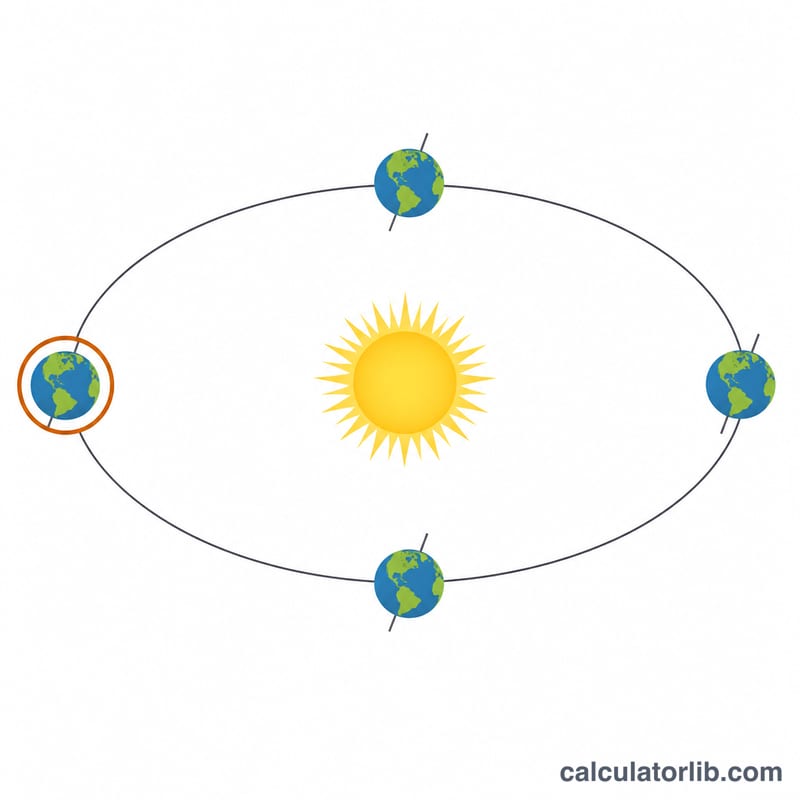
This tool counts how many days remain until the start of fall (autumn) in the Northern Hemisphere. Fall traditionally begins around the September equinox, which this calculator fixes at September 22. Enter any date and it tells you how long until autumn arrives. Note: in the Southern Hemisphere the seasons are reversed, so this date marks the start of spring there.
How to use it
Pick the date you want to count from (it defaults to today) and the calculator returns the number of days until the next September 22. If that date has already passed in the current year, it automatically rolls forward to next year's autumn.
The formula explained
The calculation is a simple date difference:
$$\text{days} = \text{date(September 22, next occurrence)} - \text{from date}$$
The "next occurrence" rule ensures the countdown is always positive: once September 22 of the current year is behind you, the target jumps to September 22 of the following year.
Worked example
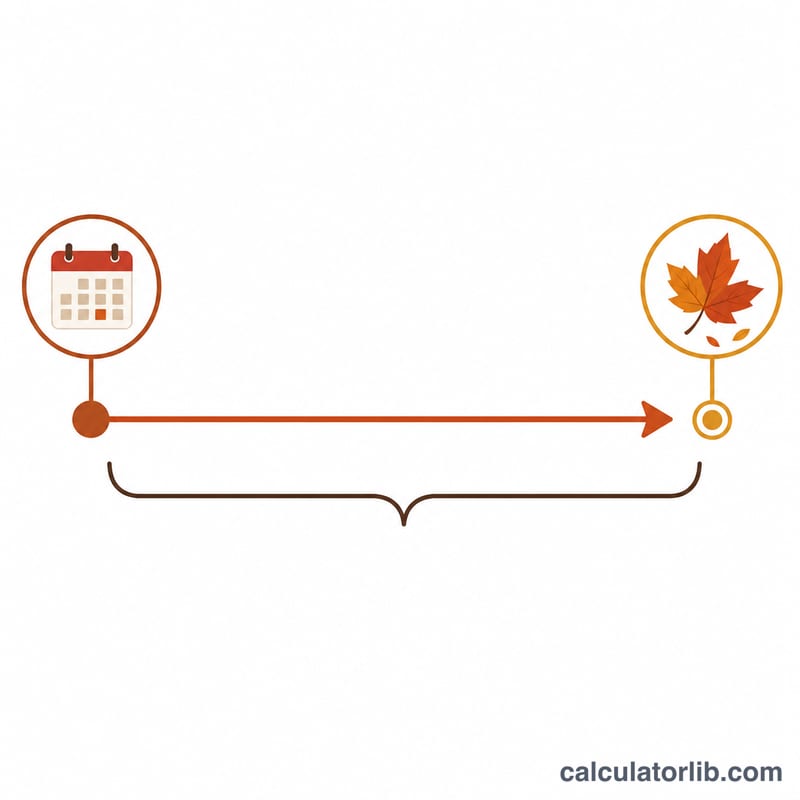
Suppose today is September 1, 2024. September 22, 2024 is still ahead, so the target stays in 2024. From September 1 to September 22 there are 21 days. The calculator therefore returns 21 days, or 3 weeks.
Start of Fall by Year and Definition
There is no single "first day of fall". The date depends on whether you use the astronomical definition (based on Earth's orbit) or the meteorological definition (based on whole calendar months). The table below compares them for both hemispheres.
| Definition | Hemisphere | Fall (autumn) begins | Basis |
|---|---|---|---|
| Astronomical | Northern | September equinox, usually Sept 22 or 23 (Sept 21 or 24 have occurred only rarely in other centuries) | Sun crosses the celestial equator heading south |
| Meteorological | Northern | September 1 | Fall = September, October, November |
| Astronomical | Southern | March equinox, around March 20 (March 19–21) | Sun crosses the celestial equator heading north |
| Meteorological | Southern | March 1 | Autumn = March, April, May |
Recent equinox dates (UTC)
| Year | March equinox | September equinox |
|---|---|---|
| 2024 | March 20 | September 22 |
| 2025 | March 20 | September 22 |
| 2026 | March 20 | September 23 |
The exact equinox moment is given in Universal Time (UTC). In your local time zone, the calendar date can differ by one day from the date listed here.
What this calculator uses: it counts the days from your chosen date to the fixed date of September 22, the Northern Hemisphere astronomical start of fall. In years when the equinox falls on September 23, the real equinox is one day later than the countdown target. If you want the meteorological start instead, count to September 1. In the Southern Hemisphere, the September equinox marks the start of spring, not fall, so this countdown does not apply there.
FAQ
Why September 22? The autumnal equinox in the Northern Hemisphere usually falls on September 22 or 23. We use September 22 as a consistent reference point.
What if September 22 is today? The result is 0 days — fall begins today.
Does this work for the Southern Hemisphere? The same date marks the start of spring south of the equator, so the day count is identical but the season label differs.