
What Is the Degree of Operating Leverage?
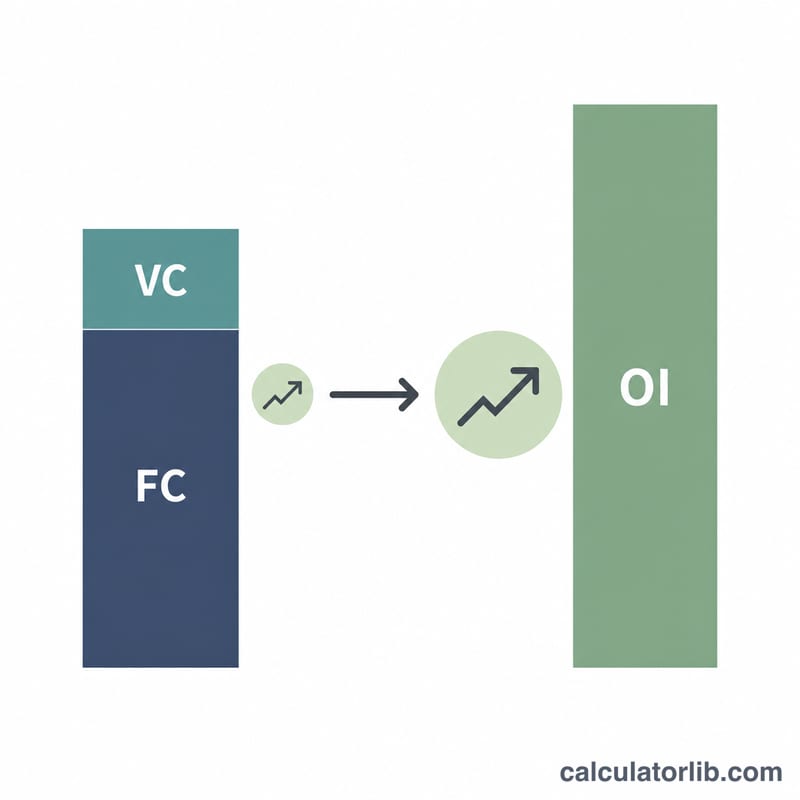
The Degree of Operating Leverage (DOL) measures how sensitive a company's operating income (EBIT) is to changes in sales. A high DOL means a small change in sales produces a large swing in operating profit — typically because the business has a high proportion of fixed costs. A DOL of 2, for example, tells you that a 10% rise in sales should drive a 20% rise in operating income.
How to Use This Calculator
Enter the percentage change in operating income (EBIT) and the percentage change in sales over the same period. The calculator divides the first by the second to return the DOL multiple. Both inputs are percentages — enter 20 for a 20% change, not 0.20.
The Formula Explained
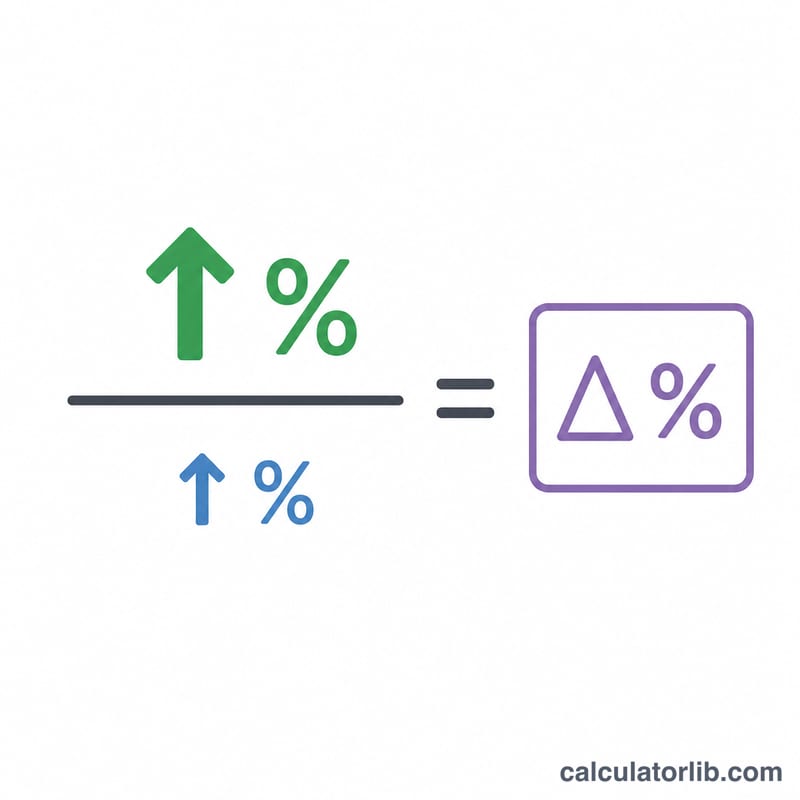
$$\text{DOL} = \frac{\text{\% Change in Operating Income}}{\text{\% Change in Sales}}$$ Because both numerator and denominator are percentages, the result is a unitless multiple (expressed as "times" or \(\times\)). It captures the amplifying effect of fixed costs: the larger the fixed-cost base relative to variable costs, the higher the DOL and the more volatile profits become with revenue swings.
Worked Example
Suppose sales rose 10% and operating income rose 20%. $$\text{DOL} = 20\% \div 10\% = 2.0\times$$ This means operating income changes twice as fast as sales — a 1% sales change moves EBIT by about 2%.
FAQ
What is a good DOL? There is no universal "good" value. Higher leverage boosts profits when sales grow but magnifies losses when sales fall, so it reflects risk appetite rather than quality.
Can DOL be negative? Yes. If income and sales move in opposite directions, the ratio is negative, signaling an unusual or transitional period worth investigating.
How is DOL different from financial leverage? Operating leverage relates to fixed operating costs (rent, salaries, depreciation), while financial leverage relates to fixed financing costs such as interest on debt.