
What Is Operating Margin?
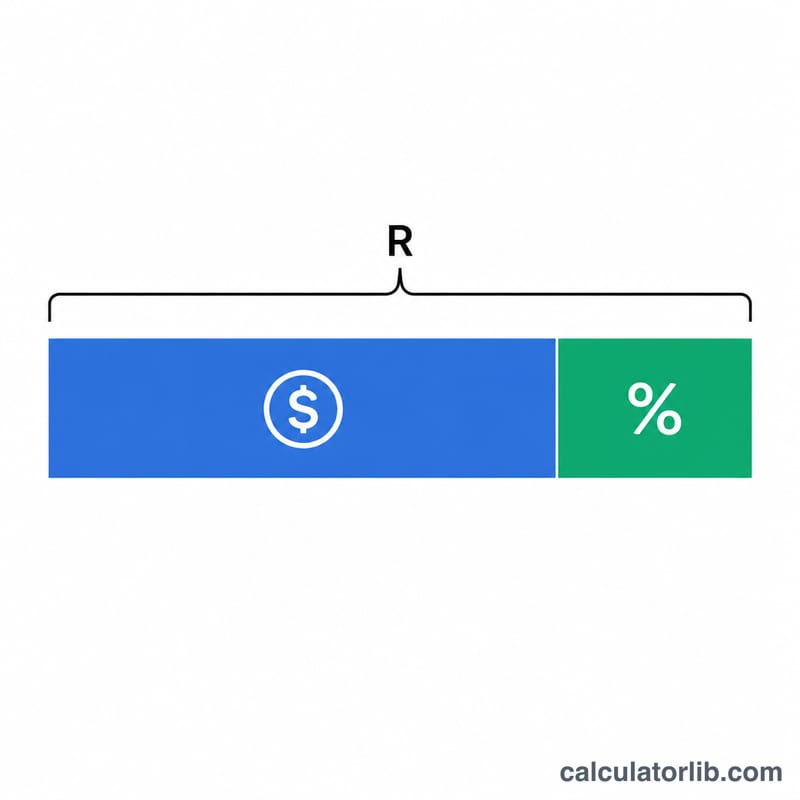
Operating margin is a profitability ratio that shows how much of every dollar of revenue is left over as operating profit after paying for the costs of running the business — including the cost of goods sold and operating expenses such as wages, rent and depreciation, but before interest and taxes. A higher operating margin means the company converts more of its sales into core operating profit, which is a strong indicator of operational efficiency and pricing power.
How to Use This Calculator
Enter your total revenue (net sales for the period) and your operating income (also called operating profit or EBIT). The calculator divides operating income by revenue and multiplies by 100 to express the result as a percentage. Use figures from the same period — typically a quarter or fiscal year — taken straight from the income statement.
The Formula Explained
The calculation is simple:
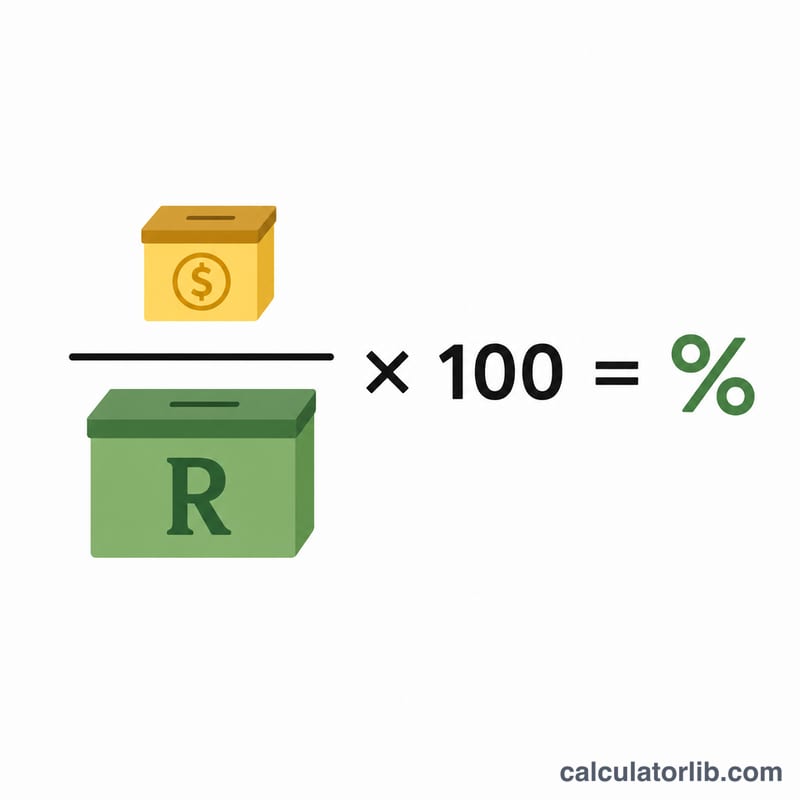
$$\text{Operating Margin} = \frac{\text{Operating Income}}{\text{Revenue}} \times 100\%$$
Operating income equals revenue minus cost of goods sold minus operating expenses. Dividing it by revenue normalizes profit to a percentage so companies of different sizes can be compared fairly.
Worked Example
Suppose a company reports $500,000 in revenue and $75,000 in operating income. The operating margin is $$75{,}000 \div 500{,}000 \times 100 = \textbf{15\%}$$ That means 15 cents of every sales dollar remains as operating profit before interest and taxes.
FAQ
What is a good operating margin? It varies by industry. Software companies may exceed 30%, while grocery retailers often operate below 5%. Compare against industry peers rather than an absolute benchmark.
How is operating margin different from net margin? Operating margin excludes interest and taxes, focusing on core operations. Net margin includes all expenses, giving the bottom-line profitability.
Can operating margin be negative? Yes. If operating expenses exceed revenue, operating income is negative, producing a negative margin — common for early-stage or struggling companies.