
What is the espresso brew ratio?
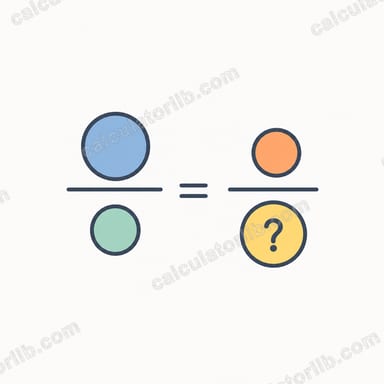
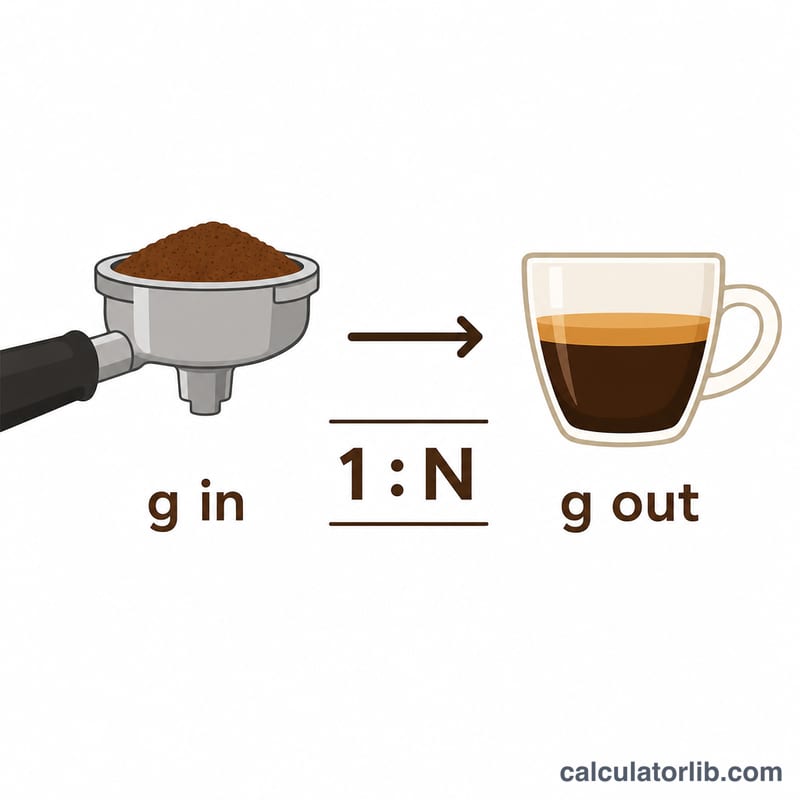
The brew ratio is the relationship between the amount of dry ground coffee you put in the portafilter (the dose) and the amount of liquid espresso you pull into the cup (the yield). It is written as 1 : N, where N is how many grams of espresso you get for every gram of coffee. A ratio of 1:2 means 18 g of coffee produces 36 g of espresso. Ratio is the single most useful number for dialing in repeatable shots across any machine or grinder.
How to use this calculator
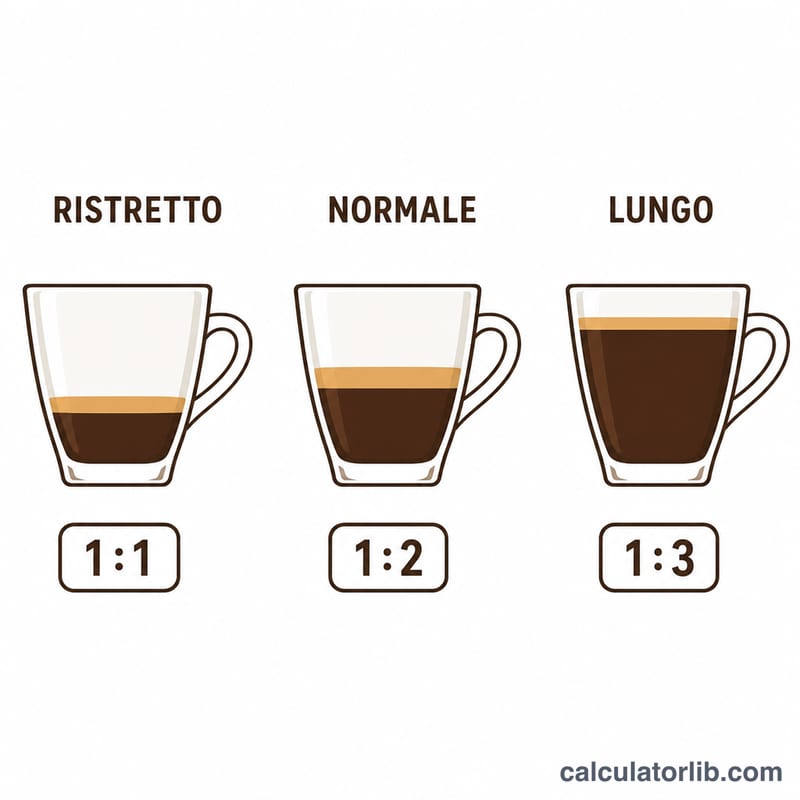
Enter your dose in grams (most baskets are made for 14–22 g) and your target brew ratio. The calculator returns the yield you should weigh on your scale. Lower ratios (1:1 to 1:1.5) give concentrated, syrupy ristretto shots; 1:2 is the classic balanced "normale"; higher ratios (1:3+) make a longer, lighter lungo. Weigh the output rather than timing alone — time is a result, not a target.
The formula explained
The math is simple multiplication: $$\text{Yield} = \text{Dose} \times \text{Ratio}$$ To work backwards from a shot you already pulled, divide: $$\text{Ratio} = \text{Yield} \div \text{Dose}$$ Because espresso is measured by mass on a scale (grams), there is no need to convert to volume or account for crema.
Worked example
You load 18 g of coffee and want a standard 1:2 shot. $$\text{Yield} = 18 \times 2 = 36 \text{ g}$$ of espresso. Pull until your scale reads 36 g, then stop the shot.
FAQ
What ratio should I start with? 1:2 is the safest starting point for most modern espresso. Adjust toward 1:1.5 for more intensity or 1:2.5 for more clarity.
Should I include crema in the yield? Weigh the total mass in the cup including crema; it settles into the liquid anyway.
Why is my shot bitter or sour at the right ratio? Ratio controls strength, not extraction balance. Adjust grind size and time: sour means under-extracted (grind finer), bitter means over-extracted (grind coarser).