
What this calculator does
This tool computes the classic efficiency (asset-turnover) ratios used in financial-statement analysis. Each ratio divides net sales (from the income statement) by a balance-sheet item, telling you how many times per period that item "turns over" to generate revenue. Higher turnover generally signals more efficient use of assets. The math is universal accounting and currency-agnostic; only the benchmark thresholds are rough conventional guides (not financial advice).
How to use it
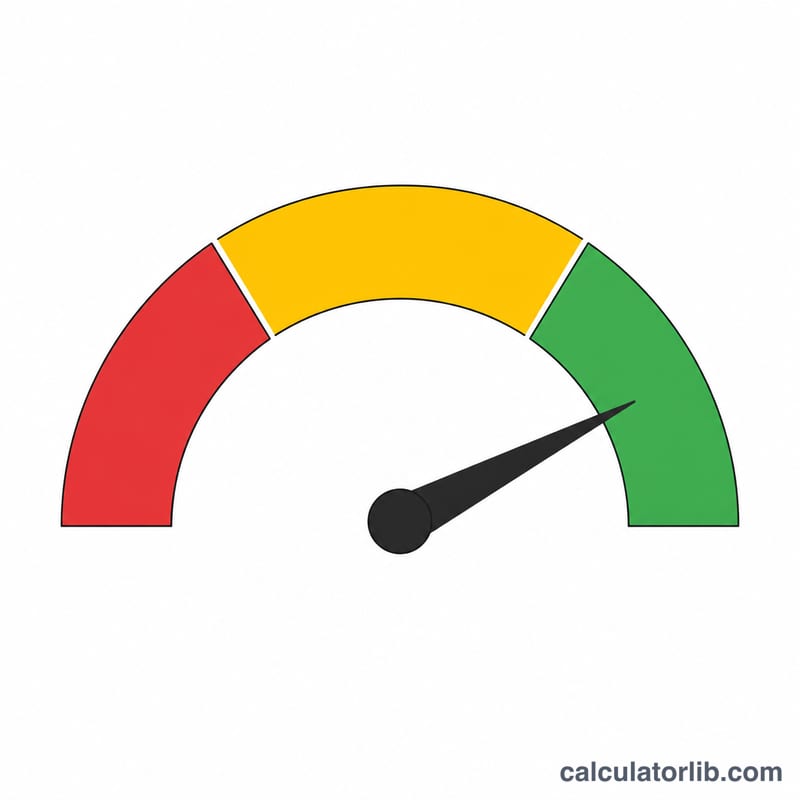
Enter all figures in the same unit (for example thousands). Provide net sales plus five balance-sheet amounts: trade receivables, inventory, tangible fixed assets, total net assets (equity), and total assets (total liabilities and net assets). The calculator returns each turnover ratio in "times" and rates it Excellent, Average/Normal, or Danger/Caution against its benchmark band.
The formula
Every ratio uses the same shape: Net Sales / Asset Item. Because both numerator and denominator share the same monetary unit, the unit cancels and the result is a pure dimensionless number of turns. This version uses the single period-end balance-sheet figure as entered (some textbooks instead average opening and closing balances).
$$\text{Total Asset Turnover} = \frac{\text{Net Sales}}{\text{Total Assets}}$$The related ratios follow the same pattern:
$$\text{Receivables Turnover} = \frac{\text{Net Sales}}{\text{Accounts Receivable}}$$$$\text{Inventory Turnover} = \frac{\text{Net Sales}}{\text{Inventory}}$$$$\text{Fixed Asset Turnover} = \frac{\text{Net Sales}}{\text{Tangible Fixed Assets}}$$$$\text{Equity Turnover} = \frac{\text{Net Sales}}{\text{Net Assets (Equity)}}$$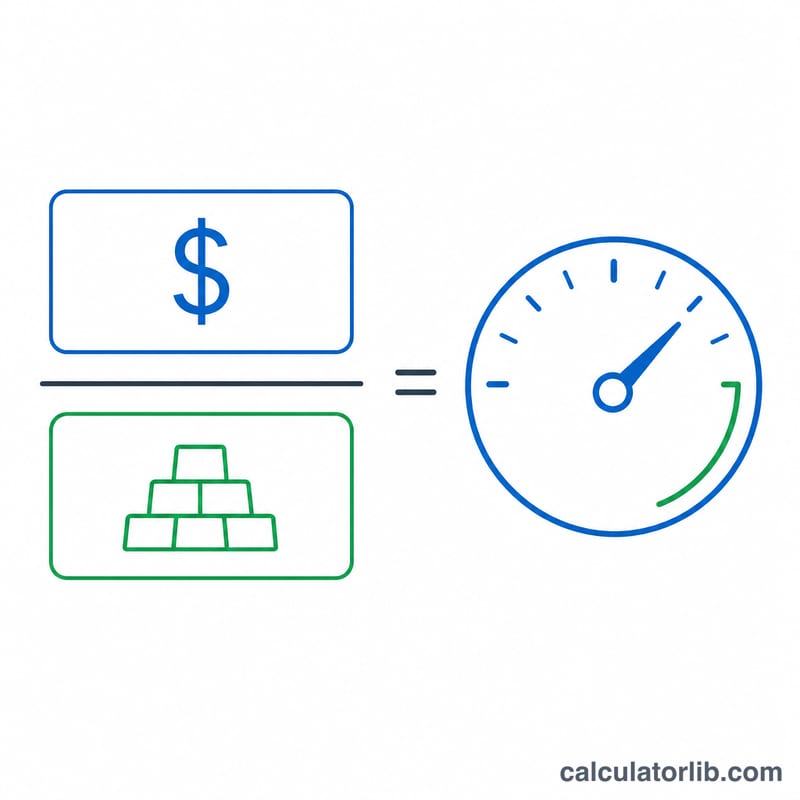
Worked example
With sales = 1,000,000, receivables = 120,000, inventory = 40,000, tangible fixed assets = 150,000, equity = 300,000 and total assets = 700,000: total asset turnover =
$$\frac{1{,}000{,}000}{700{,}000} = 1.43 \text{ times (Average)}$$receivables turnover = \(8.33\); inventory turnover = \(25.0\); tangible fixed asset turnover = \(6.67\); equity turnover = \(3.33\) — all in the Average band.
FAQ
What does a higher turnover mean? It usually means assets are being used more productively to drive sales, though very high figures can also reflect under-investment.
Why is a ratio shown as a dash? If a denominator is zero or blank the ratio is undefined, so it is omitted rather than shown as infinity.
Are the benchmarks strict rules? No. They are general industry-agnostic guides; ideal ranges vary widely by sector and business model.