
What Is Inventory Turnover?
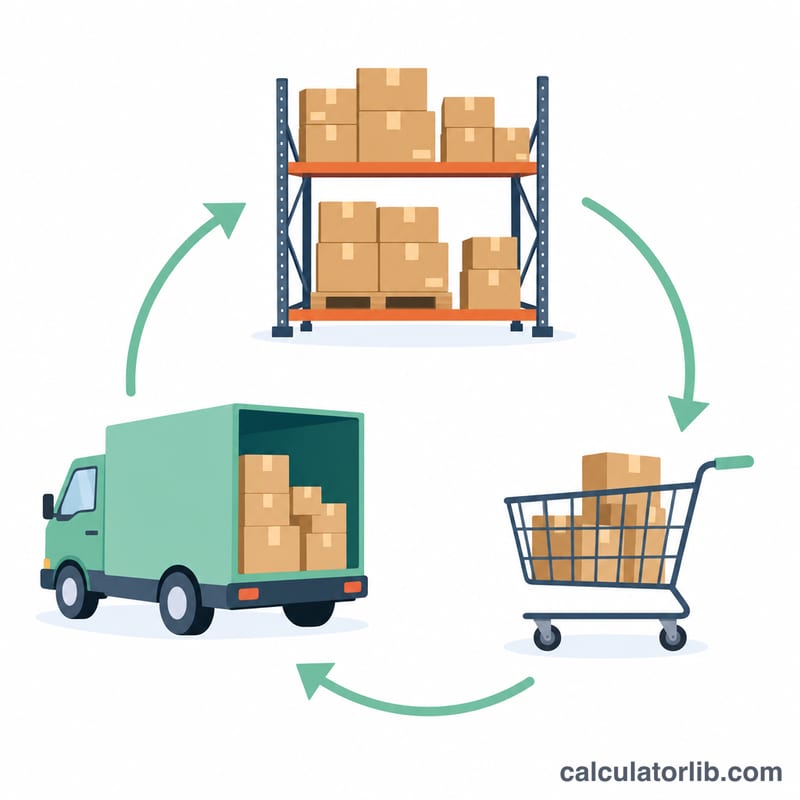
Inventory turnover is a financial efficiency ratio that measures how many times a business sells and replaces its stock during a given period (usually a year). A higher ratio generally means strong sales and lean inventory management, while a low ratio can signal overstocking, weak demand, or obsolete goods. This calculator works for any currency and any business — it is purely a math tool.
How to Use This Calculator
Enter your Cost of Goods Sold (COGS) for the period and your Average Inventory. Average inventory is typically calculated as (Beginning Inventory + Ending Inventory) ÷ 2. The calculator returns your turnover ratio plus the Days Inventory Outstanding (DIO), which tells you roughly how long items sit before selling.
The Formula Explained
The core formula is simple:
$$\text{Inventory Turnover} = \frac{\text{COGS}}{\text{Average Inventory}}$$COGS is used instead of revenue because both COGS and inventory are recorded at cost, giving a like-for-like comparison. Days Inventory Outstanding converts the ratio into days:
$$\text{DIO} = \frac{365}{\text{Turnover}}$$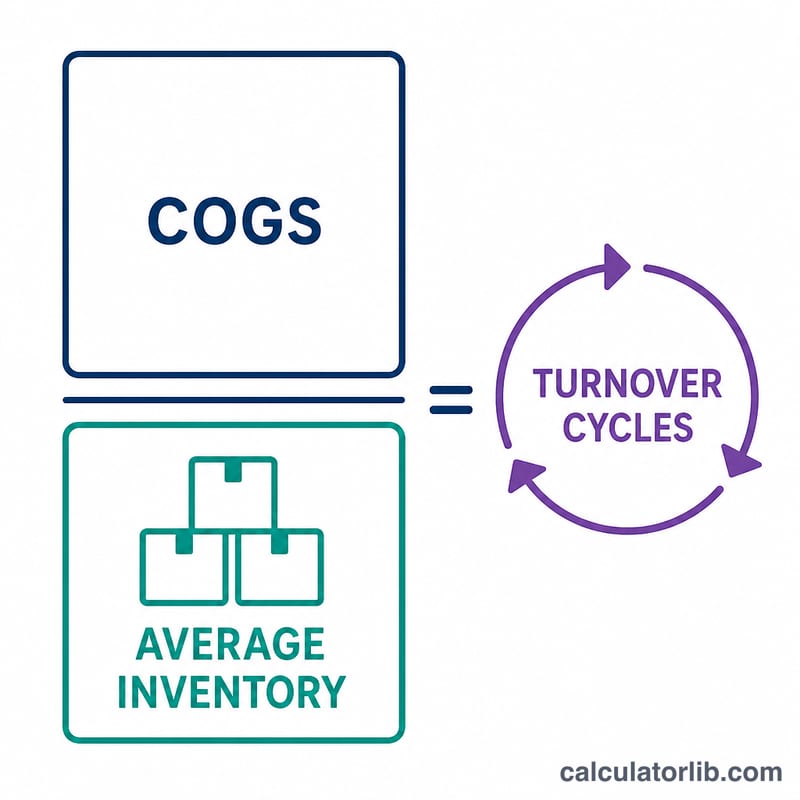
Worked Example
Suppose a retailer had COGS of $500,000 and average inventory of $100,000. The turnover ratio is \(500{,}000 \div 100{,}000 = 5.0\), meaning the company cycled through its inventory five times in the year. Days Inventory Outstanding is \(365 \div 5 = 73\) days — on average, products sit in stock for about 73 days before being sold.
FAQ
What is a good inventory turnover ratio? It varies by industry. Grocery and fast-fashion retailers may exceed 10–15, while heavy machinery or luxury goods may sit at 2–4. Compare against industry peers.
Should I use COGS or sales? Use COGS for accuracy. Some analysts use total sales, but this inflates the ratio because sales include markup.
How do I find average inventory? Add beginning and ending inventory for the period and divide by two. For more volatile inventory, average monthly figures.