

What Is the Employee Turnover Rate?
Employee turnover rate measures the percentage of workers who leave an organization during a given period — typically a month, quarter, or year. It is one of the most-watched HR metrics because high turnover signals problems with engagement, compensation, or management, and because replacing staff is expensive. This calculator converts two simple numbers — how many people left and your average headcount — into a clean percentage you can track over time.
How to Use This Calculator
Enter the number of employees who left during your chosen period (voluntary and involuntary departures combined, unless you are tracking them separately). Then enter your average number of employees for the same period. The average is usually calculated as (headcount at start + headcount at end) ÷ 2. Press calculate to see your turnover rate and the corresponding retention rate.
The Formula Explained
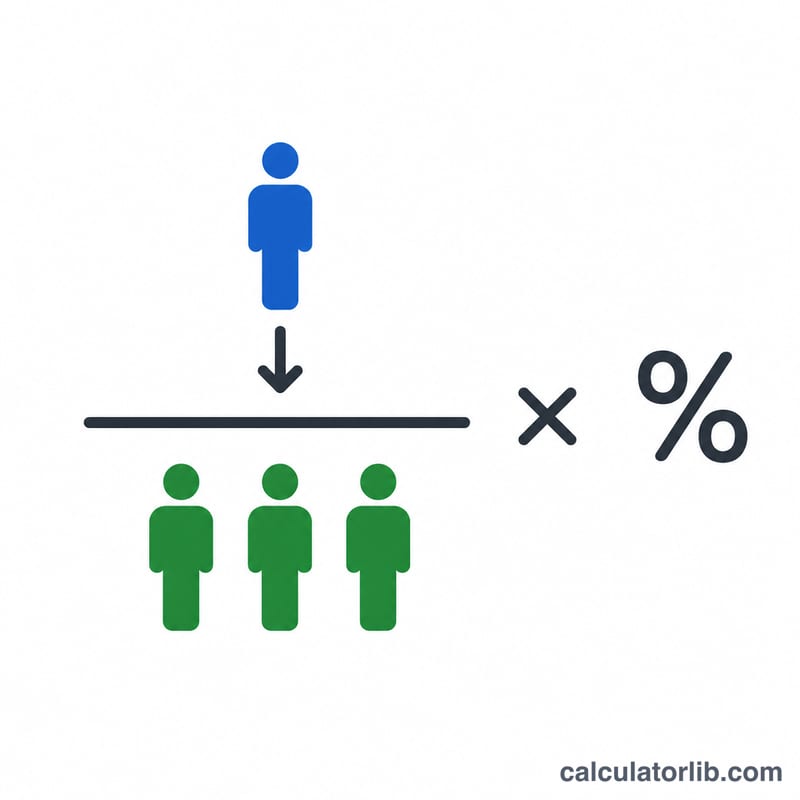
The core formula is:
$$\text{Turnover Rate} = \frac{\text{Employees Who Left}}{\text{Average Number of Employees}} \times 100\%$$
Dividing departures by average headcount normalizes the figure so companies of different sizes can be compared. Multiplying by 100 expresses it as a percentage. Retention rate is simply 100 minus the turnover rate.
Worked Example
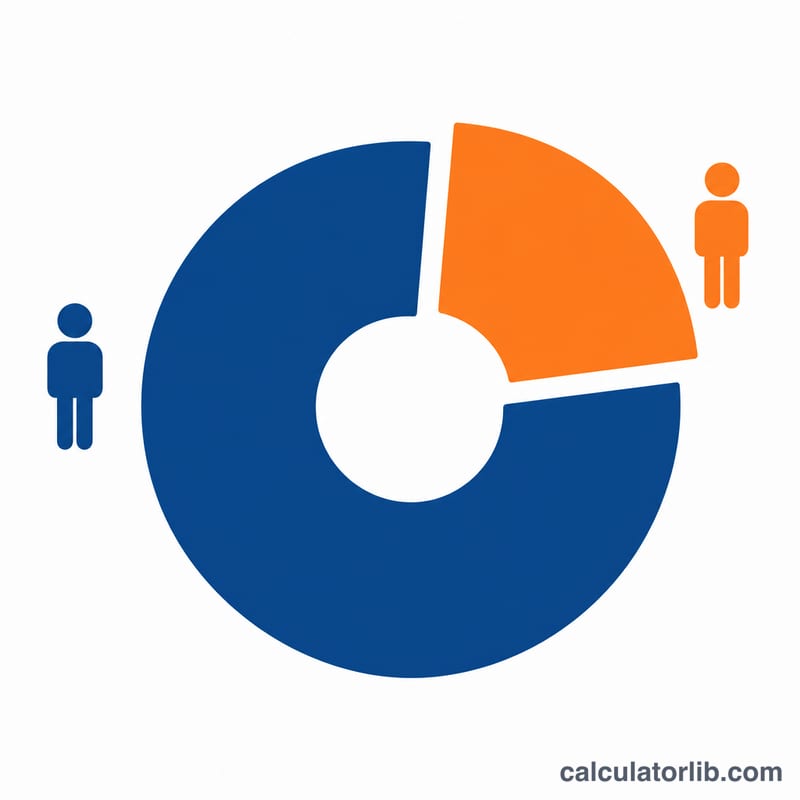
Suppose 15 employees left over the year and your average headcount was 200. Turnover = $$\left( \frac{15}{200} \right) \times 100 = 7.5\%$$ That means a retention rate of \(92.5\%\). A turnover rate under about 10% is generally considered healthy, though benchmarks vary widely by industry.
FAQ
Should I include both voluntary and involuntary exits? For overall turnover, yes. Many HR teams also calculate them separately to understand whether people are choosing to leave or being let go.
How do I find average headcount? Add the number of employees at the start and end of the period and divide by two, or average your monthly headcounts for more accuracy.
What is a good turnover rate? It depends on the sector — retail and hospitality often see 30%+, while many office roles aim for under 15%. Compare against your own history and industry benchmarks.