
What Is the Lead Conversion Rate?
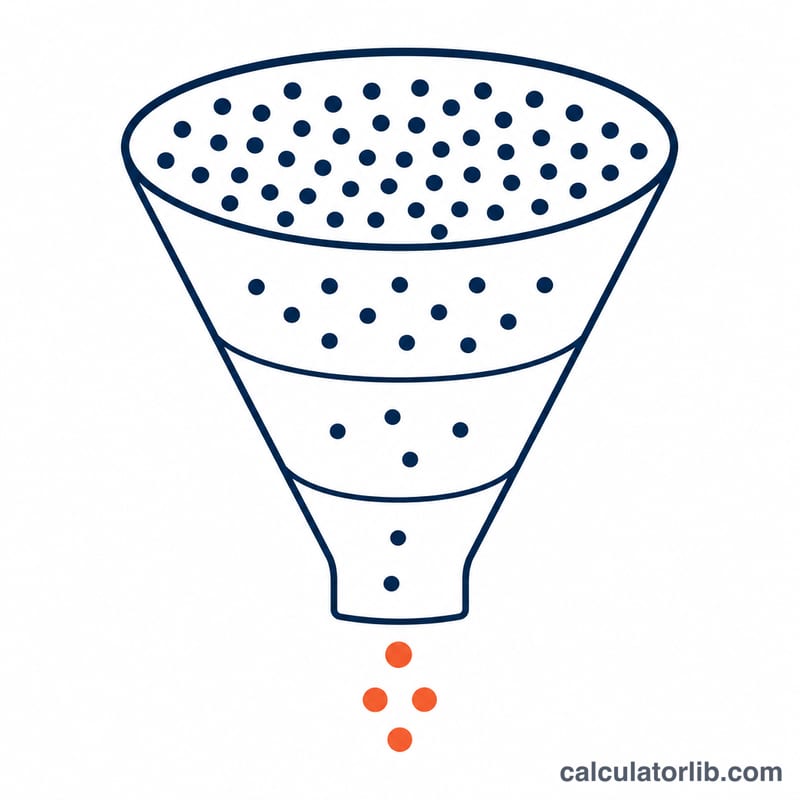
The lead conversion rate measures the percentage of leads that turn into a desired outcome — a sale, a signup, a booked demo, or any other goal. It is one of the most important metrics in sales and marketing because it tells you how efficiently your funnel converts interest into action. A higher rate means your messaging, targeting, and follow-up are working; a lower rate signals friction somewhere in the journey.
How to Use This Calculator
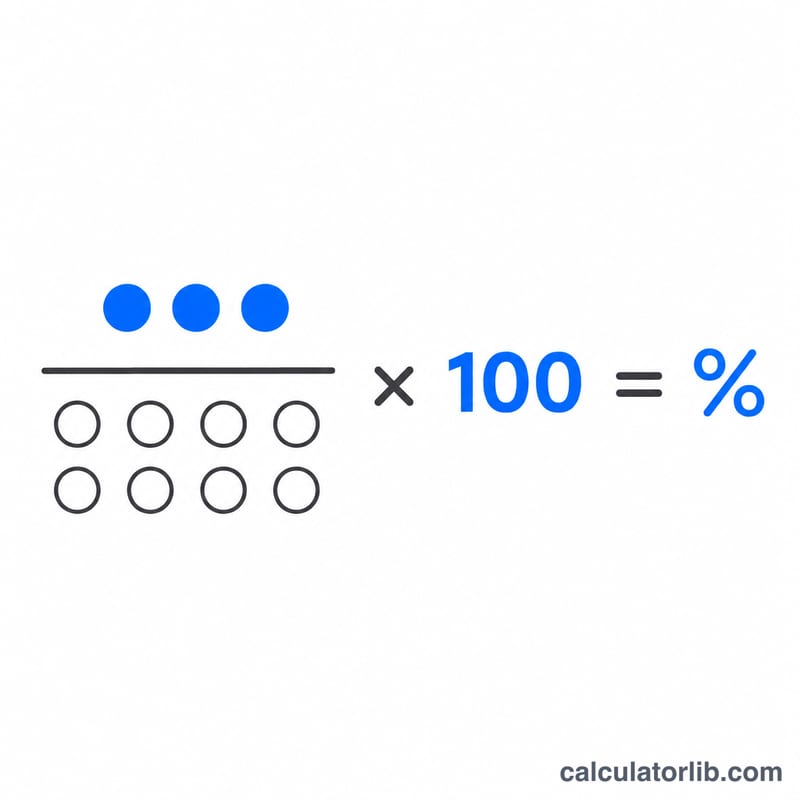
Enter the number of converted leads (those who completed the desired action) and your total leads (every prospect that entered the funnel during the period). The calculator divides the two and multiplies by 100 to give your conversion rate as a percentage, plus a breakdown of how many leads did not convert.
The Formula Explained
The math is simple: $$\text{Lead Conversion Rate (\%)} = \frac{\text{Converted Leads}}{\text{Total Leads}} \times 100$$. Dividing converted leads by total leads gives the proportion that converted; multiplying by 100 expresses it as a percentage. Always use the same time window for both numbers so the comparison is fair.
Worked Example
Suppose you generated 200 leads last month and 50 of them became paying customers. Your conversion rate is $$(50 \div 200) \times 100 = 25\%$$. That means 1 in 4 leads converted, while 150 leads did not. Tracking this monthly helps you spot trends and test improvements.
FAQ
What is a good lead conversion rate? It varies widely by industry and channel, but many B2B funnels see 2%–10%, while warm or referral leads can convert much higher. Compare against your own historical baseline rather than a universal benchmark.
Should I count every lead? Count all leads that entered the stage you are measuring. To measure a specific step, use only the leads that reached that step as your denominator.
How can I improve my rate? Tighten lead qualification, speed up follow-up, personalize outreach, and remove friction in your signup or checkout process.