
What Is a Parallelogram Calculator?
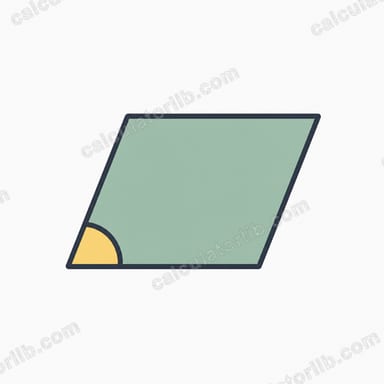
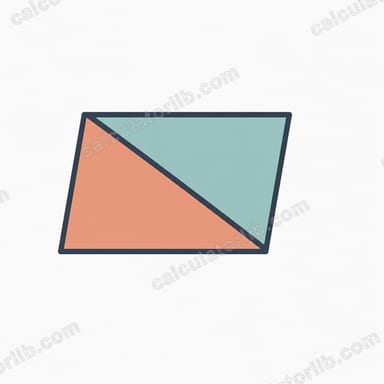
A parallelogram is a four-sided shape (quadrilateral) where opposite sides are parallel and equal in length. This calculator finds the area and perimeter of any parallelogram once you know its base, perpendicular height, and the length of its adjacent side.
How to Use It
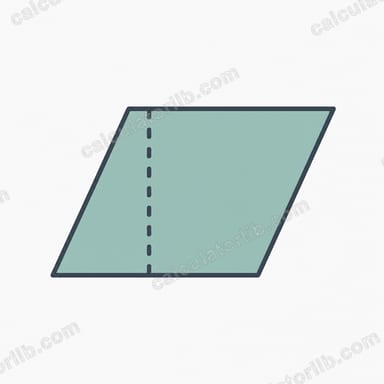
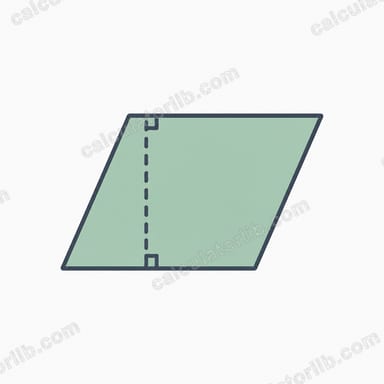
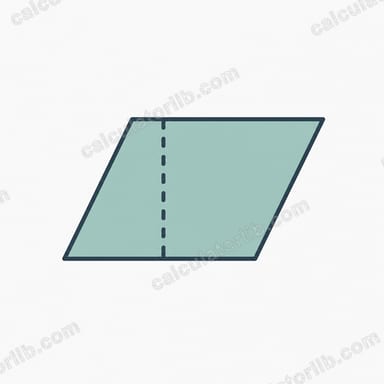
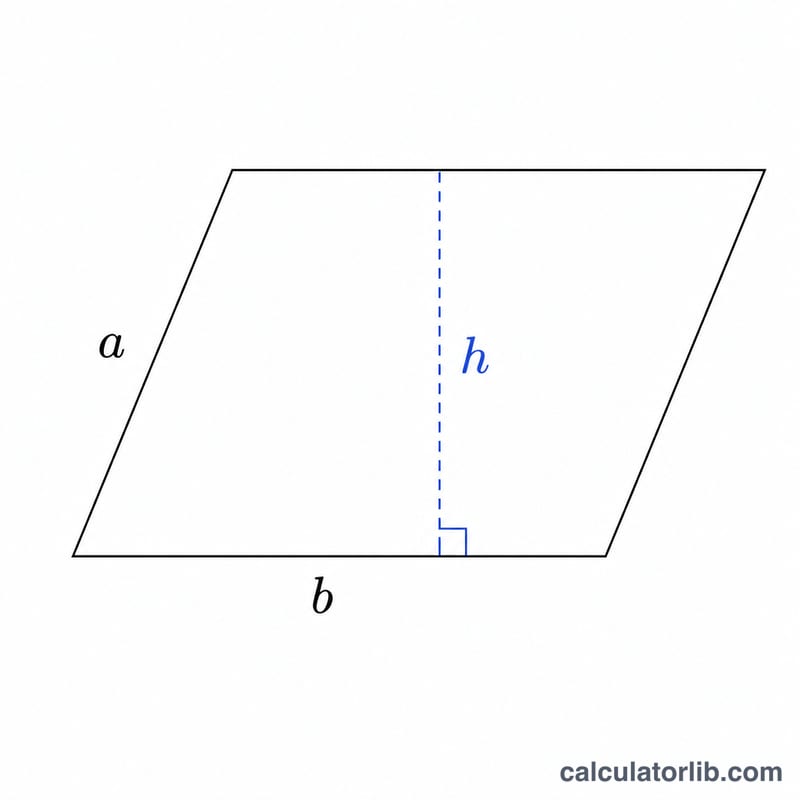
Enter three values: the base (b), the perpendicular height (h) measured straight down from the opposite side to the base, and the slanted side (a). Click calculate to instantly get the area in square units and the perimeter in linear units. Make sure all measurements use the same unit.
The Formulas Explained
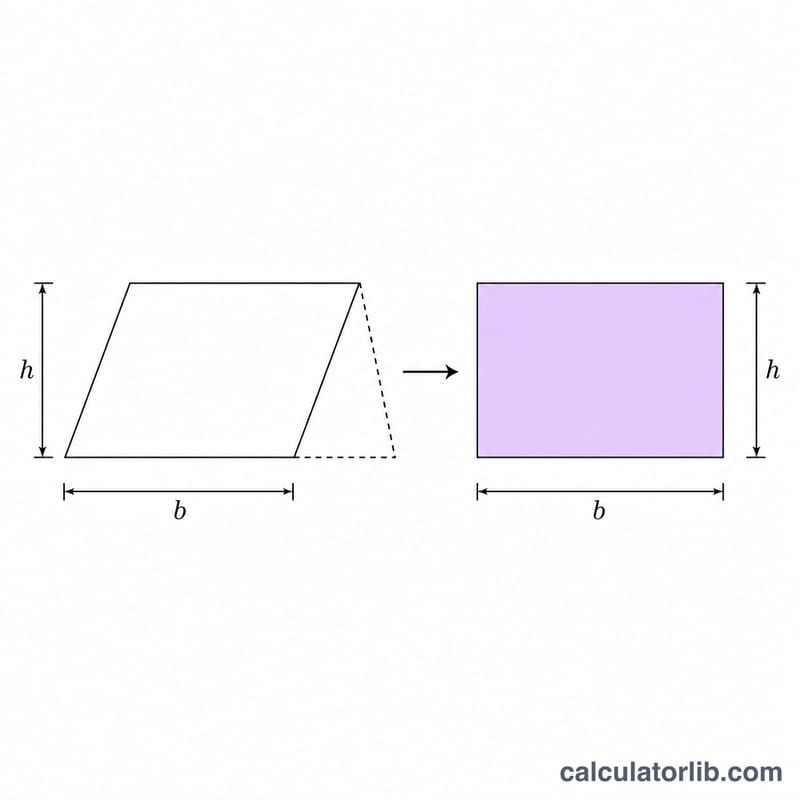
The area equals the base times the perpendicular height: $$A = b \times h$$ Note the height is the straight vertical distance between the two parallel bases — not the slanted side length. The perimeter sums all four edges; since opposite sides are equal, this simplifies to $$P = 2(a + b)$$
Worked Example
Suppose a parallelogram has base \(b = 8\), height \(h = 5\), and side \(a = 6\). The area is $$8 \times 5 = 40 \text{ square units}$$ The perimeter is $$2 \times (6 + 8) = 2 \times 14 = 28 \text{ units}$$
FAQ
Is the height the same as the slanted side? No. The height is the perpendicular distance between the parallel bases. The slanted side is usually longer and is only used for the perimeter.
Can I use any units? Yes — centimeters, meters, inches, feet — as long as every input uses the same unit. The area comes out in those units squared.
Does this work for a rectangle? Yes. A rectangle is a parallelogram where the side equals the height, so the same formulas apply.