
What Is the Roofing Cost Calculator?
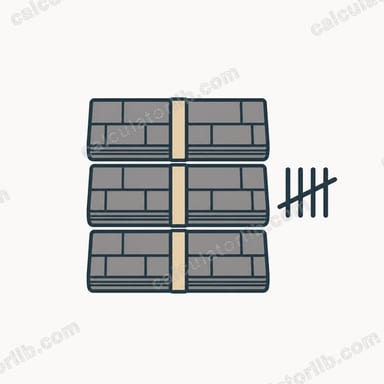
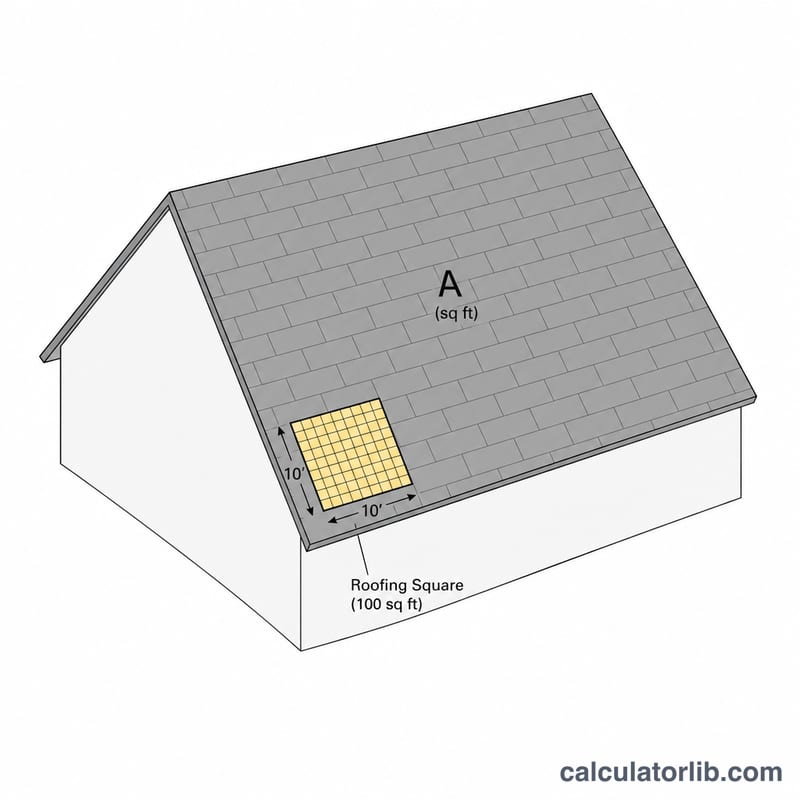
The Roofing Cost Calculator gives you a fast, transparent estimate of what it will cost to install or replace a shingle roof. Roofers measure and price work in "squares" — a roofing square is 100 square feet of roof surface. By entering your total roof area and the price per square for both materials and labor, you instantly see the projected total cost, broken out into material and labor portions.
How to Use It
Enter three numbers: the total roof area in square feet, the material cost per square (shingles, underlayment, and accessories), and the labor cost per square. The calculator converts your area into squares, multiplies by each per-square rate, and adds them together. Tip: actual roof area is larger than your home's footprint because of slope and overhangs — add 10–20% to your floor area as a rough adjustment, or use measured roof dimensions.
The Formula Explained
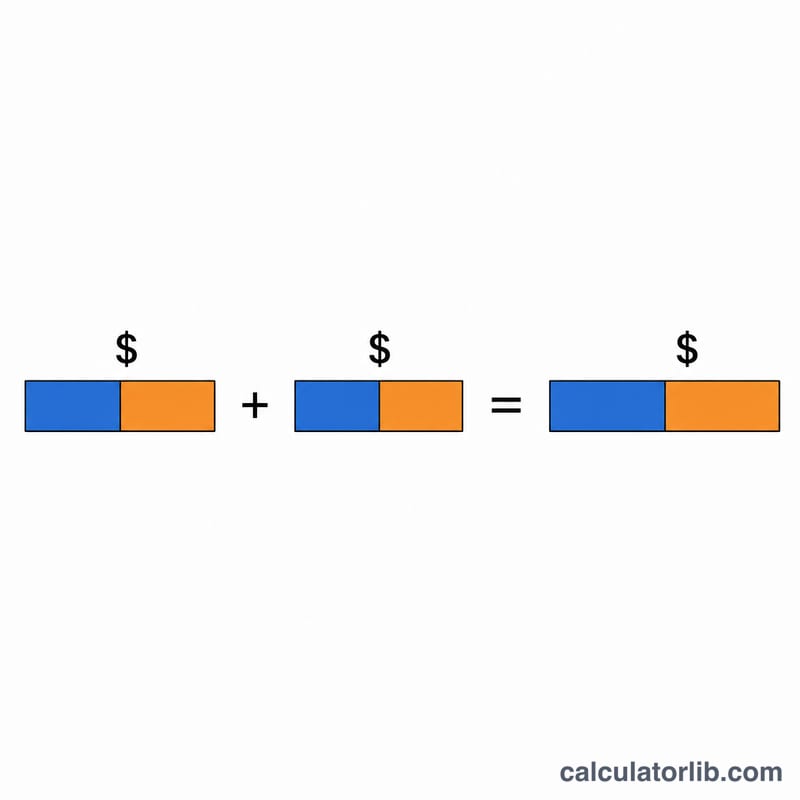
First, \( \text{squares} = \text{roof area} \div 100 \). Then $$\text{Total Cost} = \text{squares} \times \left( \text{Material/Square} + \text{Labor/Square} \right)$$ Material and labor are kept separate so you can swap shingle grades or compare contractor quotes line by line.
Worked Example
Suppose your roof is 2,000 sq ft, material runs $100 per square, and labor is $150 per square. That's \( 2{,}000 \div 100 = 20 \) squares. Material \( = 20 \times \$100 = \$2{,}000 \). Labor \( = 20 \times \$150 = \$3{,}000 \). Total \( = \$5{,}000 \).
FAQ
What is a roofing square? It is 100 square feet of roof area — the standard unit roofers use for quoting and ordering materials.
Does this include tear-off or disposal? No. If your job needs old shingles removed, add that to your labor-per-square figure or include it as a separate cost.
Why is roof area bigger than my house's square footage? Roof slope (pitch) and overhangs increase the surface area, so measure the roof itself rather than using floor area when possible.