
What is the AHI?
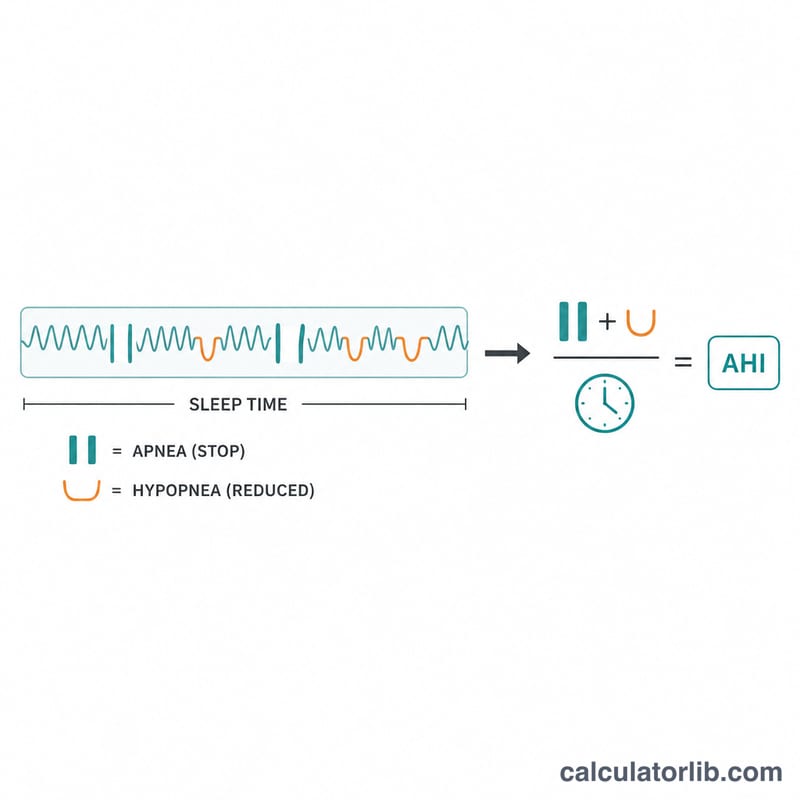
The Apnea-Hypopnea Index (AHI) is the standard measure used in sleep medicine to grade the severity of obstructive sleep apnea. It counts the average number of breathing interruptions — apneas (complete pauses) and hypopneas (partial reductions in airflow) — that occur per hour of sleep during a sleep study (polysomnography or a home sleep test).
How to use this calculator
Enter the total number of apneas and hypopneas recorded during your sleep study, and the total sleep time in hours. The calculator divides the combined event count by the hours of sleep to give your AHI, then maps it to a clinical severity band.
The formula explained
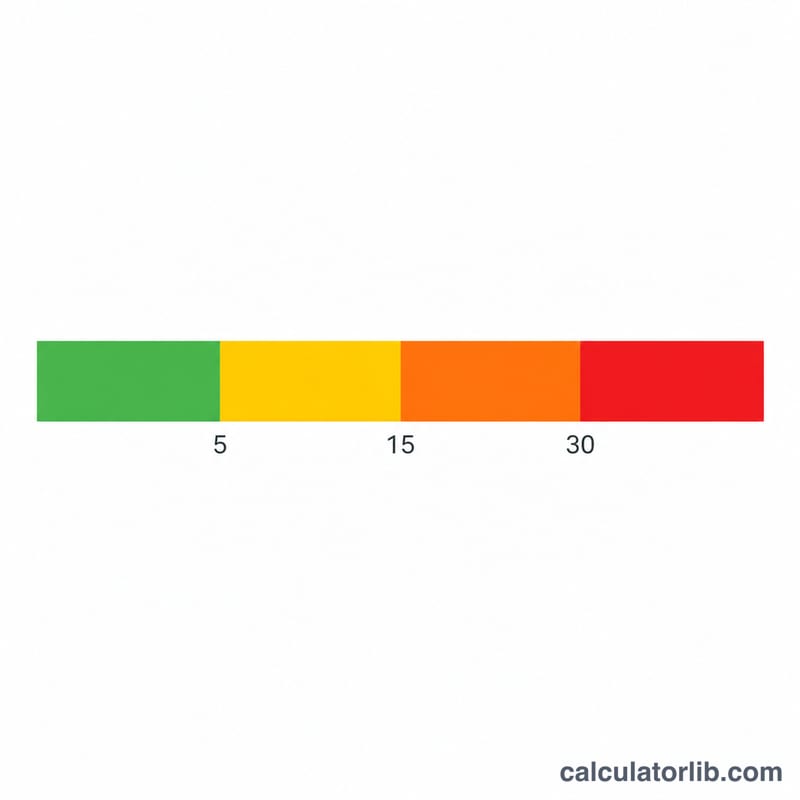
$$\text{AHI} = \frac{\text{apneas} + \text{hypopneas}}{\text{total sleep hours}}$$ The standard severity thresholds are: AHI < 5 normal, 5–14.9 mild, 15–29.9 moderate, and 30 or more severe sleep apnea.
Worked example
Suppose a study records 30 apneas and 45 hypopneas across 7 hours of sleep. That is 75 events total. $$\text{AHI} = 75 / 7 \approx 10.7$$ events per hour, which falls in the mild range.
FAQ
What counts as a normal AHI? An AHI below 5 events per hour is generally considered normal in adults.
Is AHI the same as RDI? Not exactly. The Respiratory Disturbance Index (RDI) also includes respiratory effort-related arousals (RERAs), so it can be higher than the AHI.
Can I diagnose myself with this? No. This tool is for educational estimation only. Diagnosis and treatment require a qualified sleep physician interpreting a full sleep study.