
What Is Social Media ROI?
Social media ROI (return on investment) measures how much value your social media efforts generate relative to what they cost. It is the single most important metric for justifying marketing budgets, comparing channels, and deciding where to invest next. A positive ROI means your campaigns earn more than they cost; a negative ROI means you are losing money. This calculator works for any currency or platform — Facebook, Instagram, LinkedIn, TikTok, X, or paid ad campaigns.
How to Use This Calculator
Enter the total Value Generated — this is the revenue, lead value, or monetary worth attributed to your social media activity. Then enter the Total Cost, which includes ad spend, content creation, agency fees, tools, and staff time. The calculator returns your ROI percentage and net profit instantly.
The Formula Explained
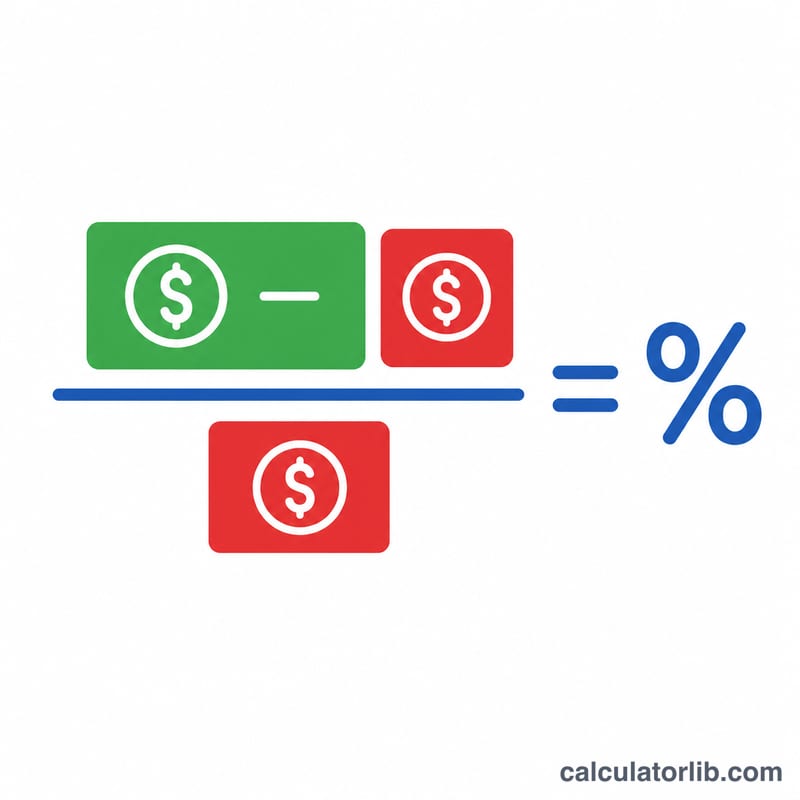
The ROI formula is: $$\text{ROI} = \frac{\text{Value Generated} - \text{Cost}}{\text{Cost}} \times 100$$ First subtract cost from value to find net profit, then divide by cost to express the gain relative to the investment, and multiply by 100 to convert it to a percentage. A result of 100% means you doubled your money; 0% means you broke even.
Worked Example
Suppose a campaign generated $5,000 in value and cost $2,000. Net profit is \(\$5{,}000 - \$2{,}000 = \$3{,}000\). Divide by the cost: \(\$3{,}000 \div \$2{,}000 = 1.5\). Multiply by 100 to get a 150% ROI. For every dollar spent, you earned $1.50 in profit on top of recovering your investment.
FAQ
What counts as a good social media ROI? Any positive percentage means you profited, but marketers often aim for 200% or higher (a 3:1 value-to-cost ratio) to comfortably cover overhead.
How do I assign value to non-sales results? Estimate a monetary value per lead, follower, or engagement based on historical conversion rates and average order value.
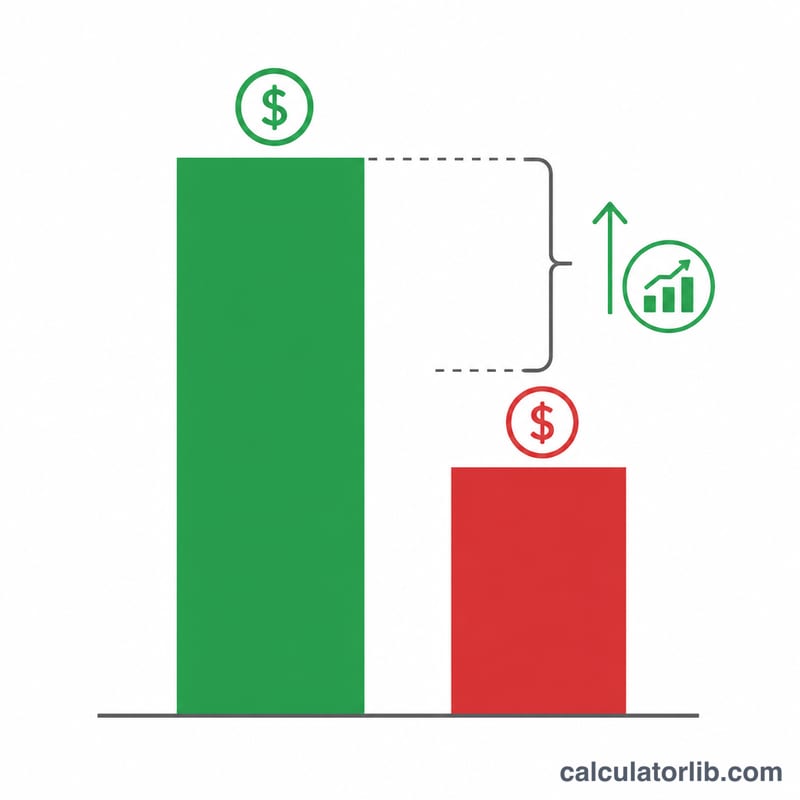
Can ROI be negative? Yes. If your value generated is less than your cost, the ROI percentage will be negative, signaling the campaign lost money.