
What Is Net Promoter Score?
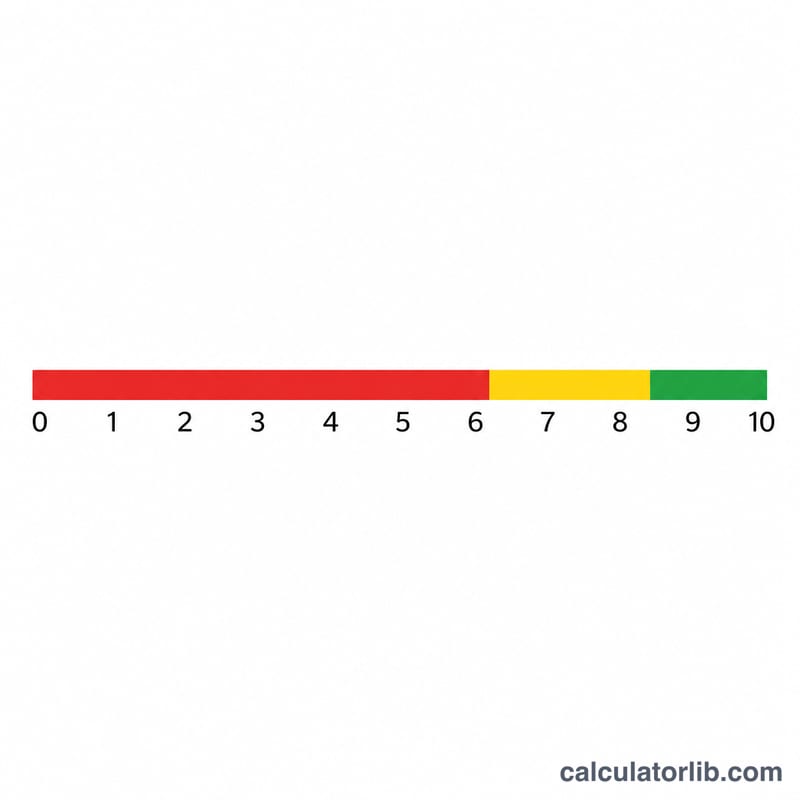
Net Promoter Score (NPS) is a widely used customer loyalty metric that measures how likely your customers are to recommend your product or service to others. Based on a single survey question — "On a scale of 0 to 10, how likely are you to recommend us?" — respondents are grouped into three categories: Promoters (9–10), Passives (7–8), and Detractors (0–6).
How to Use This Calculator
Enter the number of respondents in each category — promoters, passives, and detractors. The calculator converts each count into a percentage of the total and computes your NPS. Passives are counted in the total but do not directly affect the final score.
The Formula Explained
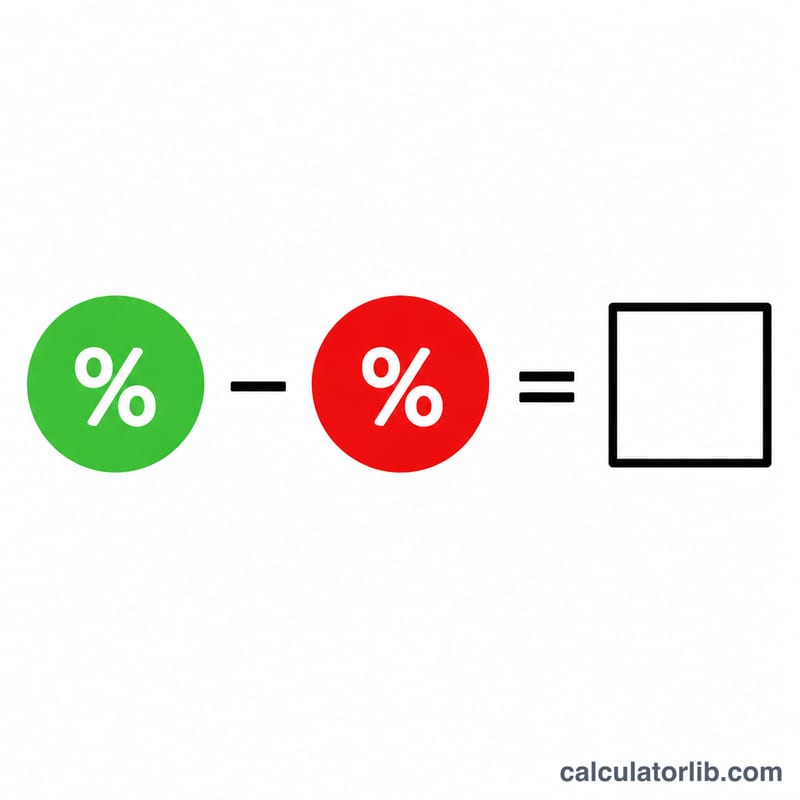
NPS = % Promoters − % Detractors. First, divide each group by the total number of respondents and multiply by 100 to get percentages. Then subtract the detractor percentage from the promoter percentage. The result ranges from −100 (everyone is a detractor) to +100 (everyone is a promoter).
$$\text{NPS} = \left( \frac{\text{Promoters} - \text{Detractors}}{\text{Promoters} + \text{Passives} + \text{Detractors}} \right) \times 100$$
Worked Example
Suppose you survey 100 customers: 70 promoters, 20 passives, and 10 detractors. Promoters = 70%, detractors = 10%. NPS = \(70 - 10 = \mathbf{60}\). A score of 60 is considered excellent across most industries.
$$\text{NPS} = \left( \frac{70 - 10}{70 + 20 + 10} \right) \times 100 = 60$$
FAQ
What is a good NPS? Anything above 0 means you have more promoters than detractors. Above 30 is good, above 50 is excellent, and above 70 is world-class.
Do passives count? Passives are included in the total respondent count (which lowers each percentage) but are not added or subtracted in the final score.
Can NPS be negative? Yes. If you have more detractors than promoters, your NPS will be negative, down to a minimum of −100.