
What is a unit rate?
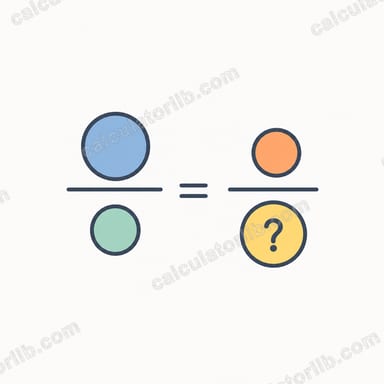
A unit rate compares two quantities where the second quantity is reduced to a single unit. It answers questions like "how much per one?" — for example miles per hour, dollars per pound, or words typed per minute. This calculator divides quantity A by quantity B to give the rate per single unit, which is the core skill behind most proportion word problems.
How to use the calculator
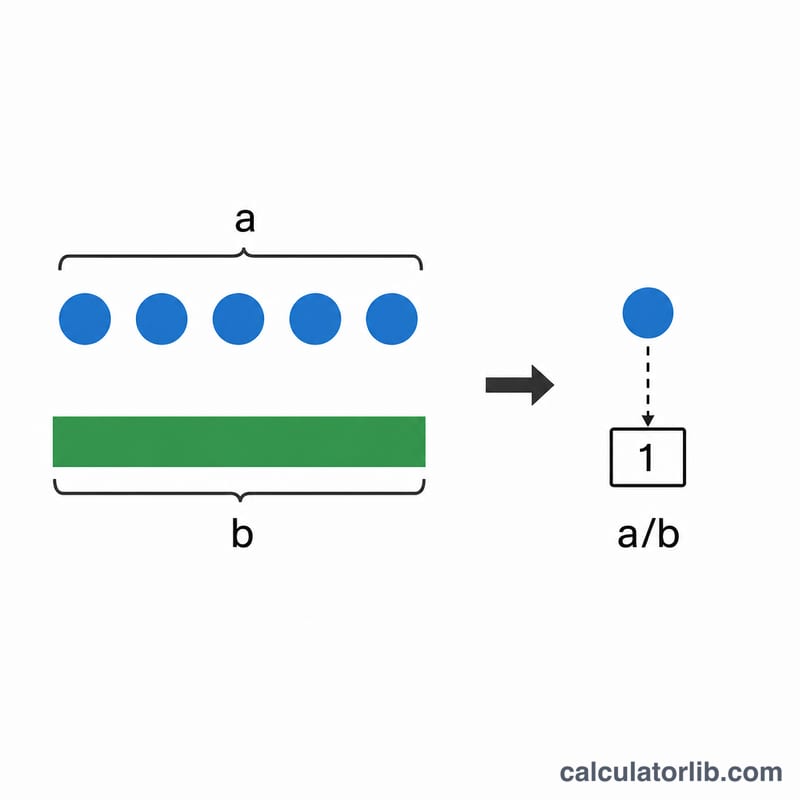
Enter the total amount as Quantity A and the number of units it covers as Quantity B. The calculator returns the unit rate (A per 1 B) and the inverse rate (B per 1 A). For instance, if a car travels 120 miles on 4 gallons, A = 120 and B = 4, giving 30 miles per gallon.
The formula explained
The unit rate is simply \(r = a / b\). Dividing both quantities by B scales the ratio so the denominator becomes 1, making it easy to compare and to scale up. The inverse rate, \(b / a\), expresses the same relationship the other way around — useful when the question asks for the opposite unit.
$$\text{Unit Rate} = \frac{\text{Quantity A}}{\text{Quantity B}} \qquad \text{Inverse Rate} = \frac{\text{Quantity B}}{\text{Quantity A}}$$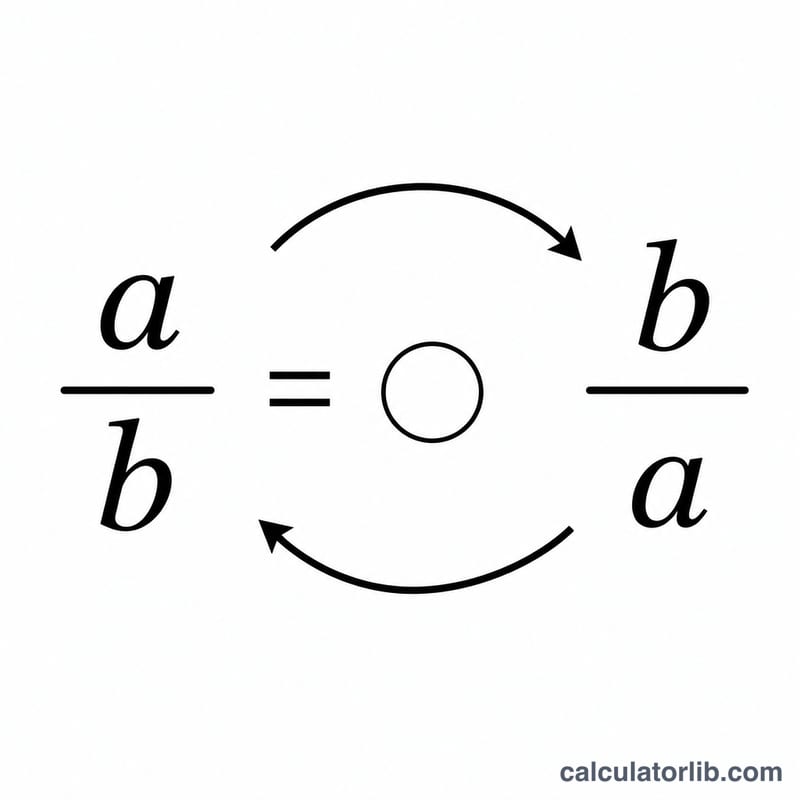
Worked example
A grocery store sells 5 apples for $2.00. To find the price per apple, set A = 2.00 and B = 5: $$r = 2.00 / 5 = \$0.40 \text{ per apple.}$$ The inverse rate is \(5 / 2 = 2.5\) apples per dollar.
FAQ
What if B is zero? Division by zero is undefined, so the calculator returns 0 — always use a positive number of units.
Can I use decimals? Yes. Both quantities accept decimal values, so you can compute rates like dollars per kilogram or liters per minute.
How do I solve a proportion with this? Find the unit rate first, then multiply it by the new quantity to scale up or down.