
What Is a Percentile Rank?
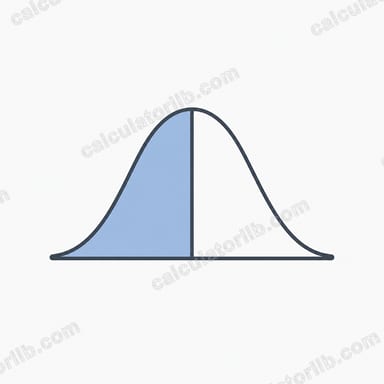
A percentile rank tells you the percentage of values in a data set that fall below a particular score. If your test result is in the 90th percentile, it means 90% of the other scores were lower than yours. Percentile rank is different from a raw rank or position — it expresses where you stand relative to the whole group as a percentage, which makes comparisons across different group sizes meaningful.
How to Use This Calculator
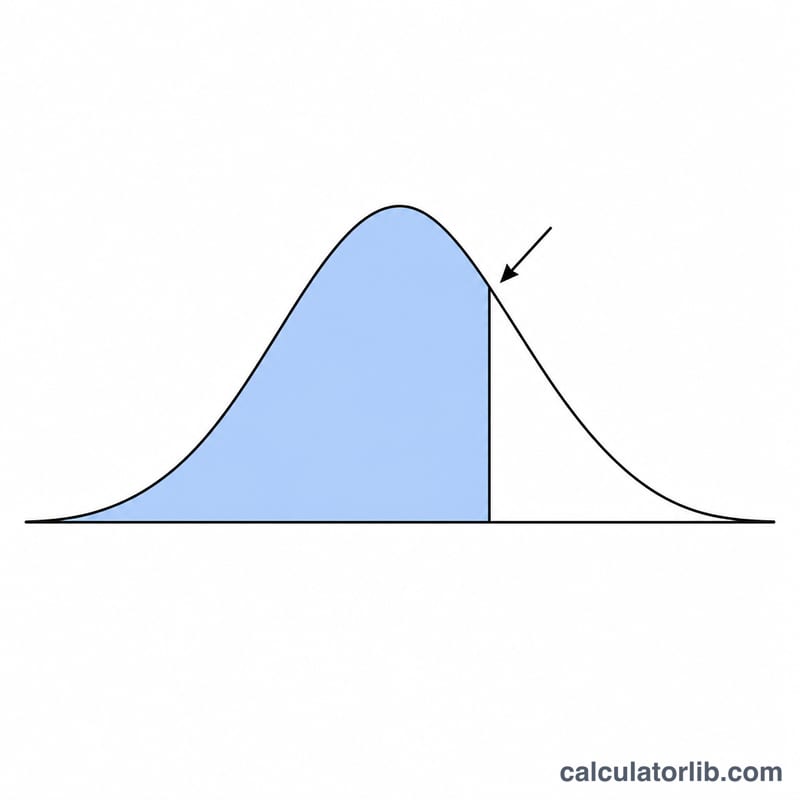
Enter two numbers: the count of scores that are below yours, and the total number of scores in the group. The calculator divides the number below by the total and multiplies by 100 to return your percentile rank. For example, in a class of 200 students where 150 scored lower than you, your percentile rank is 75.
The Formula Explained
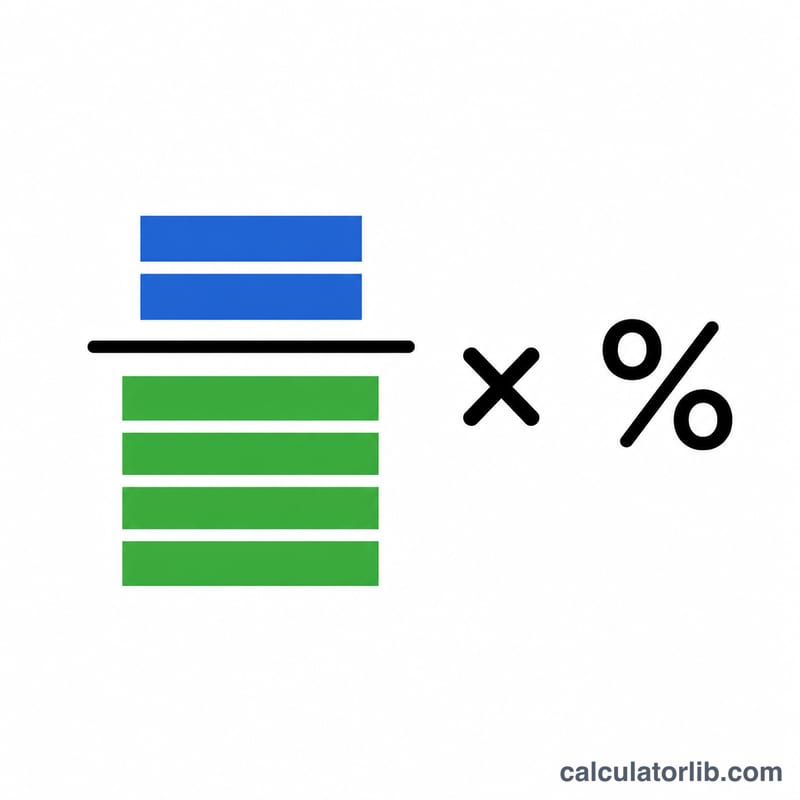
The percentile rank is computed as $$\text{Percentile} = \frac{\text{number below}}{\text{total}} \times 100$$. The "number below" is how many values are strictly less than the value you care about, and "total" is the size of the whole set. Because the result is a ratio scaled to 100, a higher percentile always means a relatively higher standing regardless of how large the group is.
Worked Example
Suppose 75 students scored below you out of 100 total. Plugging in: $$\frac{75}{100} \times 100 = 75.$$ You are in the 75th percentile, meaning you outperformed three-quarters of the group.
FAQ
Is percentile the same as percentage score? No. A percentage score is your marks out of the maximum. A percentile rank compares you to others, not to the maximum possible score.
Can the percentile be 100? Only if every other score is below yours. If you count ties separately, the highest possible value depends on how many scores equal yours.
Should I count scores equal to mine? This calculator counts only scores strictly below yours. For a tie-adjusted percentile, add half the number of tied scores to the "number below" figure.