
What Is Percentile Rank?
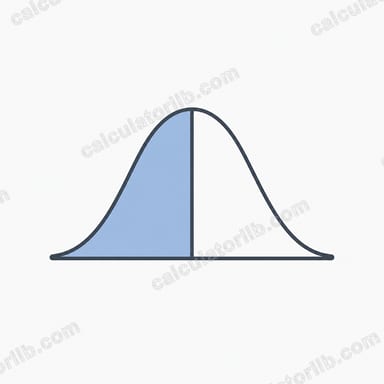
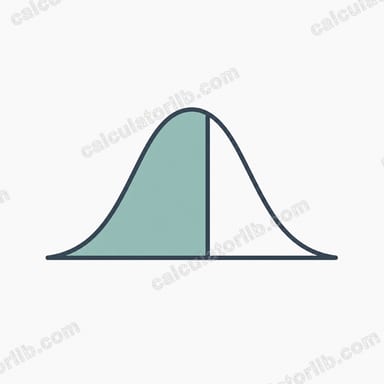
A percentile rank tells you the percentage of values in a data set that fall at or below a given score. If your test score has a percentile rank of 80, it means you performed as well as or better than 80% of the group. It is one of the most common ways to interpret standardized test scores, survey results, and any ranked data.
How to Use This Calculator
Enter your data set as a list of numbers separated by commas or spaces, then type the score (x) you want to rank. The calculator counts how many values are below your score and how many equal it, then applies the percentile rank formula. The result is a value between 0 and 100.
The Formula Explained
This tool uses the "midpoint" definition of percentile rank:
$$\text{PR} = \frac{B + 0.5 \times E}{N} \times 100$$
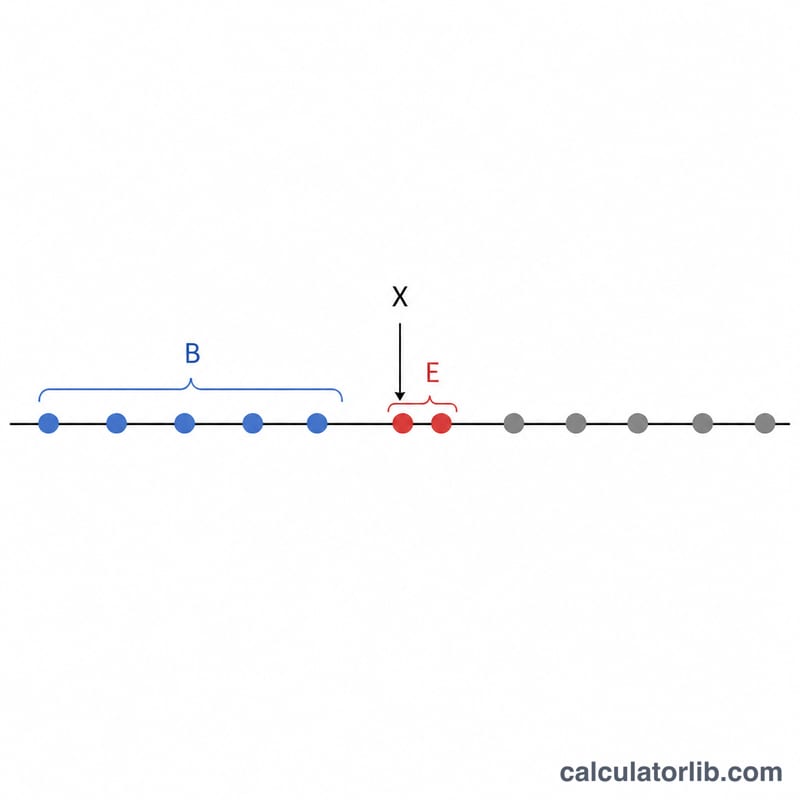
where B is the count of values strictly below x, E is the count of values exactly equal to x, and N is the total number of values. Adding half of the equal values gives a fairer, symmetric estimate when ties exist.
Worked Example
Suppose the data set is 10, 20, 30, 40, 50 and the score is 30. There are 2 values below 30 (10 and 20) and 1 value equal to 30. With \(N = 5\): $$\text{PR} = \frac{2 + 0.5 \times 1}{5} \times 100 = \frac{2.5}{5} \times 100 = 50$$ So a score of 30 sits at the 50th percentile.
FAQ
Can percentile rank be 0 or 100? With this midpoint formula a score equal to the maximum will not reach exactly 100, and the minimum will not be exactly 0, because half the equal values are counted. This avoids overstating extremes.
Does the order of my data matter? No. The calculator counts values, so you can enter them in any order.
What if a value appears more than once? Repeats are counted normally, which increases N and the relevant below/equal counts.