What is the Two Time Zone Meeting Planner?
This tool converts a meeting time scheduled in one time zone into the equivalent local clock time in a second time zone, using each zone's UTC offset. It also tells you whether the converted time lands on the previous day, the same day, or the next day — the detail people most often get wrong when scheduling across continents.
To compare working hours in 2 to 5 cities hour by hour on one grid, daylight saving included, use the meeting planner.
How to use it
Enter the meeting hour and minute as they appear on the clock in Zone A. Then enter each zone's UTC offset in hours (for example New York is -5, London is 0 or +1 in summer, Tokyo is +9). Fractional offsets such as 5.5 (India) or 5.75 (Nepal) are supported in quarter-hour steps. The result shows the matching clock time in Zone B plus a day-shift note.
The formula explained
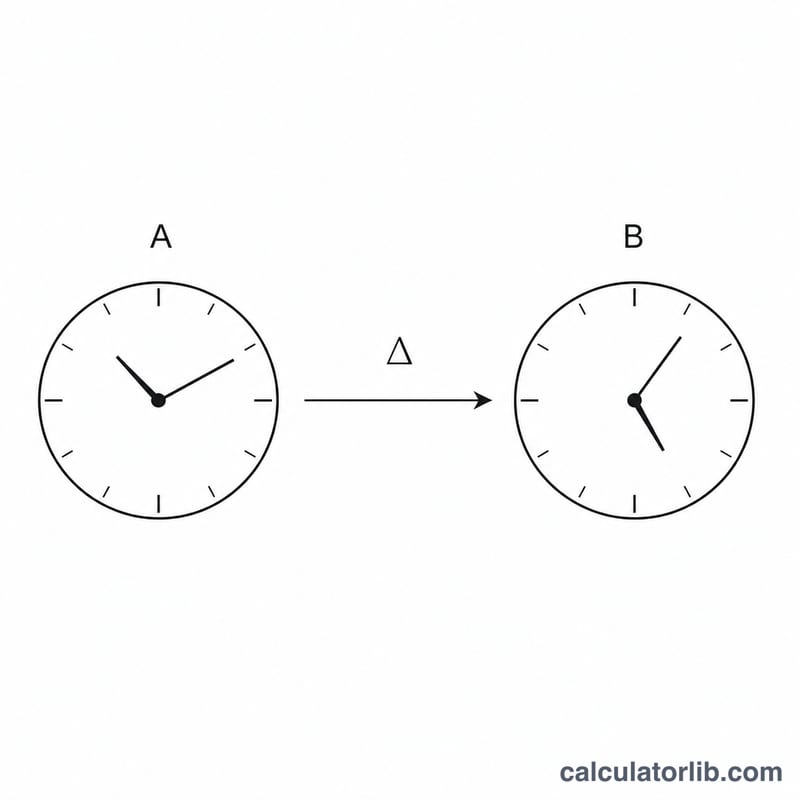
The core relationship is \(\text{Time}_B = \text{Time}_A + \left(\text{Offset}_B - \text{Offset}_A\right)\). We convert the Zone A time to minutes, add the offset difference in minutes, then normalize into a 24-hour day. The number of whole days we had to roll forward or back is the day shift: floor(totalMinutesB / 1440). A negative result means the meeting is on the previous calendar day in Zone B.
Worked example
A meeting is at 23:30 in Tokyo (UTC+9). The other party is in Los Angeles (UTC-8), so \(\text{Offset}_B - \text{Offset}_A = -8 - 9 = -17\) hours. Starting minutes \(= 23 \times 60 + 30 = 1410\). Adding \(-17 \times 60 = -1020\) gives 390 minutes. But floor(390... wait: \(1410 - 1020 = 390\) minutes \(= 06{:}30\). Day shift \(= \lfloor 390 / 1440 \rfloor = 0\)? No — the test uses LA at the given -17h difference from Tokyo. With \(\text{totalMinutesB} = 1410 + (-1020) = 390\), day shift is 0; if the offset difference pushes below zero (e.g. an earlier Tokyo time), floor returns -1, i.e. the previous day in LA.
Common UTC Offsets by City and Region
Enter each zone as its offset from UTC in hours (use decimals for partial-hour zones, e.g. 5.5 or 5.75). The table lists the standard-time offset and, where the place observes daylight saving time (DST), the offset while DST is in effect. Always use the offset that applies on the meeting date.
| City / Region | Standard offset (UTC) | DST offset (UTC) |
|---|---|---|
| Los Angeles (US Pacific) | -8 | -7 |
| New York (US Eastern) | -5 | -4 |
| São Paulo (Brazil) | -3 | none (no DST currently observed) |
| London (UK) | 0 | +1 |
| Berlin (Central Europe) | +1 | +2 |
| Dubai (UAE) | +4 | none |
| Mumbai (India) | +5.5 | none |
| Kathmandu (Nepal) | +5.75 | none |
| Singapore | +8 | none |
| Tokyo (Japan) | +9 | none |
| Sydney (Australia, southeast) | +10 | +11 |
| Auckland (New Zealand) | +12 | +13 |
Daylight saving notes: DST start and end dates differ by country and region. The US and the EU/UK change on different dates, so the gap between, for example, New York and London can shift for a few weeks each spring and autumn. In the southern hemisphere (Sydney, Auckland), DST runs roughly from October to April, so it is in effect during the northern winter. Many zones, including India, Japan, Dubai, Singapore and Nepal, do not observe DST, and their offsets stay fixed all year. Rules can change by government decision, so check an official source for the specific date.
FAQ
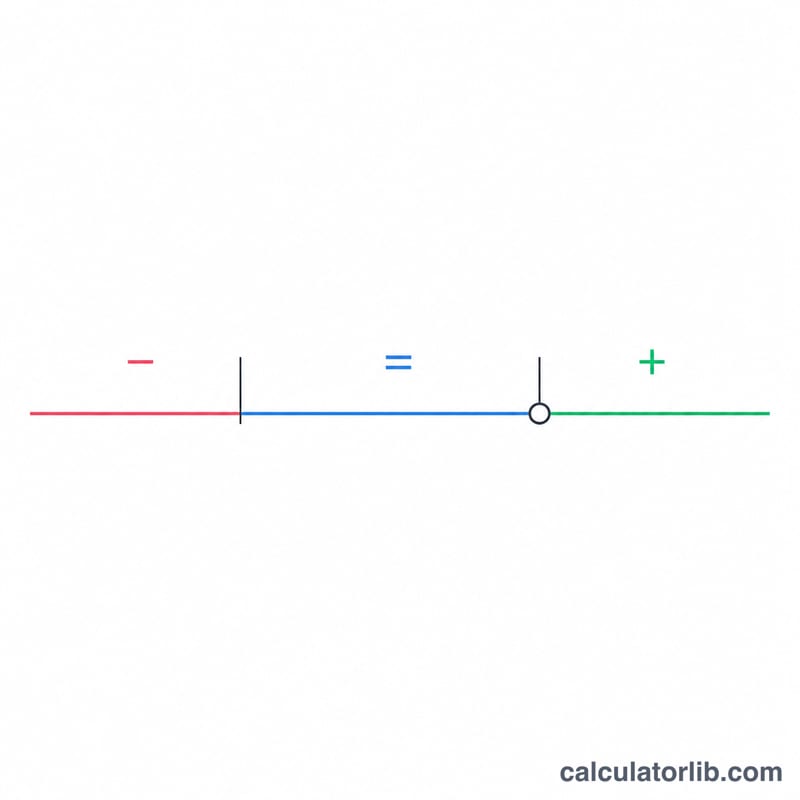
What does a day shift of -1 mean? The meeting falls on the calendar day before Zone A's date in Zone B.
Does this handle daylight saving time? No — enter the correct seasonal offset for each zone yourself.
Can I use half-hour zones? Yes, offsets accept quarter-hour steps like 5.5 or 5.75.