
What Is a Windsock Wind Speed Calculator?
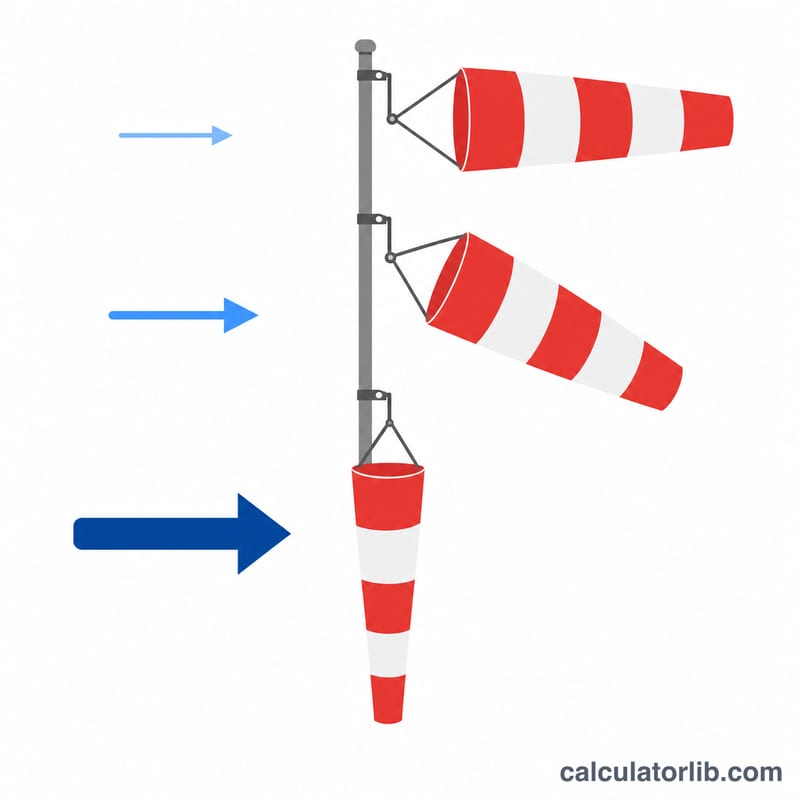
A windsock is a cone-shaped fabric tube mounted on a pole at airfields, helipads, chemical plants and bridges to indicate both wind direction and approximate wind strength. The harder the wind blows, the higher the sock lifts toward horizontal. This calculator turns the visible lift angle of a windsock into an estimated wind speed in knots, miles per hour and kilometres per hour.
How to Use It
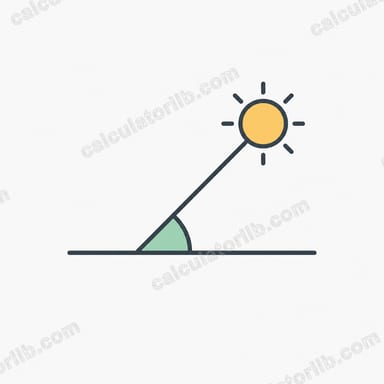
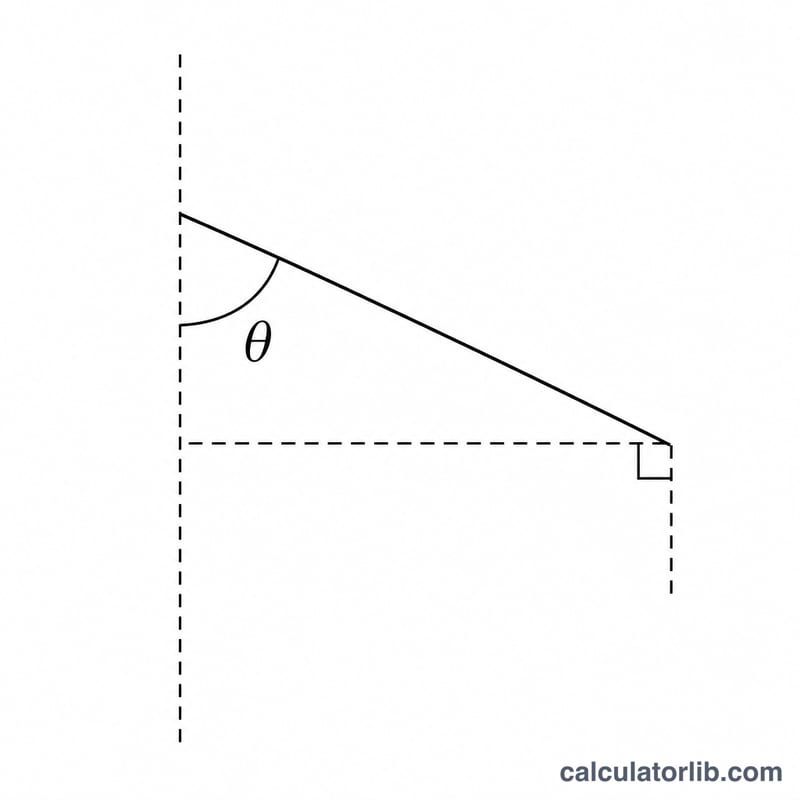
Estimate the angle the windsock makes from vertical (the pole). A sock hanging straight down is 0°, while one streaming fully horizontal is 90°. Enter that angle, then enter the wind speed at which your particular windsock reaches full horizontal extension. Many standard aviation windsocks are calibrated to stand straight out at about 15 knots, which is the default value here.
The Formula Explained
The model assumes a simple linear relationship between the lift angle and wind speed:
$$V = \text{Full-Extension Speed (kt)} \times \frac{\text{Angle}}{90}$$
So at 0° the speed is zero, at 45° it is half of the full-extension speed, and at 90° it equals the full-extension speed. The result is then converted to mph (\(\times 1.15078\)) and km/h (\(\times 1.852\)). This is an approximation — real windsock behaviour is non-linear and depends on fabric weight, length and design — but it gives a quick, useful field estimate.
Worked Example
Suppose a windsock that fully extends at 15 knots is lifted to 45° from vertical. $$\text{Wind Speed} = 15 \times \frac{45}{90} = 15 \times 0.5 = 7.5 \text{ knots}$$ 7.5 knots ≈ 8.63 mph ≈ 13.89 km/h.
FAQ
How accurate is this estimate? It is a rough field approximation. Use calibrated anemometers for operational decisions.
What full-extension speed should I use? Standard ICAO aviation windsocks extend fully near 15 knots; lighter or heavier socks differ, so adjust to match your equipment's specification.
What does a half-lifted windsock mean? At about 45° the wind is roughly half the sock's full-extension rating, e.g. ~7–8 knots for a 15-knot sock.