
What this calculator does
This tool converts the grams of fat, protein, carbohydrate and alcohol in a food, meal or recipe into total calories (kilocalories) and shows what percentage of energy each macronutrient supplies. It uses the standard Atwater energy factors used on nutrition labels worldwide, so it works for any food in any country.
How to use it
Enter the grams of each macronutrient from a nutrition label or recipe. Fat, protein and carbohydrates are required; alcohol is optional and defaults to zero. The calculator multiplies each value by its energy factor, adds them up, and breaks the result down by macro and percentage.
The formula explained
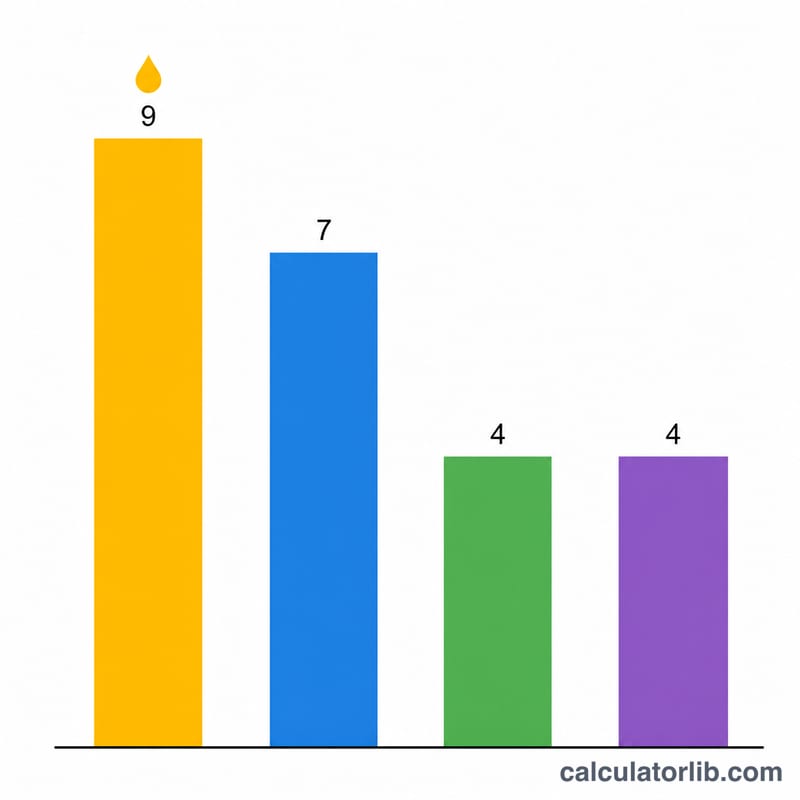
Energy density differs by macronutrient: fat = 9 kcal/g, protein = 4 kcal/g, carbohydrate = 4 kcal/g and alcohol = 7 kcal/g. The total is simply:
$$\text{kcal} = 9 \times \text{fat} + 4 \times \text{protein} + 4 \times \text{carb} + 7 \times \text{alcohol}$$
Fat is the most energy-dense macro, which is why fatty foods carry more calories per gram than equivalent-weight carbs or protein.
Worked example
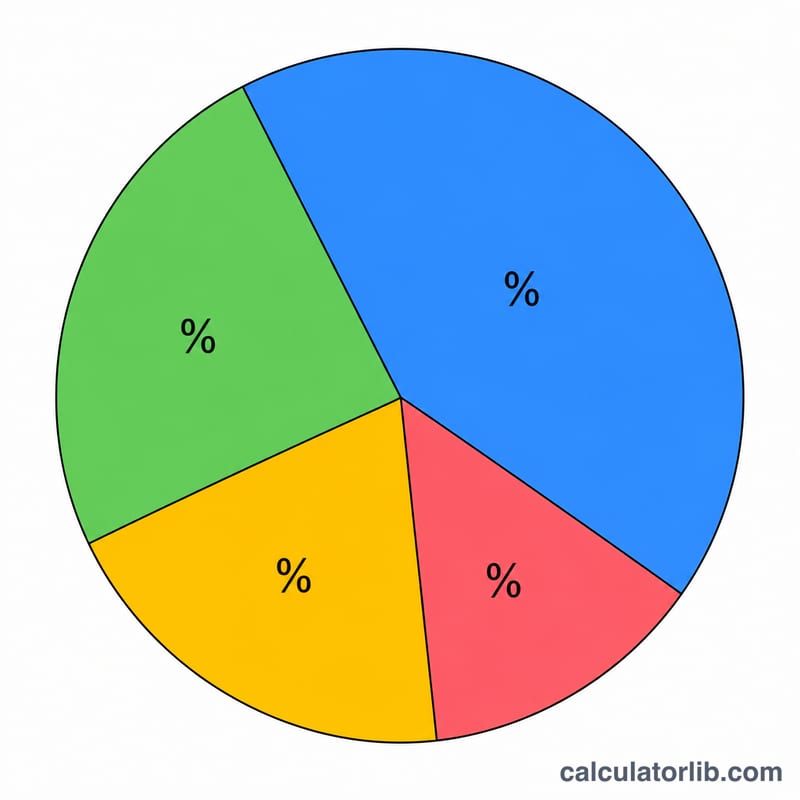
Suppose a meal contains 10 g fat, 20 g protein, 30 g carbohydrate and 0 g alcohol. Fat = \(9 \times 10 = 90\) kcal, protein = \(4 \times 20 = 80\) kcal, carbs = \(4 \times 30 = 120\) kcal. Total = \(90 + 80 + 120 = 290\) kcal. Fat supplies \(90/290 \approx 31\%\), protein \(\approx 27.6\%\) and carbs \(\approx 41.4\%\) of the energy.
FAQ
Why might my total differ slightly from the label? Labels sometimes use rounded gram values or country-specific factors (e.g. fibre at 2 kcal/g), so small differences are normal.
Are these calories or kilocalories? The "calories" shown on food labels are kilocalories (kcal). This tool reports kcal.
Should I include fibre or sugar alcohols? This calculator treats all entered carbohydrate at 4 kcal/g. If you want net carbs, subtract fibre before entering, or adjust manually for sugar alcohols.