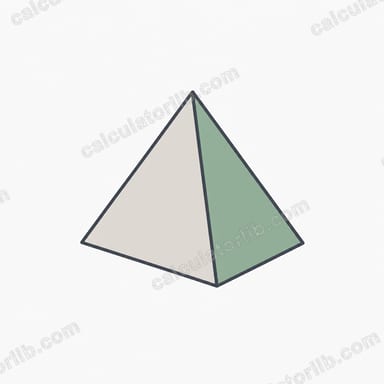

What is the Surface Area of a Pyramid Calculator?
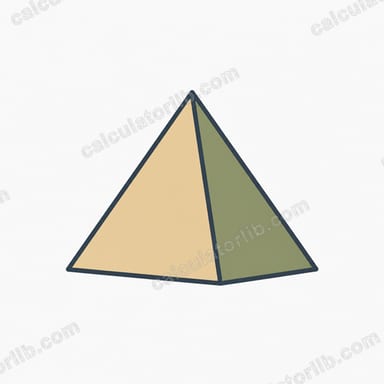
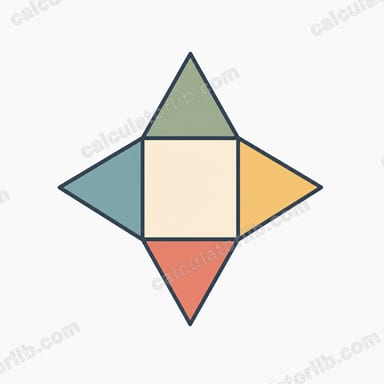
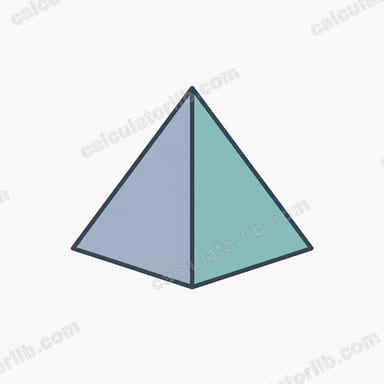
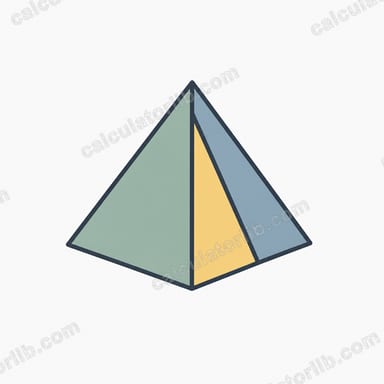
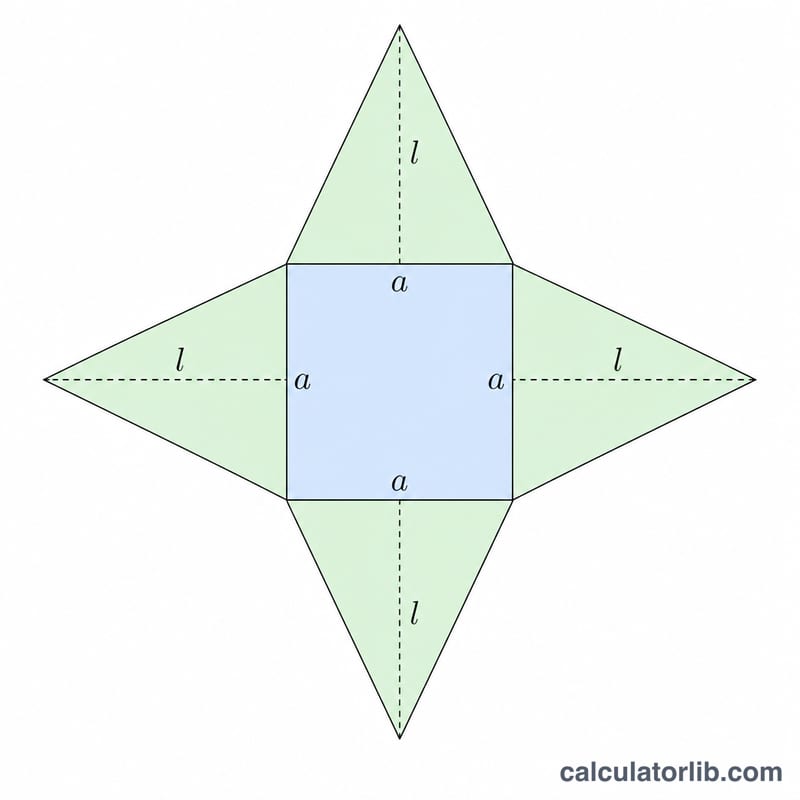
This calculator finds the total surface area of a right square pyramid — a pyramid with a square base and four identical triangular faces meeting at an apex. The total surface area is the sum of the square base and the four triangular sides. It is a universal geometry tool that works with any unit of length (cm, m, inches, feet), as long as you stay consistent; the result is in those units squared.
How to Use It
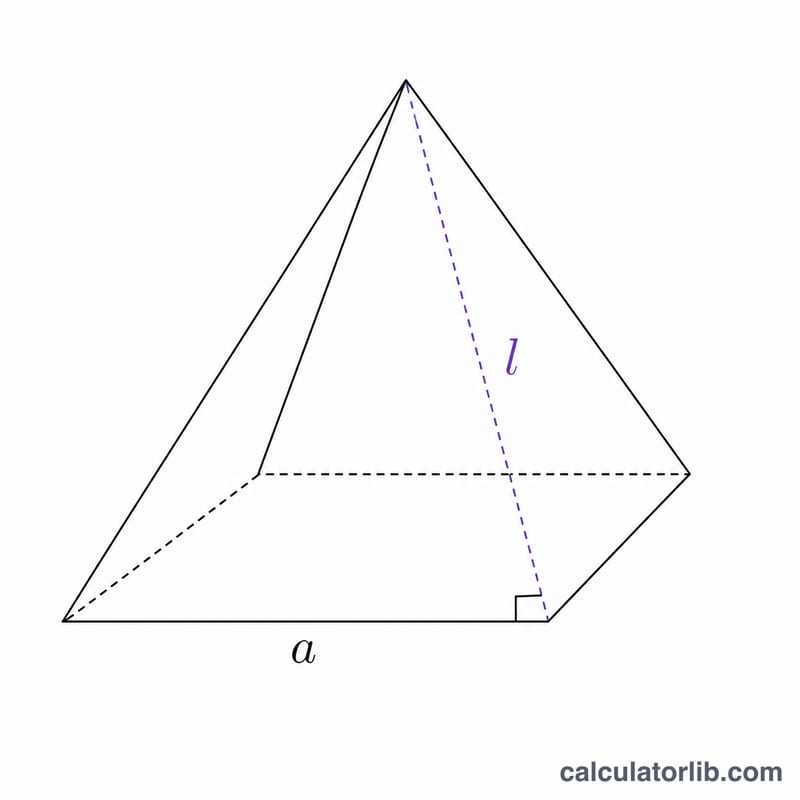
Enter two measurements: the base edge length (a) — the length of one side of the square base — and the slant height (l), which is the distance from the midpoint of a base edge straight up the face to the apex. Click calculate to get the total surface area, plus the base area, perimeter, and lateral (side) area broken out.
The Formula Explained
The general surface-area formula for a pyramid is A = base area + ½ · perimeter · slant height. For a square pyramid the base area is \(a^{2}\) and the perimeter is \(4a\), so the formula becomes:
$$A = a^{2} + \tfrac{1}{2} \cdot (4a) \cdot l$$
The term ½ · perimeter · slant height gives the combined area of the triangular faces, because each triangle has area ½ · base · height and there are four of them.
Worked Example
Suppose a square pyramid has a base edge of 6 units and a slant height of 5 units. The base area is \(6^{2} = 36\). The perimeter is \(4 \times 6 = 24\), so the lateral area is \(\tfrac{1}{2} \times 24 \times 5 = 60\). The total surface area is \(36 + 60 =\) 96 square units.
FAQ
Is slant height the same as the pyramid's height? No. The vertical (perpendicular) height goes straight from the apex to the center of the base. The slant height runs along a face from the apex to the midpoint of a base edge and is always longer.
Does this work for non-square pyramids? This version assumes a square base. For other regular bases, the same A = base area + ½·perimeter·slant height idea applies, but you'd substitute the correct base area and perimeter.
What units does the result use? Whatever length unit you input is squared — enter meters and you get square meters.