
What This Calculator Does
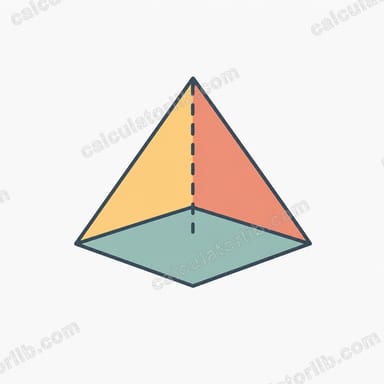
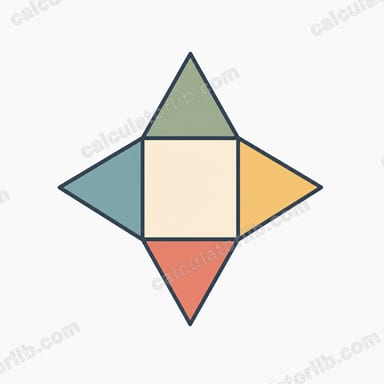
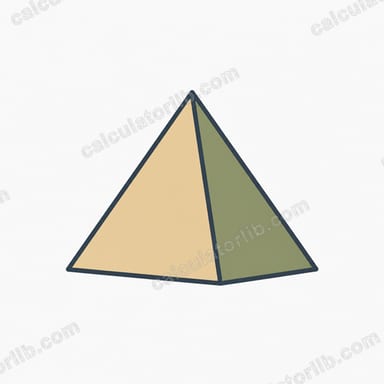
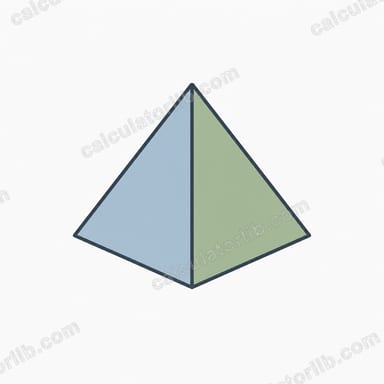
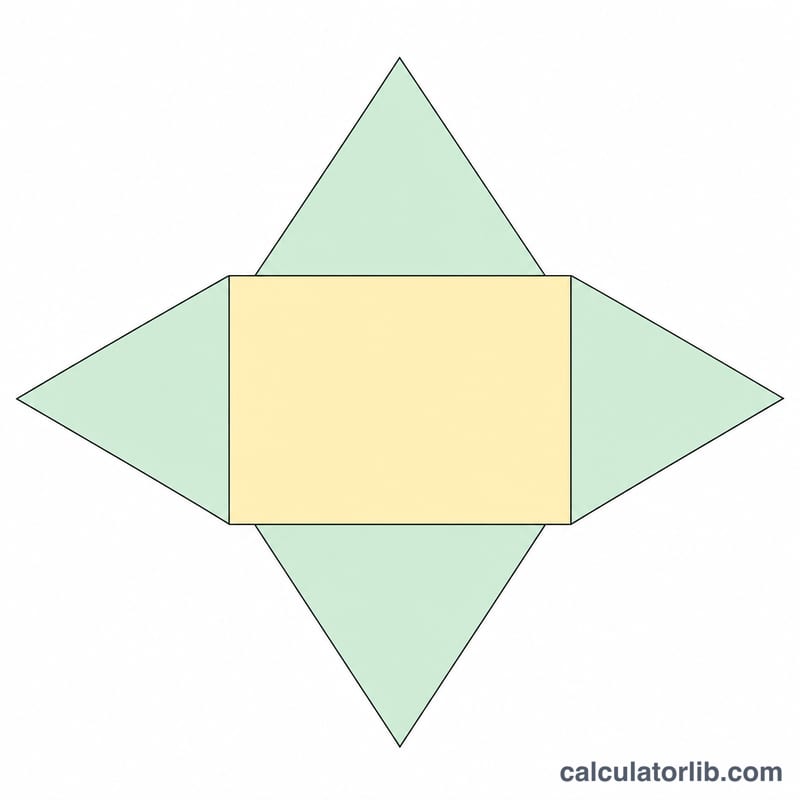
The Pyramid Surface Area Calculator finds the total outer surface area of a rectangular-based pyramid — a pyramid whose base is a rectangle (or square) and whose apex sits directly above the centre of that base. It adds the area of the rectangular base to the areas of the four triangular sides, giving you a single result in square units. Because it works from plain length, width and height measurements, you don't need to calculate slant heights yourself — the tool does that internally.
The Three Inputs
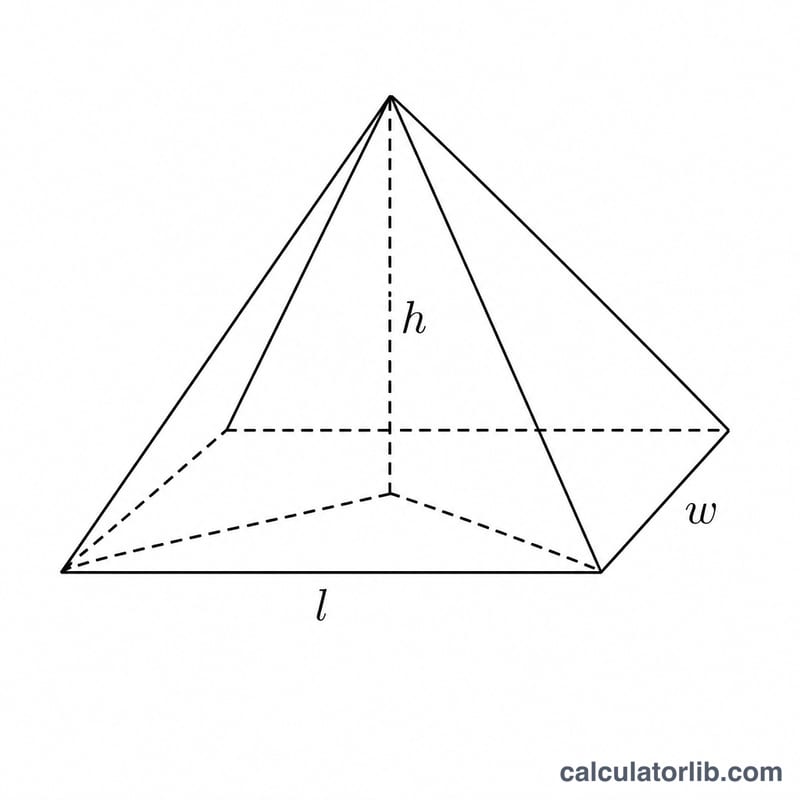
- Length (l): the longer dimension of the rectangular base.
- Width (w): the shorter dimension of the rectangular base.
- Height (h): the vertical (perpendicular) height from the centre of the base up to the apex — not the slant edge length.
Use the same unit for all three (cm, m, inches, etc.). The result comes out in that unit squared.
The Formula Explained
The calculator uses:
A = lw + l·√(h² + w²/4) + w·√(h² + l²/4)
Here lw is the base area. The two square-root terms are the slant heights found with the Pythagorean theorem: √(h² + w²/4) is the slant height of the front and back faces, and √(h² + l²/4) is the slant height of the left and right faces. Multiplying each slant height by its base edge and pairing the faces gives the combined area of all four triangles.
Worked Example
Suppose length = 6, width = 4 and height = 9.
- Base area = 6 × 4 = 24
- Front/back slant = √(9² + 4²/4) = √(81 + 4) = √85 ≈ 9.22; front+back area = 6 × 9.22 ≈ 55.32
- Left/right slant = √(9² + 6²/4) = √(81 + 9) = √90 ≈ 9.49; left+right area = 4 × 9.49 ≈ 37.95
- Total surface area ≈ 24 + 55.32 + 37.95 = 117.27 square units
The calculator also reports each single face area and slant height so you can check the breakdown.
Frequently Asked Questions
Does the height mean the slant height? No. Enter the vertical height from the base to the apex. The calculator converts it into the two slant heights automatically.
Can I use it for a square pyramid? Yes. Just set length and width to the same value — both pairs of triangular faces will then be identical.
Is the base included in the answer? Yes, the total includes the rectangular base. If you only want the lateral (side) area, subtract the base area (l × w) from the result.