
What This Calculator Does
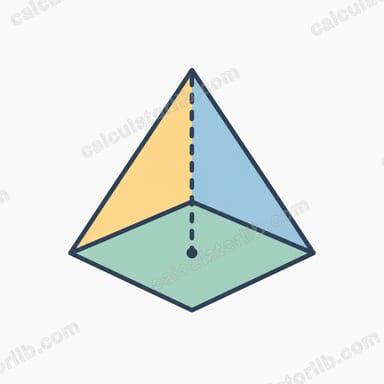
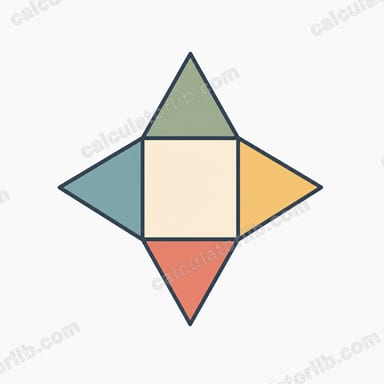
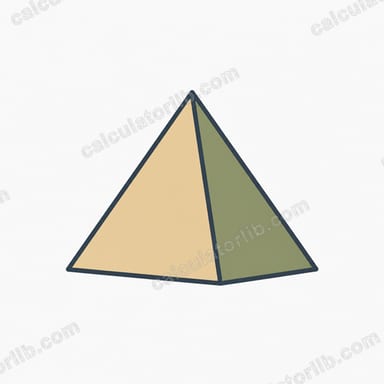
The Pyramid Lateral Surface Area Calculator finds the combined area of the four sloping triangular sides of a rectangular-based pyramid. The lateral surface area excludes the base — it is only the "outer skin" of the slanted faces. This is useful for tasks like estimating paint, sheet metal, fabric for a tent, or roofing material for a pyramid-shaped structure. You enter three measurements and the tool instantly returns the total slanted area along with the helpful intermediate values.
The Input Fields
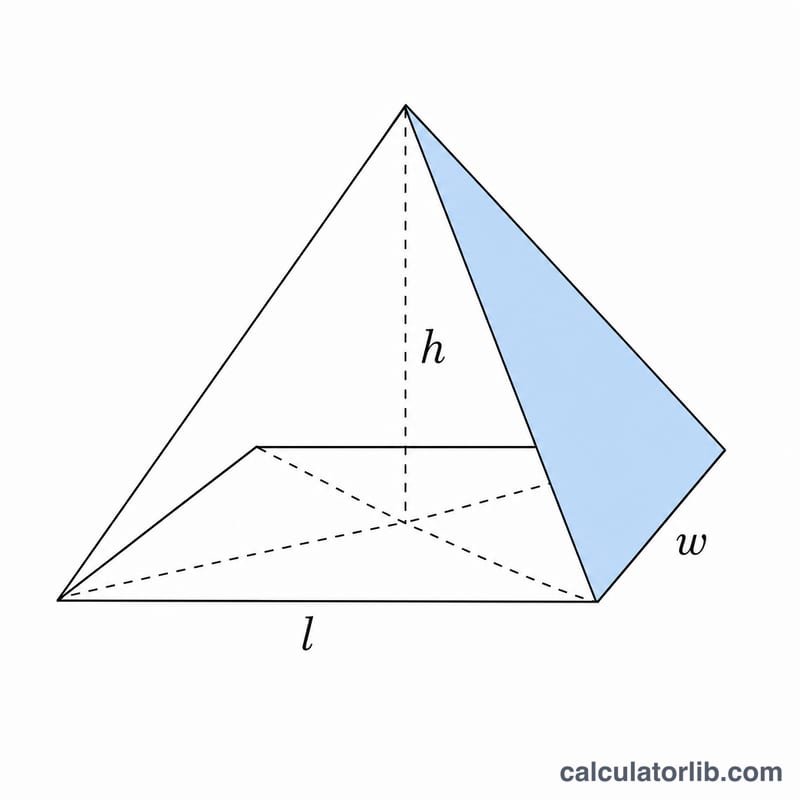
- Length (l) — one side of the rectangular base.
- Width (w) — the perpendicular side of the rectangular base.
- Height (h) — the vertical (perpendicular) height from the centre of the base up to the apex.
Use consistent units (all in metres, centimetres, inches, etc.). The result is in those units squared.
The Formula
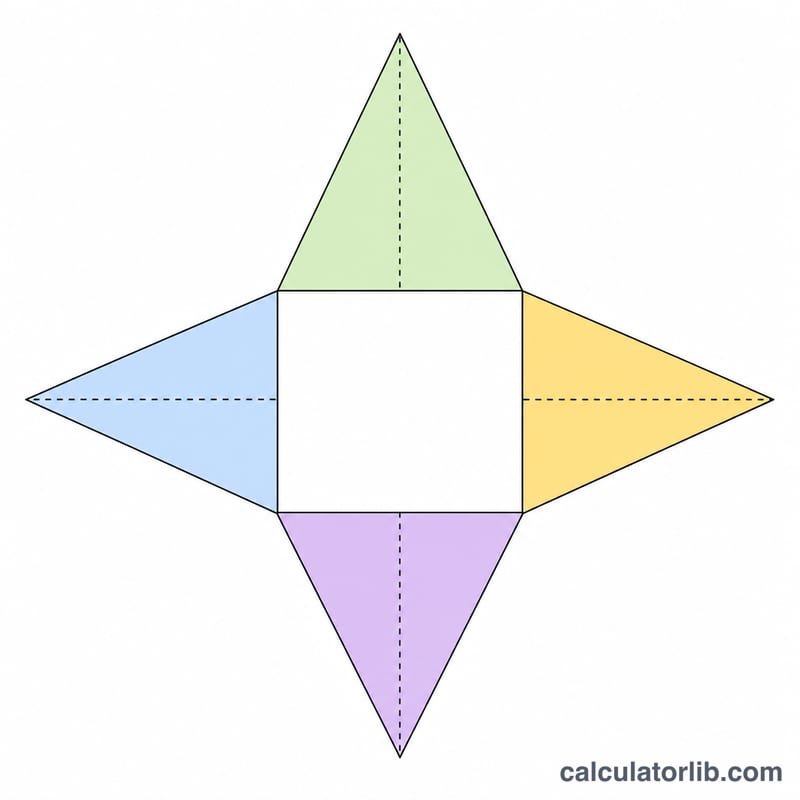
A rectangular pyramid has two pairs of matching triangular faces. Because the apex sits above the centre, each triangle's slant height is found with the Pythagorean theorem using the vertical height and half the opposite base edge:
AL = l·√(h² + w²/4) + w·√(h² + l²/4)
The first term covers the two faces resting on the length edges, and the second term covers the two faces on the width edges. The calculator also reports each slant height and the area of a single front/back and left/right face separately.
Worked Example
Suppose a pyramid has length = 6, width = 4, and height = 9.
- Slant height (over width): √(9² + (4/2)²) = √(81 + 4) = √85 ≈ 9.220
- Slant height (over length): √(9² + (6/2)²) = √(81 + 9) = √90 ≈ 9.487
- Length faces: 6 × 9.220 ≈ 55.32
- Width faces: 4 × 9.487 ≈ 37.95
- Total lateral surface area ≈ 93.27 square units
FAQ
Does this include the base? No. Lateral surface area is only the four triangular sides. To get the full surface area, add the base area (length × width).
Why divide the base edge by two? The slant height runs from the apex (above the centre) down to the middle of each base edge, so the horizontal leg of the right triangle is half of the opposite side.
Does it work for a square pyramid? Yes. Enter equal length and width, and both slant heights — and both pairs of faces — will be identical.