
What This Calculator Does
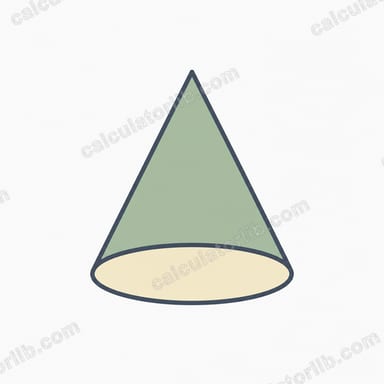
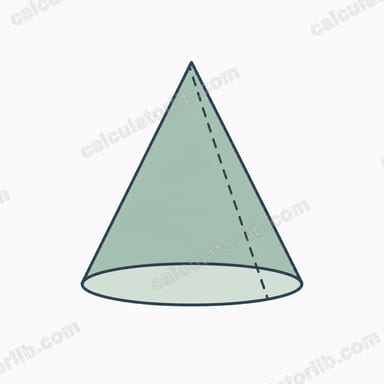
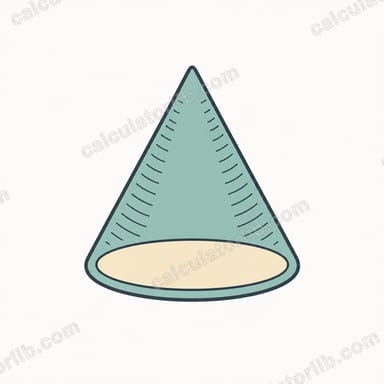
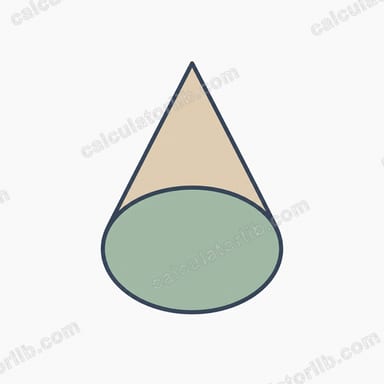
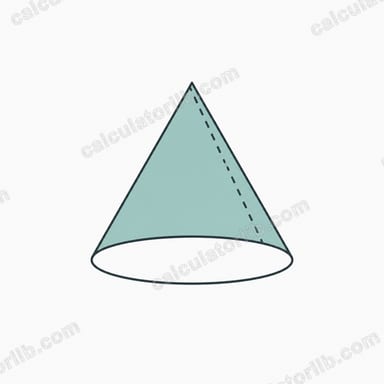
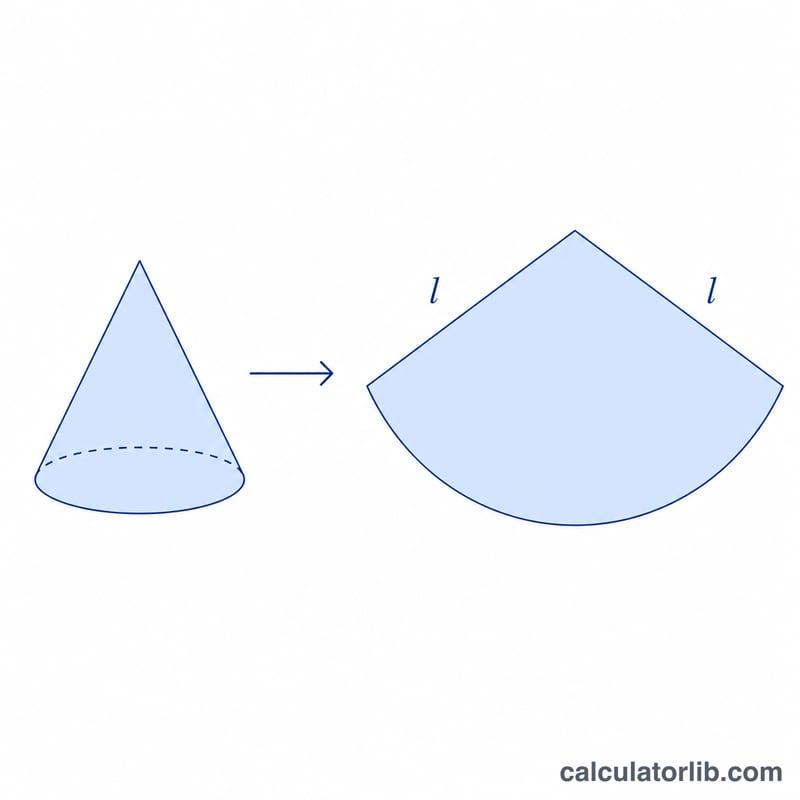
The Cone Lateral Surface Area Calculator works out the curved (slanted) surface of a right circular cone — the area you would get if you peeled off the cone's side and laid it flat. It does not include the flat circular base. You simply enter two values, the radius and the height, and the tool returns the lateral surface area along with several helpful supporting figures.
The Inputs You Provide
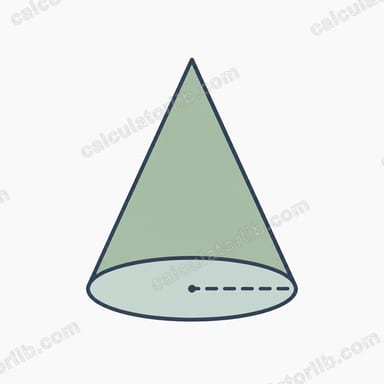
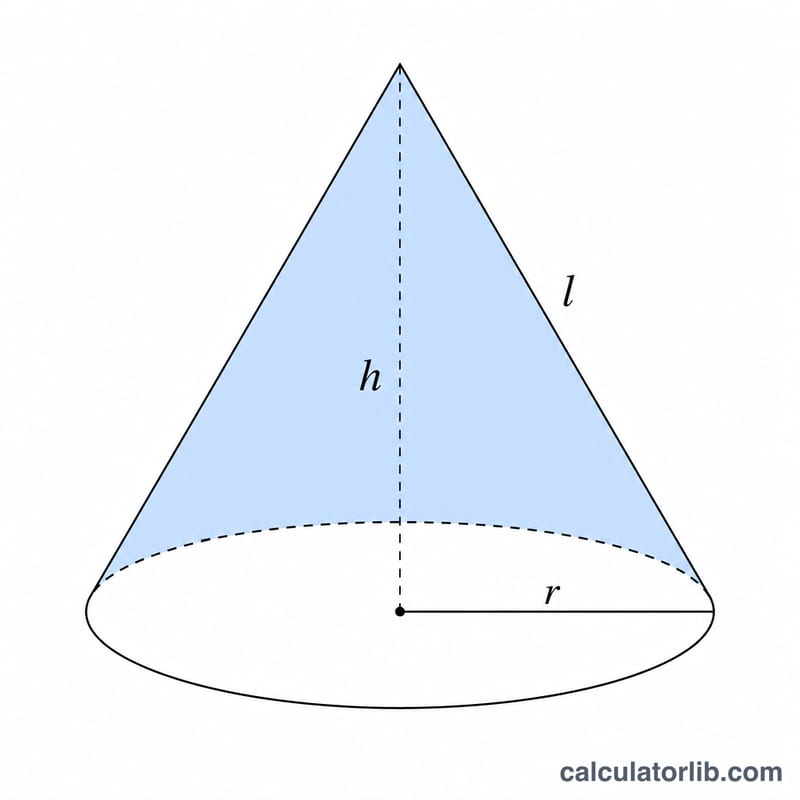
- Radius: the distance from the centre of the circular base to its edge.
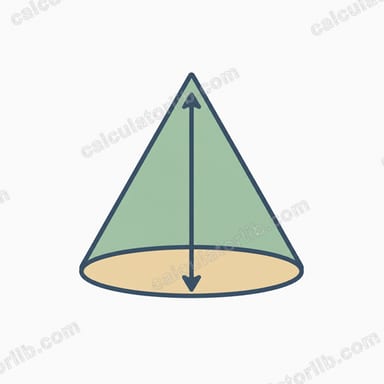
- Height: the perpendicular (vertical) distance from the base to the tip of the cone.
Both values should use the same unit (cm, m, inches, etc.). The result will be in those units squared.
The Formula Explained
The lateral surface area uses the formula:
A = π r √(r² + h²)
The term √(r² + h²) is the slant height (l) — the straight-line distance from the base edge up to the apex, found using the Pythagorean theorem. So the formula can also be written A = π r l. The calculator computes this slant height for you first, then multiplies by π and the radius.
Behind the scenes the tool also reports two related geometry values: the arc length (the perimeter of the base, 2πr) and the sector angle, which is the angle of the flat sector you would get when unrolling the curved surface.
Worked Example
Suppose a cone has a radius of 3 and a height of 4.
- Slant height = √(3² + 4²) = √(9 + 16) = √25 = 5
- Lateral area = π × 3 × 5 = 15π ≈ 47.12 square units
- Arc length (base perimeter) = 2 × π × 3 ≈ 18.85 units
So this cone has a curved surface area of about 47.12 square units.
Frequently Asked Questions
Does this include the base of the cone? No. This is the lateral (side) surface only. To get the total surface area, add the base circle area πr².
What is the difference between height and slant height? Height is the vertical distance to the tip; slant height runs along the sloped surface. The calculator derives slant height from your height and radius automatically.
What units should I use? Any unit works, as long as radius and height match. The area is returned in that unit squared.