
What This Calculator Does
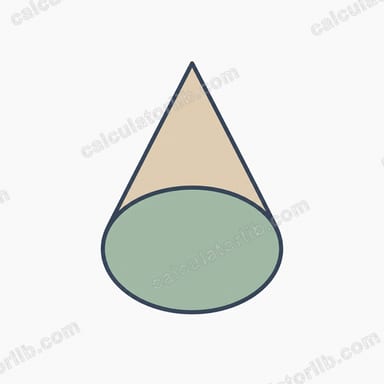
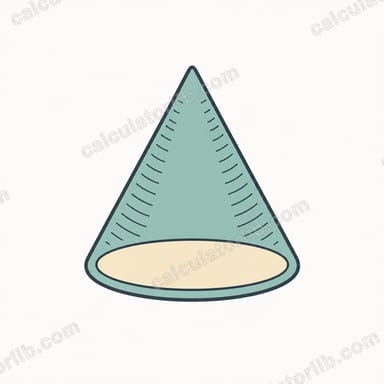
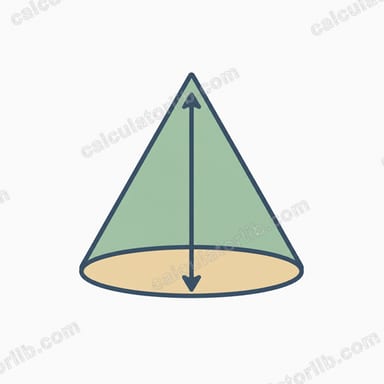
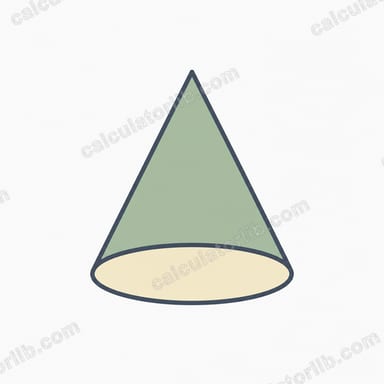
The Cone Surface Area Calculator works out the total surface area of a right circular cone using just two measurements: the radius of its circular base and its vertical height. Along the way it also computes the slant height, the curved (lateral) surface area, and the flat base area, so you can see exactly how the final total is built up. It's a handy tool for geometry homework, engineering sketches, packaging design, and any project involving cone-shaped objects like funnels, party hats, or roofs.
The Inputs You Enter
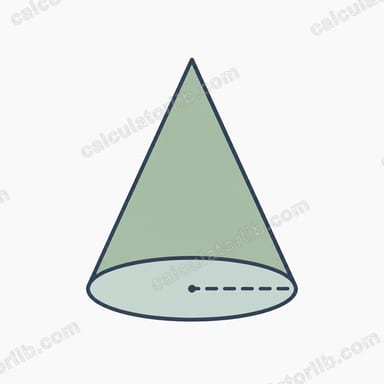
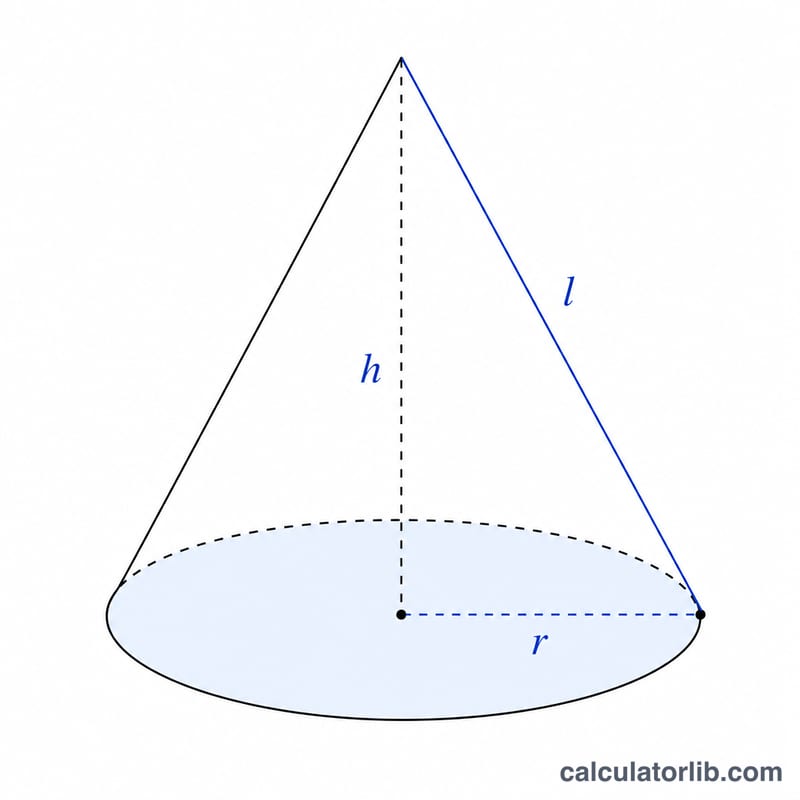
- Radius (r): the distance from the centre of the circular base to its edge.
- Height (h): the perpendicular distance from the base up to the cone's tip (apex).
Use the same unit for both values—for example, both in centimetres or both in inches. Your result will then be in those units squared.
The Formula Explained
The calculator uses the standard total surface area formula:
A = πr² + πr√(r² + h²)
It is computed in clear steps that mirror the geometry:
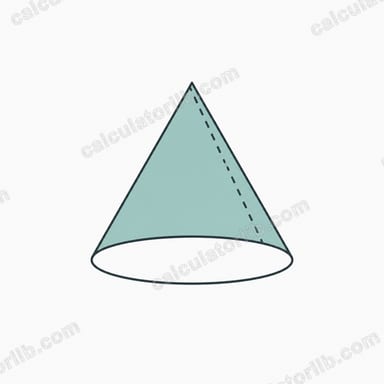
- Slant height: l = √(r² + h²) — found with the Pythagorean theorem.
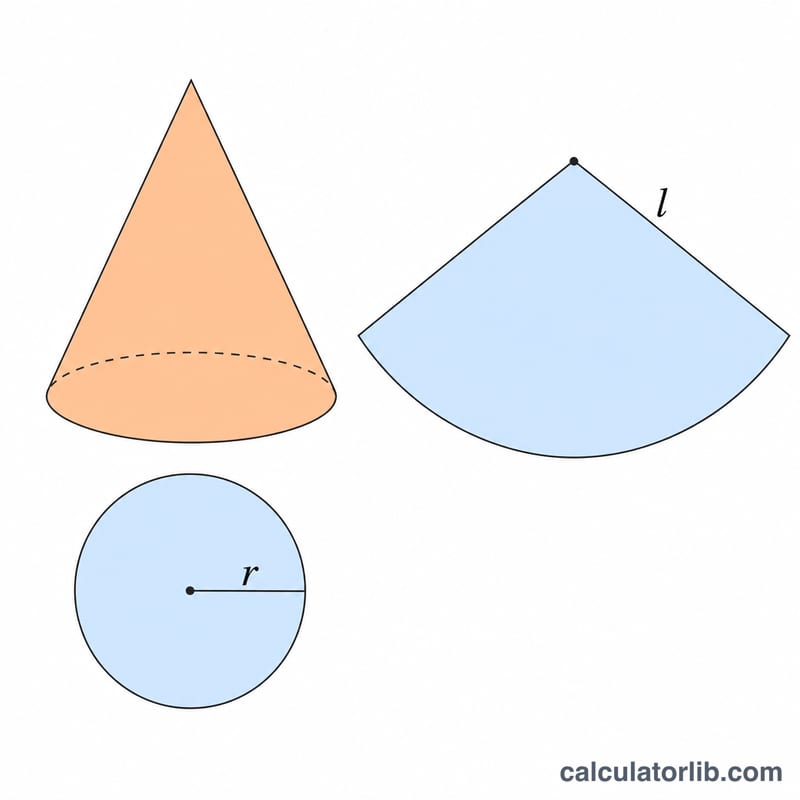
- Lateral (curved) area: πr·l — the cone's sloping side.
- Base area: πr² — the flat circular bottom.
- Total area: lateral area + base area.
Worked Example
Suppose a cone has a radius of 3 and a height of 4.
- Slant height = √(3² + 4²) = √25 = 5
- Lateral area = π × 3 × 5 ≈ 47.12
- Base area = π × 3² ≈ 28.27
- Total surface area = 47.12 + 28.27 ≈ 75.40 square units
The calculator returns all four of these figures instantly so you can check your working.
Frequently Asked Questions
What's the difference between total and lateral surface area? Lateral surface area covers only the curved sloping side (πr·l). Total surface area adds the flat circular base (πr²). If your cone is open at the bottom, you may only need the lateral area.
Do I need to know the slant height? No. This calculator derives the slant height automatically from the radius and height using √(r² + h²), so you only enter the two basic measurements.
What units does the answer use? Whatever unit you input is squared—enter centimetres and you get square centimetres (cm²). Always keep radius and height in the same unit for an accurate result.