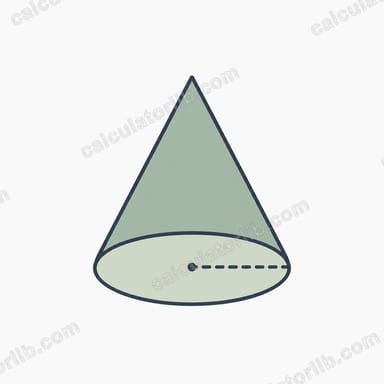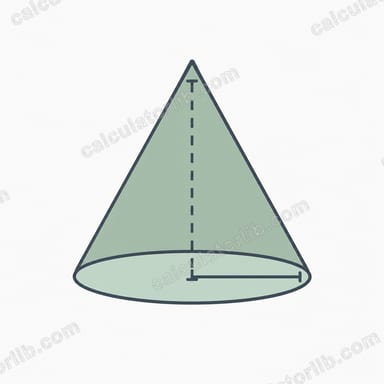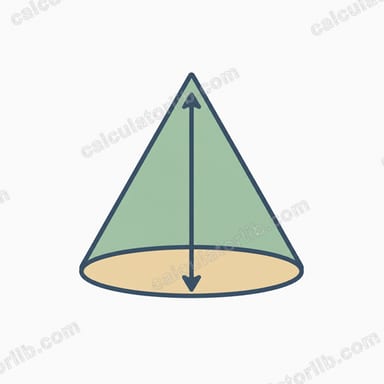

What the Cone Radius Calculator Does
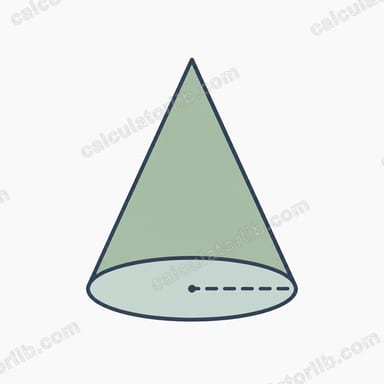
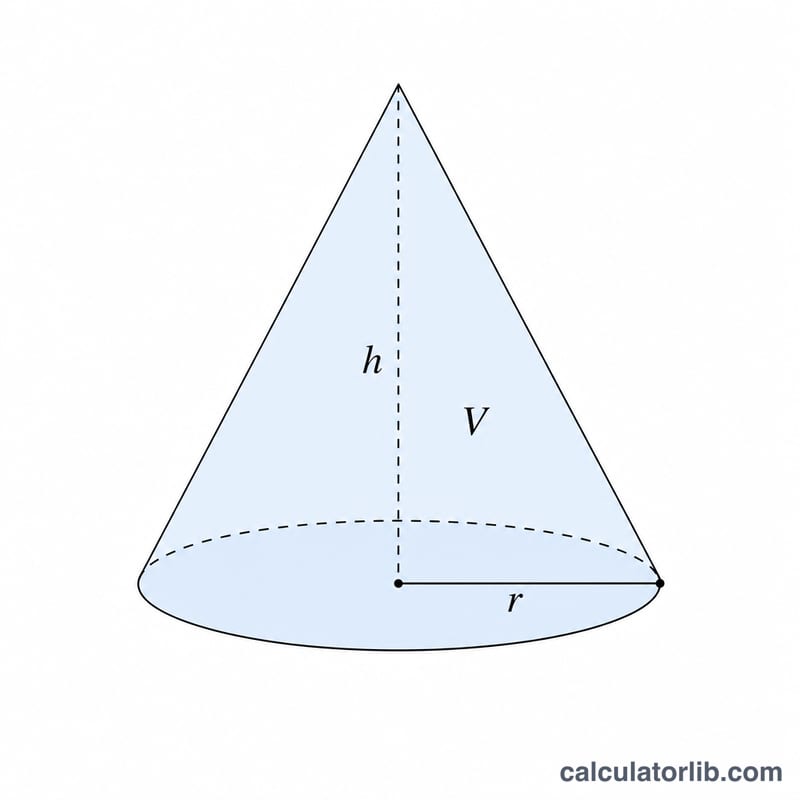
This calculator works backwards from the standard cone volume formula to find the base radius of a right circular cone. Instead of starting with a radius, you supply the cone's volume and its height, and the tool solves for the radius that produces that exact volume. It's handy whenever you know how much a cone holds (or its target capacity) and the height it must fit, but you still need to size the base.
Beyond the radius, the calculator also reports four related measurements derived from the same result: the base area, the base circumference, the slant height, and the lateral (side) surface area.
The Two Inputs
- Volume: the space the cone encloses, in cubic units (cm³, m³, in³, etc.).
- Height: the perpendicular distance from the base to the tip, in linear units that match your volume units.
Keep your units consistent — if volume is in cm³, enter height in cm so the resulting radius is in cm.
The Formula Explained
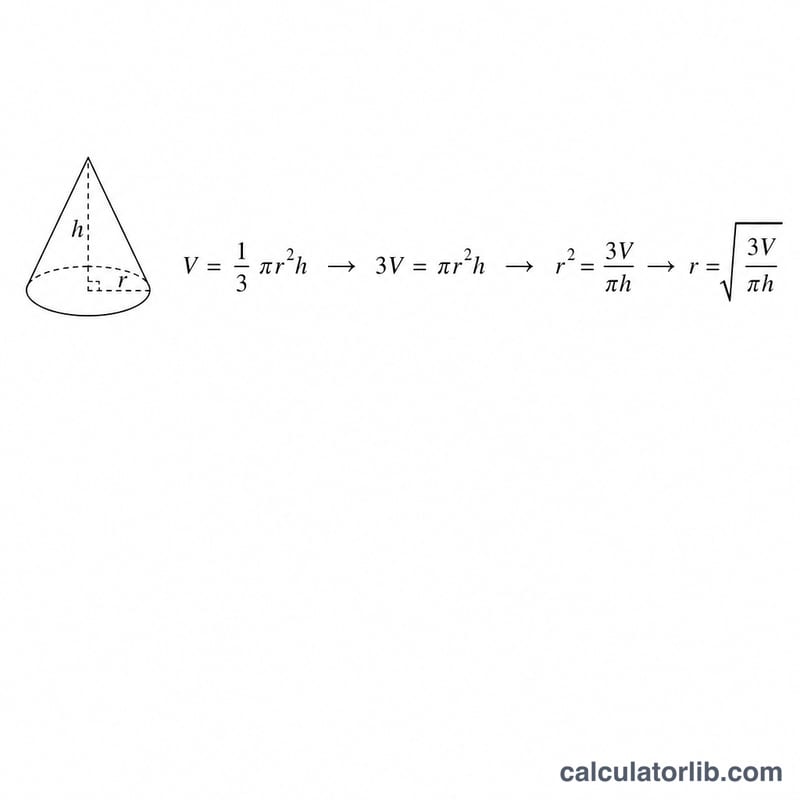
A cone's volume is V = (1/3)·π·r²·h. Rearranging to isolate the radius gives:
r = √(3V / (π·h))
Multiply the volume by 3, divide by π times the height, then take the square root. From that radius the calculator computes:
- Base area = π·r²
- Circumference = 2·π·r
- Slant height = √(r² + h²)
- Lateral area = π·r·slant height
Worked Example
Suppose a cone has a volume of 100 cm³ and a height of 12 cm.
- r = √(3 × 100 / (π × 12)) = √(300 / 37.699) = √7.958 ≈ 2.82 cm
- Base area = π × 2.82² ≈ 25.0 cm²
- Circumference = 2 × π × 2.82 ≈ 17.72 cm
- Slant height = √(2.82² + 12²) ≈ 12.33 cm
- Lateral area = π × 2.82 × 12.33 ≈ 109.2 cm²
Frequently Asked Questions
Can the radius be negative? No. A square root of a positive value is always positive, so the radius is real and positive as long as both volume and height are positive numbers.
What happens if I enter zero for height? Dividing by zero height is undefined, so always enter a positive height. Likewise, a zero volume returns a radius of zero.
Does this work for oblique cones? The formula assumes a right circular cone (tip directly above the centre of the base). The volume formula still holds for oblique cones, but the slant height and lateral area shown apply specifically to right cones.