
What the Cylinder Radius Calculator Does
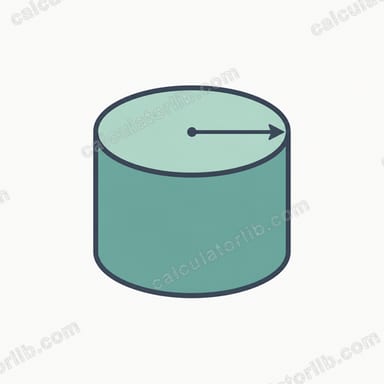
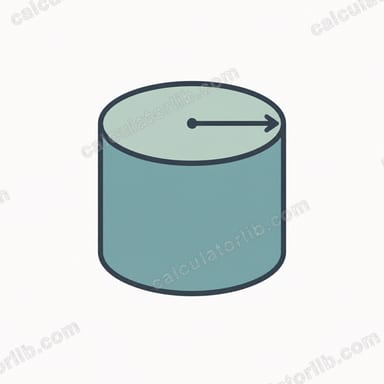
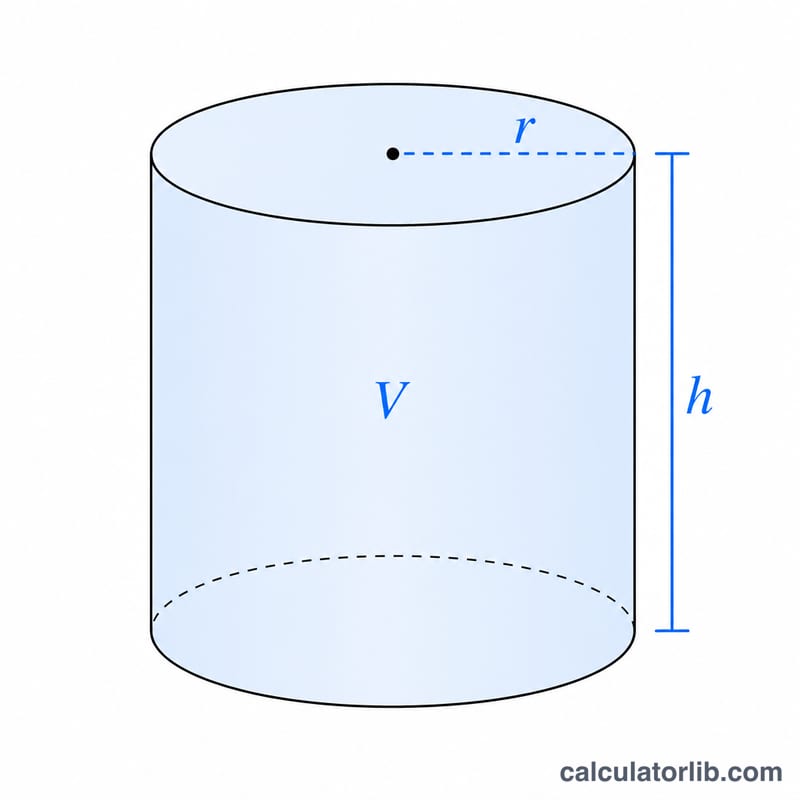
This tool works backwards from the standard cylinder volume formula. Instead of asking for the radius to find the volume, it takes a known volume and height and solves for the missing radius. That is handy when you know how much a tank, pipe, or container should hold and how tall it is, but you still need to work out how wide it has to be.
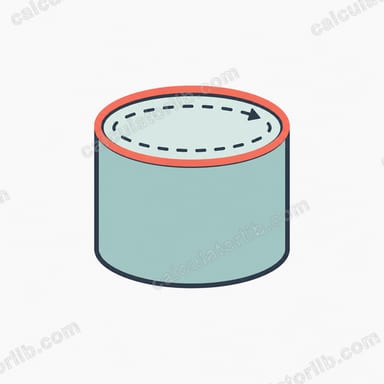
Alongside the radius, the calculator also returns three bonus values derived from that radius: the base area, the total surface area, and the circumference of the circular face.
The Inputs You Enter
- Cylinder Volume – the total capacity of the cylinder, in cubic units (cm³, m³, in³, etc.).
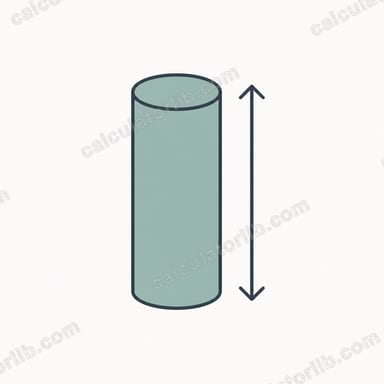
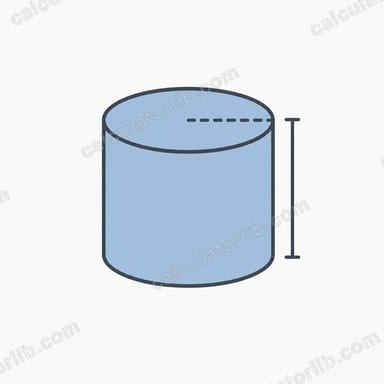
- Cylinder Height – the straight-line height of the cylinder, in the matching linear units.
Keep your units consistent. If volume is in cm³ and height is in cm, the radius comes out in cm. The calculator is unit-agnostic — it simply uses the numbers you supply.
The Formula Explained
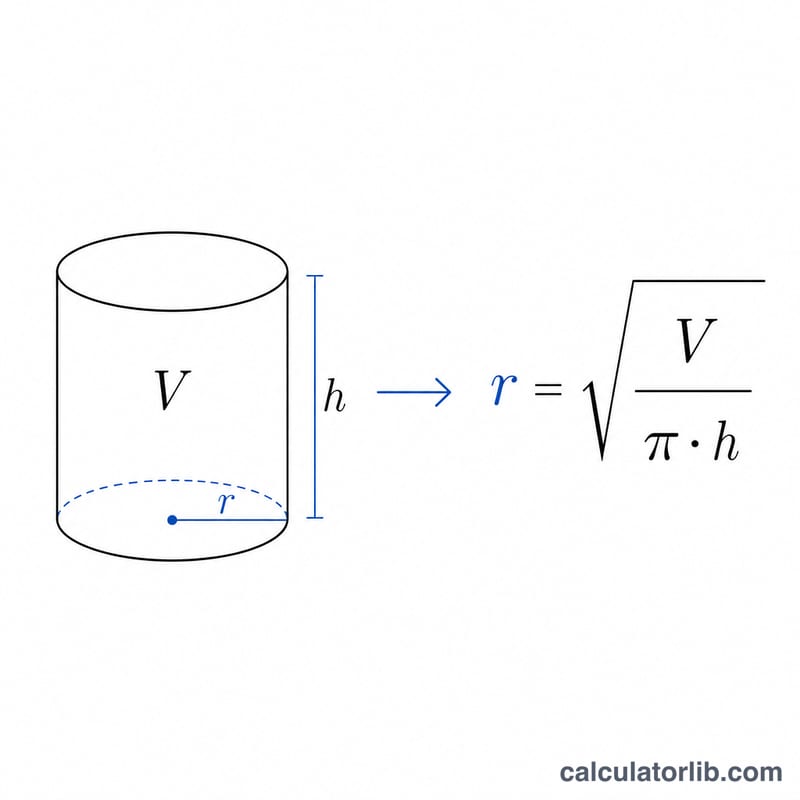
The radius is found by rearranging V = πr²h to isolate r:
r = √(V / (π × h))
From that radius the tool also computes:
- Base area = π × r²
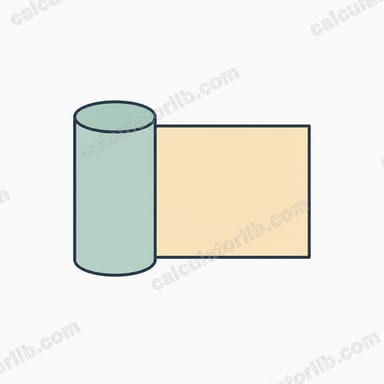
- Surface area = 2πr(r + h)
- Circumference = 2πr
Worked Example
Suppose a cylindrical tank must hold a volume of 500 cubic units and stands 10 units tall.
- r = √(500 / (π × 10)) = √(500 / 31.416) = √15.915 ≈ 3.99 units
- Base area = π × 3.99² ≈ 50.0 square units
- Circumference = 2π × 3.99 ≈ 25.07 units
- Surface area = 2π × 3.99 × (3.99 + 10) ≈ 350.6 square units
So a tank roughly 4 units in radius (8 units across) and 10 units tall holds the required 500 cubic units.
Frequently Asked Questions
How do I get the diameter from the result? Just double the radius. A radius of 3.99 units means a diameter of about 7.98 units.
What units does the radius come out in? The same linear unit as your height, provided your volume is in the cubed version of that unit (e.g. height in cm and volume in cm³ give a radius in cm).
Why include surface area and circumference? Once the radius is known they cost nothing extra to compute and are useful for material estimates — circumference for wrapping or banding, surface area for paint, coating, or sheet metal planning.