
What the Square Diagonal Calculator Does
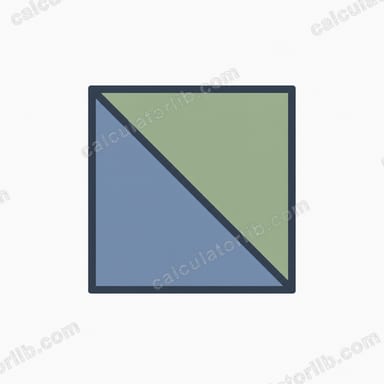
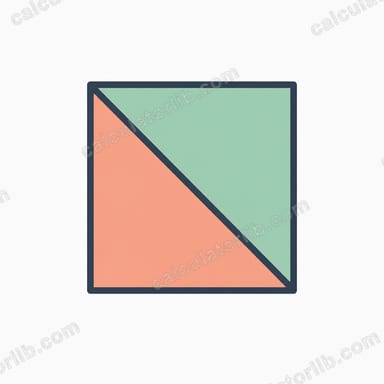
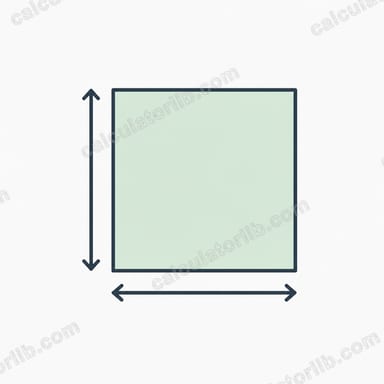
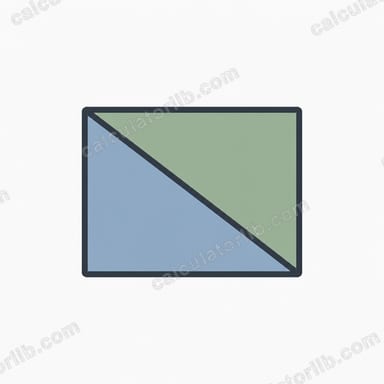
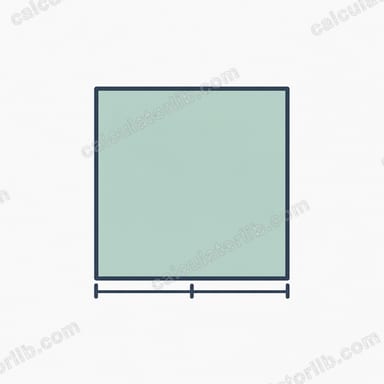
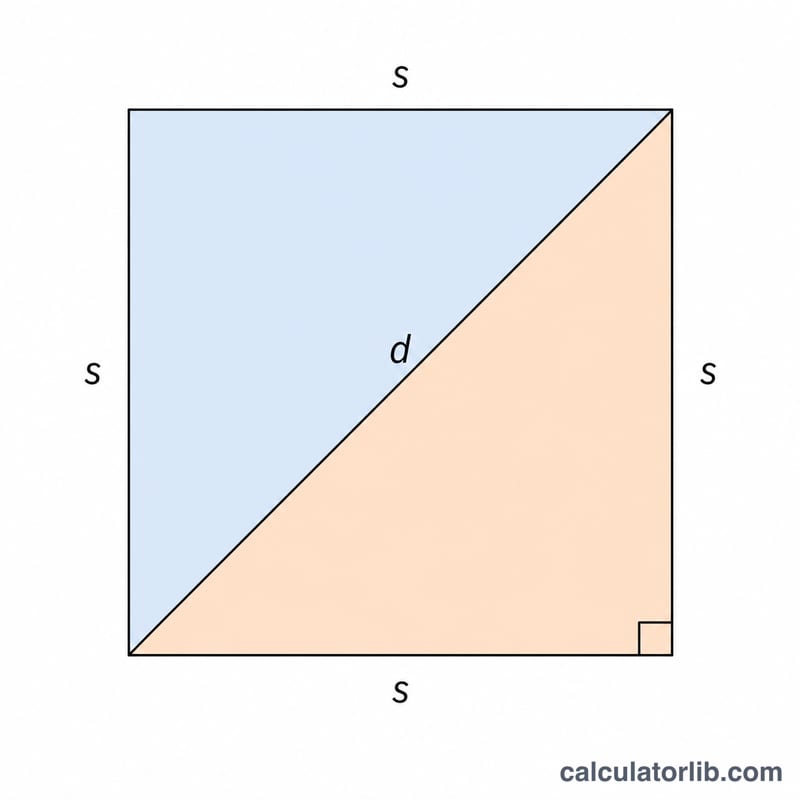
This calculator finds the diagonal of a square from a single measurement: the length of one side. A square's diagonal is the straight line connecting two opposite corners, cutting the square into two right triangles. Because all four sides of a square are equal, you only need one side length to work out the diagonal exactly.
Alongside the diagonal, the tool also returns the square's area and perimeter, giving you a complete set of measurements from one input.
How to Use It
- Square Side Length: Enter the length of one side of the square (any positive number, in whatever unit you are working in—cm, m, inches, etc.).
- The calculator instantly returns the diagonal, area, and perimeter.
The results share the same units as your input. If you enter the side in centimetres, the diagonal and perimeter come back in centimetres and the area in square centimetres.
The Formula Explained
The diagonal of a square is calculated with:
d = s√2
This comes straight from the Pythagorean theorem. The diagonal is the hypotenuse of a right triangle whose two legs are both sides of the square, so d² = s² + s² = 2s². Taking the square root gives d = s√2, where √2 ≈ 1.41421.
The tool also computes:
- Area = side × side (s²)
- Perimeter = 4 × side
Worked Example
Suppose you have a square with a side length of 10.
- Diagonal: 10 × √2 = 10 × 1.41421 = 14.142
- Area: 10 × 10 = 100
- Perimeter: 4 × 10 = 40
So a square with sides of 10 units has a diagonal of about 14.14 units, an area of 100 square units, and a perimeter of 40 units.
Frequently Asked Questions
Why is the diagonal always longer than the side? Because √2 is about 1.414, the diagonal is roughly 41% longer than any single side. This ratio holds true for every square, regardless of size.
Can I find the side length if I only know the diagonal? Yes—just rearrange the formula: s = d ÷ √2 (or equivalently s = d × 0.7071). This calculator works from the side, so divide your known diagonal by √2 to get the side first.
What units should I use? Any consistent unit works. The diagonal and perimeter will match your input unit, and the area will be in that unit squared.