
What This Calculator Does
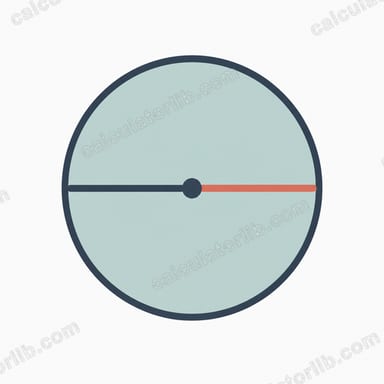
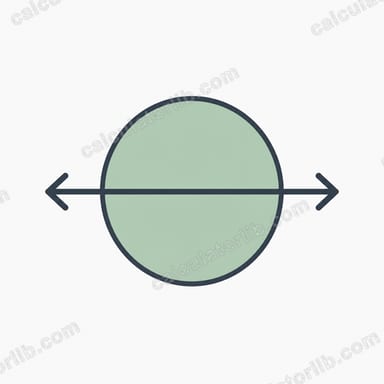
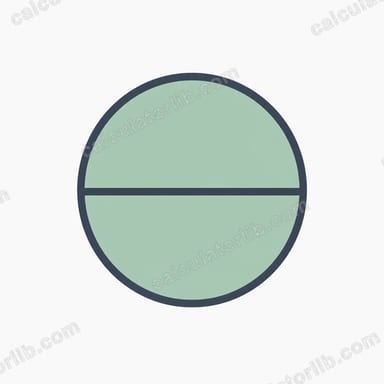
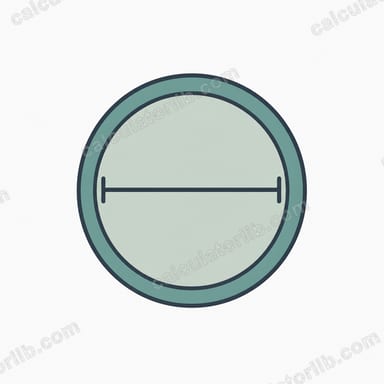
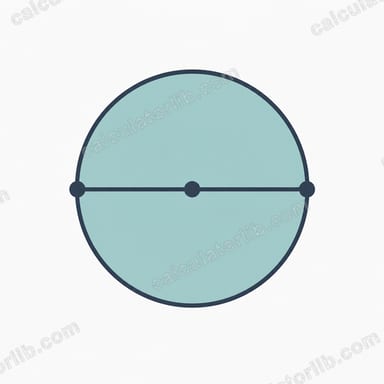
This tool converts the radius of a circle into its diameter using the simple geometric relationship \(d = 2r\). The diameter is the straight-line distance across a circle passing through the center, and it is always exactly twice the radius — the distance from the center to the edge. As a bonus, the calculator also reports the circle's circumference and area, which are commonly needed in the same calculation.
How to Use It
Enter the radius of your circle in any unit (cm, inches, meters — the result will be in the same unit). Press calculate, and the diameter appears instantly along with the circumference and area. Because the formula is unit-agnostic, you can use it for anything from a coin to a planetary orbit.
The Formula Explained
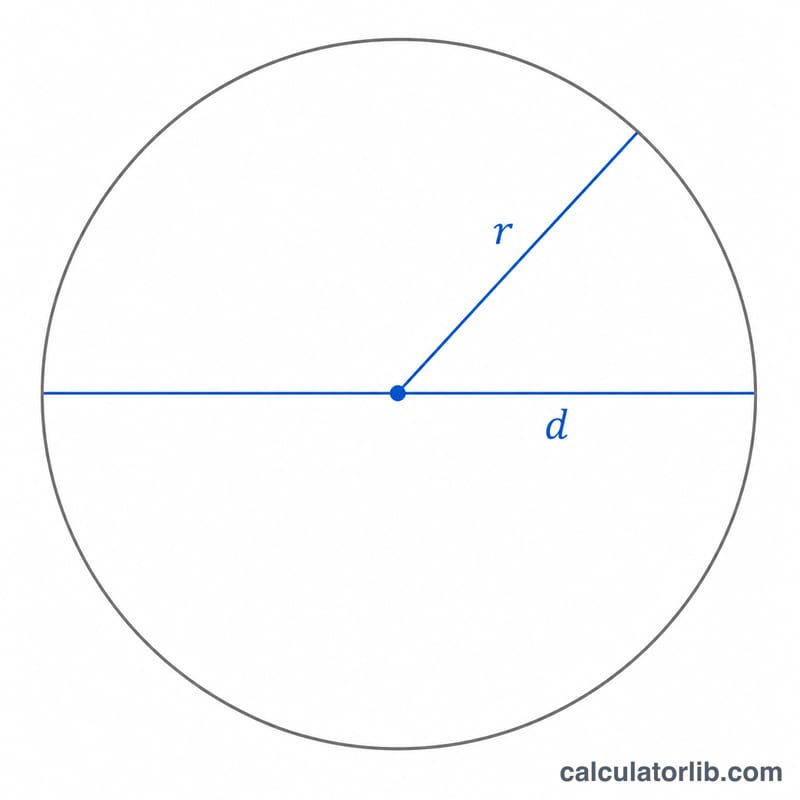
The radius (\(r\)) is the distance from a circle's center to any point on its edge. The diameter (\(d\)) spans the full width, so it covers the radius twice: once on each side of the center. That gives
$$d = 2r$$From the radius we also derive the circumference \(C = 2\pi r\) (the perimeter) and the area \(A = \pi r^2\), where \(\pi \approx 3.14159\).
Worked Example
Suppose a circle has a radius of 5 units. Then
$$d = 2 \times 5 = 10 \text{ units}$$Its circumference is \(C = 2 \times \pi \times 5 \approx 31.42\) units, and its area is \(A = \pi \times 5^2 \approx 78.54\) square units.
FAQ
Is the diameter always double the radius? Yes — for every circle, \(d = 2r\) exactly, with no exceptions.
What if I only know the diameter? Reverse the formula: \(r = d \div 2\).
What units does the result use? The same unit you enter the radius in. The relationship is purely proportional and unit-independent.