
What Is Markup vs. Margin?
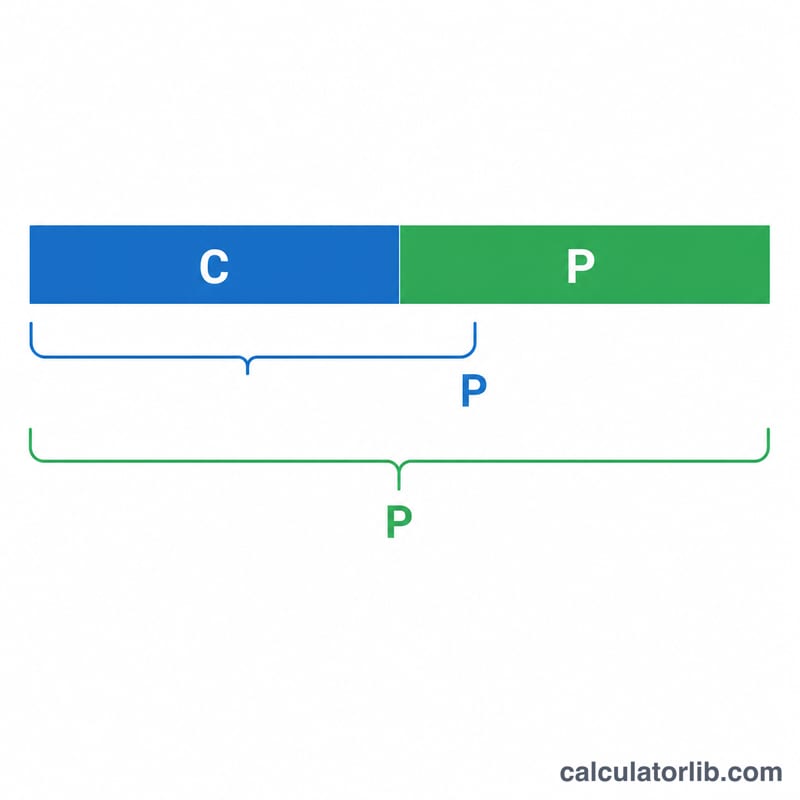
Markup and margin both describe profit, but they use different denominators and are easy to confuse. Markup is profit measured as a percentage of cost, while margin is profit measured as a percentage of the selling price. Because the selling price is always larger than the cost, the margin percentage is always lower than the markup percentage. This calculator converts a markup into its equivalent margin and shows the resulting selling price and profit per unit.
How to Use This Calculator
Enter the unit cost of your product and the markup percentage you apply. The calculator instantly returns the equivalent profit margin, the final selling price, and the profit you earn on each unit. Use it to compare pricing strategies or to translate a supplier-style markup into the margin figures your accountant reports.
The Formula Explained
If markup is expressed as a fraction (e.g. 50% = 0.50), then:
$$\text{Margin} = \frac{\text{Markup}}{1 + \text{Markup}}$$ and $$\text{Price} = \text{Cost} \times (1 + \text{Markup})$$
The "\(1 + \text{Markup}\)" term represents the selling price as a multiple of cost. Dividing the markup by that multiple re-bases the profit onto the selling price, giving the margin.
Worked Example
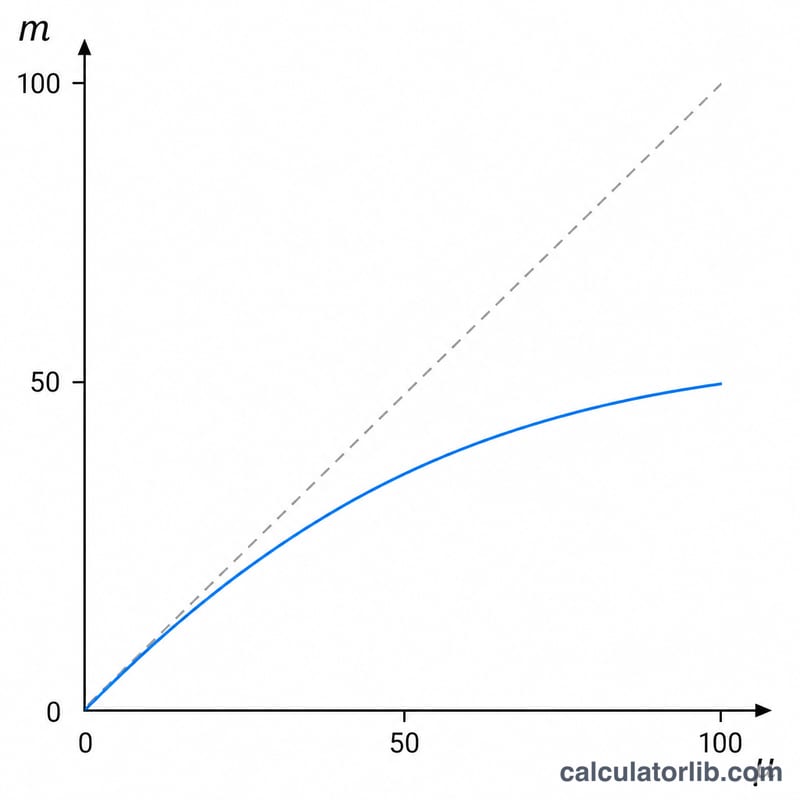
Suppose a product costs $100 and you apply a 50% markup. The selling price is $$\$100 \times 1.50 = \$150$$ so profit is $50. The margin is $$0.50 \div 1.50 = 0.3333 = 33.33\%$$ Notice the 50% markup is only a 33.33% margin.
FAQ
Why is margin lower than markup? Margin divides profit by the larger selling price, while markup divides the same profit by the smaller cost, producing a smaller percentage.
Can margin equal markup? Only when both are zero. For any positive profit, margin is always below markup.
Does this work for any currency? Yes — the percentages are currency-independent, and the price/profit simply use whatever currency you enter as cost.