
What the Micronutrient Calculator does
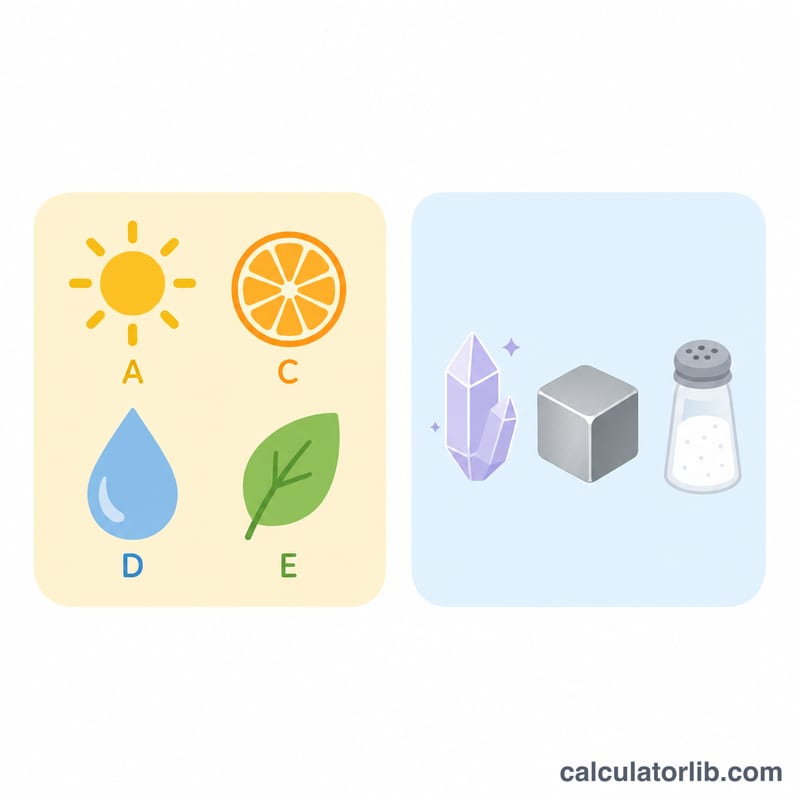
This calculator shows guideline daily intake values for essential vitamins and minerals based on your life stage. It uses the U.S. Dietary Reference Intakes (DRIs) published by the National Academies (Institute of Medicine), so the figures reflect American nutrition guidance — though they are broadly comparable to international recommendations. Enter your age and gender, and the tool maps you to the correct DRI age band and returns daily targets for nutrients such as calcium, iron, zinc, iodine, magnesium, copper, selenium, phosphorus, potassium, sodium and more.
The inputs you provide
- Age (Years) – your age in whole years.
- Age (Months) – additional months, important for infants and toddlers where needs change quickly.
- Gender – Male or Female, which adjusts some values (for example chromium, manganese and potassium) from age 9 upward.
How the calculation works
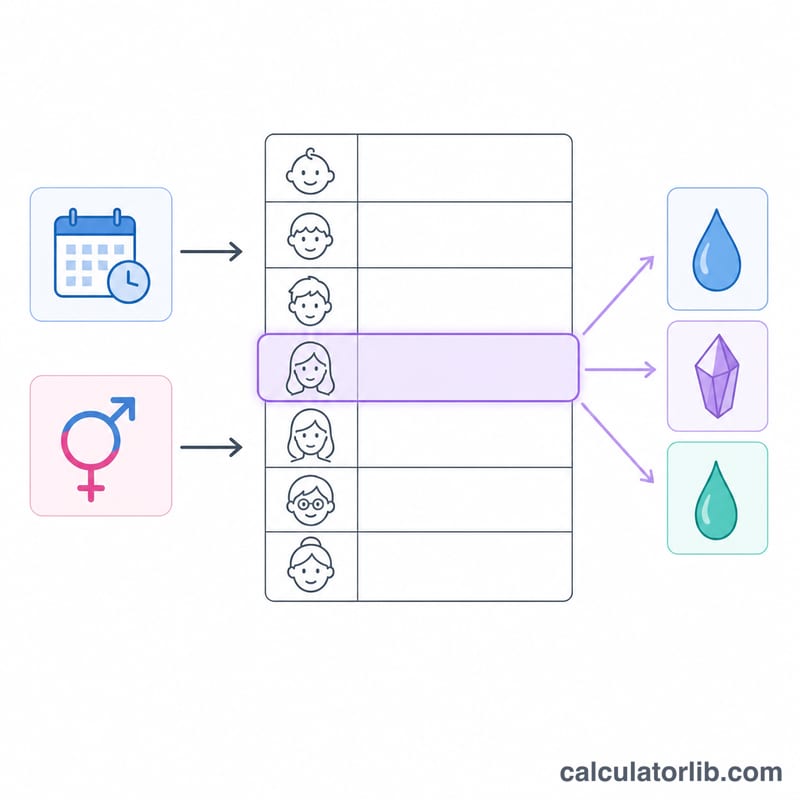
There is no arithmetic formula to memorise. Instead, the tool converts your years and months into a single total-months figure (years × 12 + months), then matches that figure to a fixed DRI age band:
- 0–6 months, 6–12 months, 1–3 years, 4–8 years, 9–13 years and so on.
- Each band stores a lookup table of recommended values. Within the band, gender determines which specific number is returned for nutrients that differ between males and females.
The result is a complete daily-needs table for that exact life stage, expressed in milligrams or micrograms.
Worked example
Suppose you enter Age 10 years, 0 months and select Male. The tool computes 10 × 12 = 120 total months, which falls in the 9–13 years band. It returns values including calcium 1300 mg, iron 8 mg, zinc 8 mg, iodine 120 µg, magnesium 240 mg and phosphorus 1250 mg. Because gender is male, chromium shows 25 µg and potassium 2500 mg; a female of the same age would see chromium 21 µg and potassium 2300 mg.
Frequently asked questions
Why do I need to enter months as well as years? Infant requirements change sharply between 0–6 and 6–12 months, so months ensure babies land in the right band.
Does gender always change the numbers? No. Below age 9, male and female values are identical. Differences appear only from 9 years upward for selected nutrients.
Are these personalised medical recommendations? No. They are general U.S. population guideline values and do not account for pregnancy, illness or individual factors. Consult a healthcare professional for personal advice.