

What this calculator does
This Paycheck Calculator estimates your net take-home pay per pay period — the money that actually lands in your account after taxes and deductions. It is oriented toward the United States, where FICA (Social Security + Medicare) is typically 7.65% of wages, but the tax-rate fields are editable so you can model any flat rates you like. Because it uses simple percentage rates rather than bracketed tax tables, treat the output as a planning estimate, not an official figure.
How to use it
Enter your gross pay for one pay period (one paycheck before any deductions), pick how often you are paid, then enter your federal, state, and FICA rates as percentages. Add any other per-period deductions such as health insurance or 401(k) contributions. The calculator shows your net pay, a breakdown of each tax, and the annualized gross and net totals.
The formula explained
Each tax is computed as a percentage of gross pay: \(\text{Federal} = \text{Gross} \times \text{FedRate}\), \(\text{State} = \text{Gross} \times \text{StateRate}\), \(\text{FICA} = \text{Gross} \times \text{FICARate}\). Net pay is then Gross minus the sum of all taxes and other deductions.
$$\text{Net} = \text{Gross} - (\text{Fed} + \text{State} + \text{FICA} + \text{Deductions})$$Annual figures simply multiply the per-period amount by the number of pay periods per year (52 weekly, 26 bi-weekly, 24 semi-monthly, 12 monthly).
$$\text{Annual} = \text{PerPeriod} \times \text{PayPeriods}$$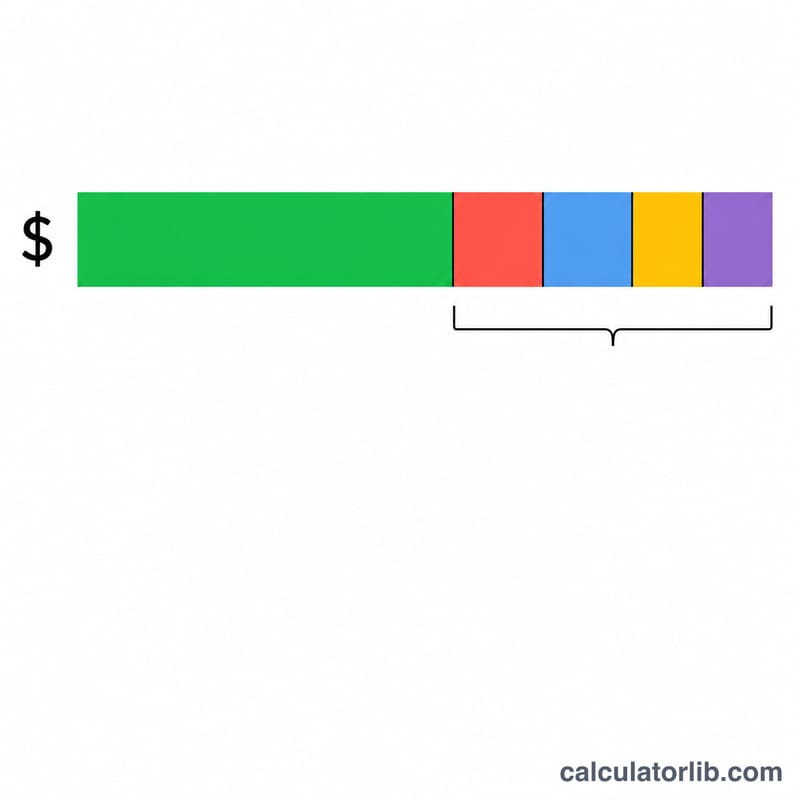
Worked example
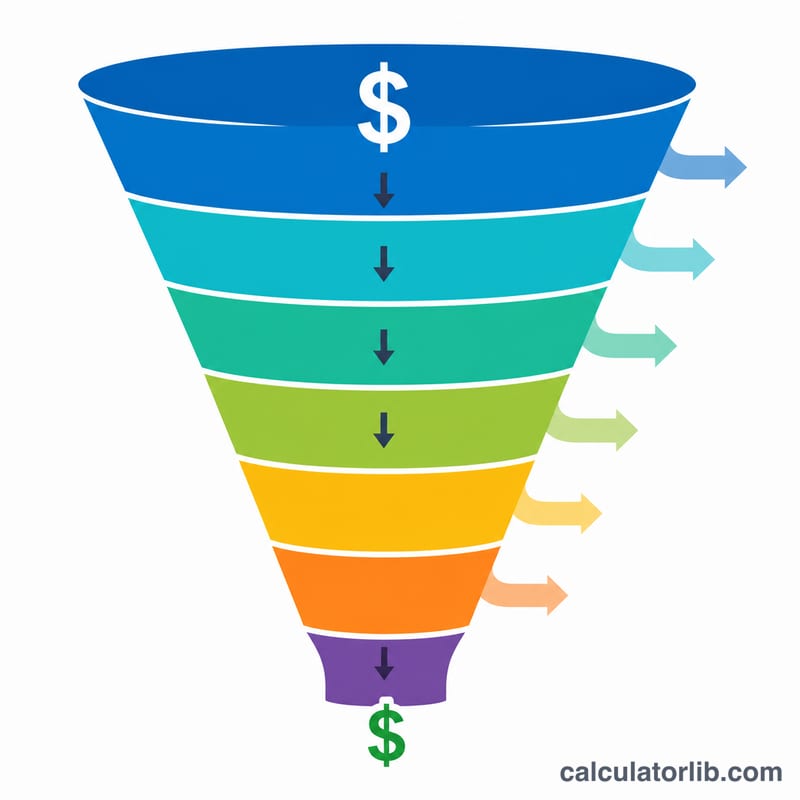
Suppose you earn $2,000 bi-weekly (26 periods), with 12% federal, 5% state, 7.65% FICA, and no extra deductions. Federal = $240, State = $100, FICA = $153, total tax $493. Net pay =
$$\$2{,}000 - \$493 = \$1{,}507$$per paycheck. Annual gross = $52,000 and annual net = $39,182.
FAQ
Is this accurate for my actual paycheck? It is an estimate. Real US payroll uses tax brackets, allowances, and caps (e.g. Social Security wage base), so your actual withholding may differ.
What rate should I enter for FICA? The standard combined employee rate is 7.65% (6.2% Social Security + 1.45% Medicare).
Should deductions go in pre- or post-tax? This simple model subtracts deductions after computing taxes on the full gross. For pre-tax items, lower your effective tax rates accordingly.