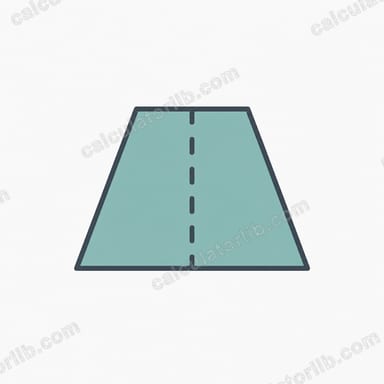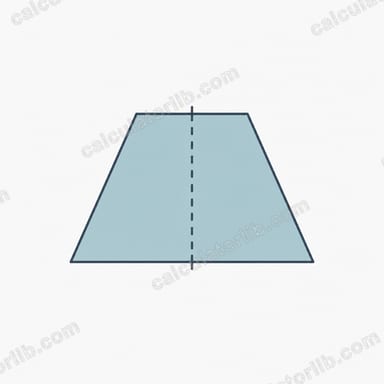

What Is a Right Trapezoid?
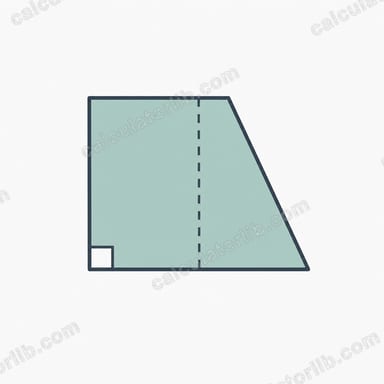
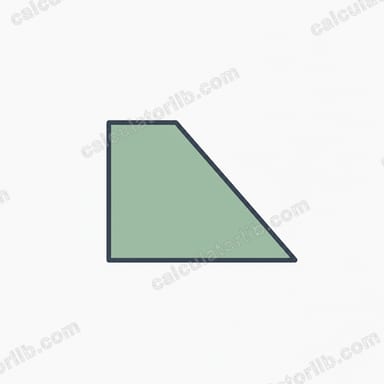
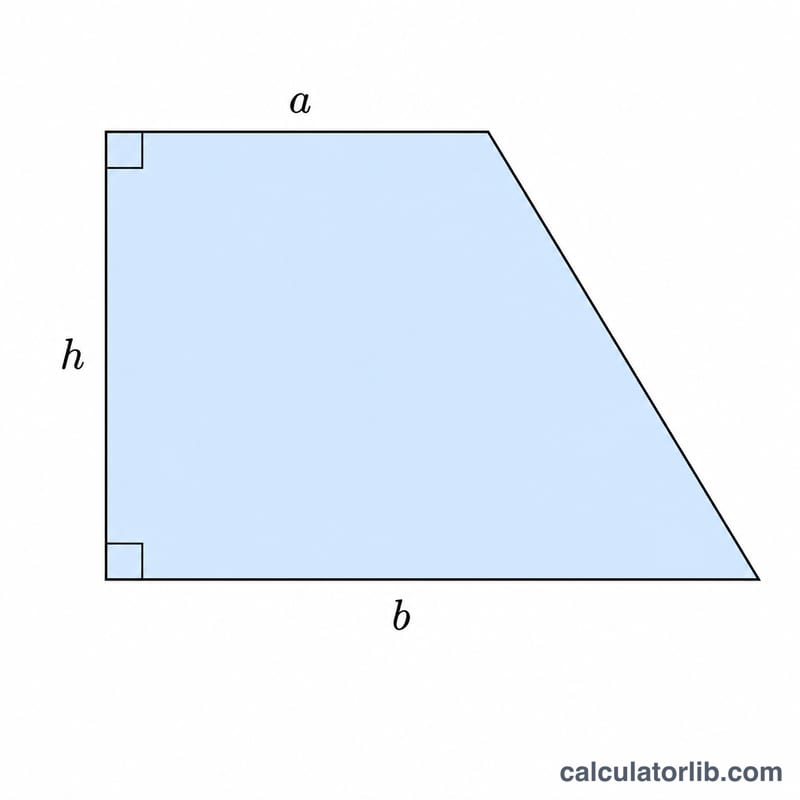
A right trapezoid (or right trapezium) is a four-sided figure with one pair of parallel sides and two adjacent right angles. The perpendicular leg that joins the two parallel sides is exactly equal to the height, which makes its area especially easy to measure. This calculator finds that area from the two parallel side lengths and the height.
How to Use the Calculator
Enter the length of the first parallel side (a), the second parallel side (b), and the height (h) — the perpendicular distance between the parallel sides. Click calculate and the tool returns the area in square units. Use the same unit for all three measurements so the result is in the matching square unit (e.g. cm gives cm²).
The Formula Explained
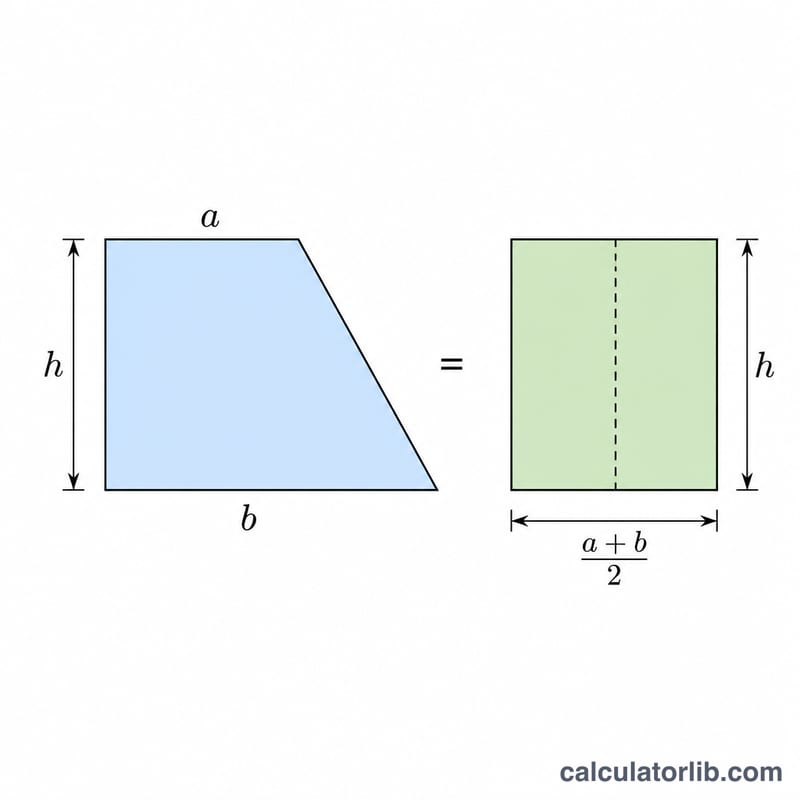
The area of any trapezoid is the average of the two parallel sides multiplied by the height:
$$\text{Area} = \frac{a + b}{2} \times h$$
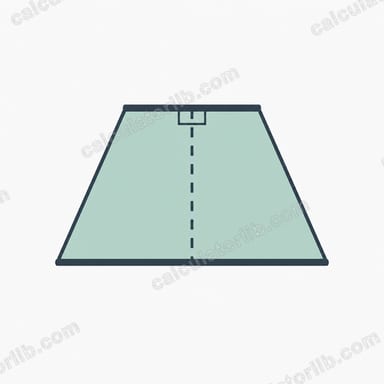
Averaging a and b gives the length of the midline of the trapezoid, and multiplying by the height yields the enclosed area. For a right trapezoid the height equals the vertical leg, so no extra trigonometry is needed.
Worked Example
Suppose \(a = 8\), \(b = 5\), and \(h = 4\). First add the parallel sides: \(8 + 5 = 13\). Divide by 2 to get the average: \(6.5\). Multiply by the height: $$6.5 \times 4 = 26 \text{ square units}.$$
FAQ
Does it matter which side is a or b? No. Addition is commutative, so swapping a and b gives the same area.
What unit is the answer in? Square units of whatever unit you entered. If a, b, and h are in metres, the area is in square metres.
Is the formula different for a right trapezoid? No — the area formula is identical for all trapezoids. The "right" feature simply means the height equals the perpendicular leg, making h easy to read off directly.