
What Is an Isosceles Trapezoid?
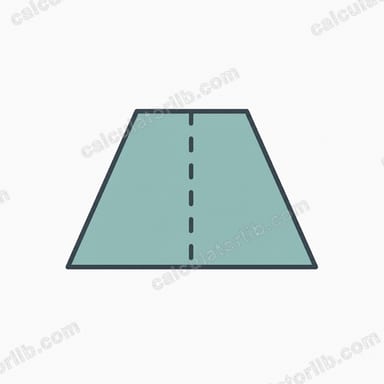
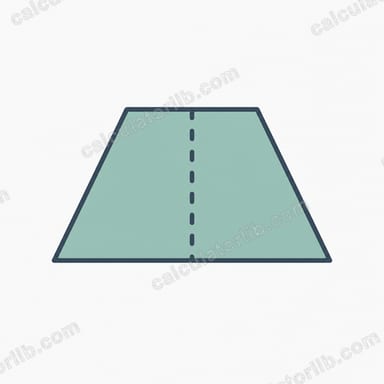
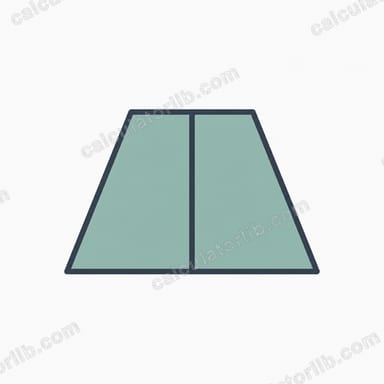
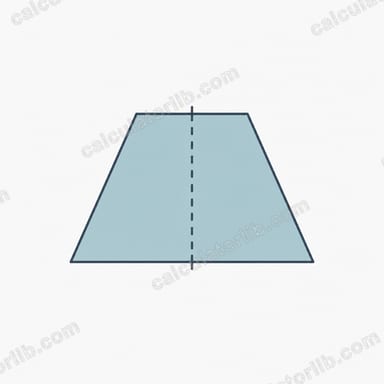
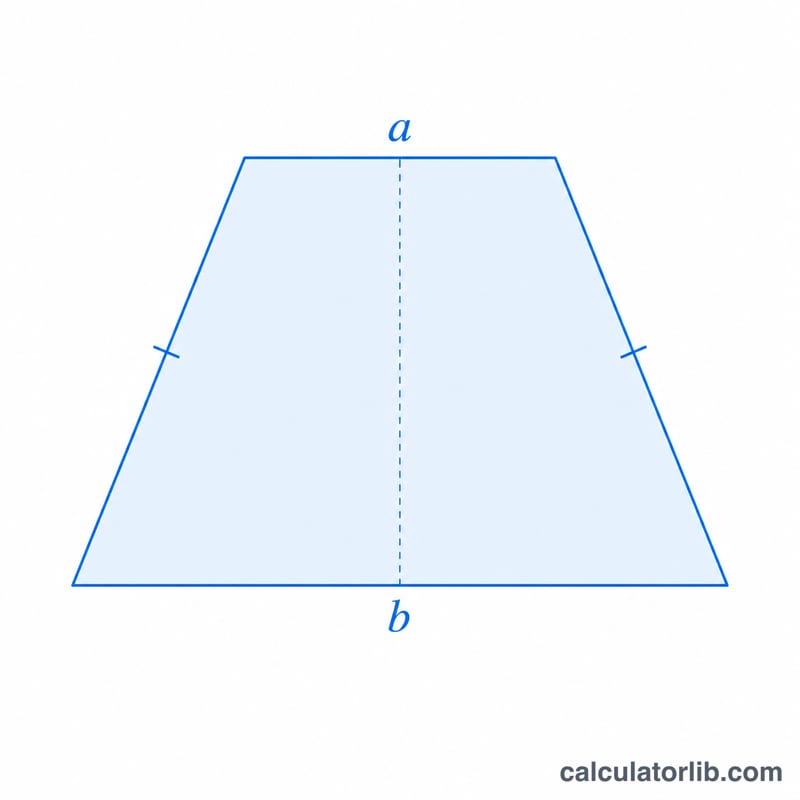
An isosceles trapezoid is a four-sided shape with one pair of parallel sides (the bases) and two non-parallel sides (legs) of equal length. Because the legs are equal, the shape is symmetric about a vertical axis. Its area depends only on the lengths of the two parallel bases and the perpendicular distance between them, called the height.
How to Use This Calculator
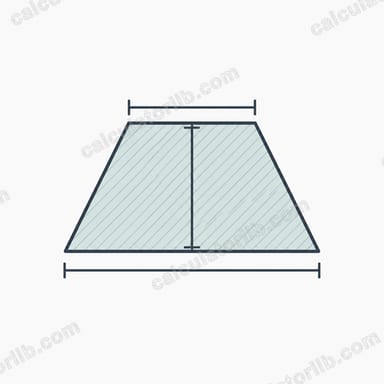
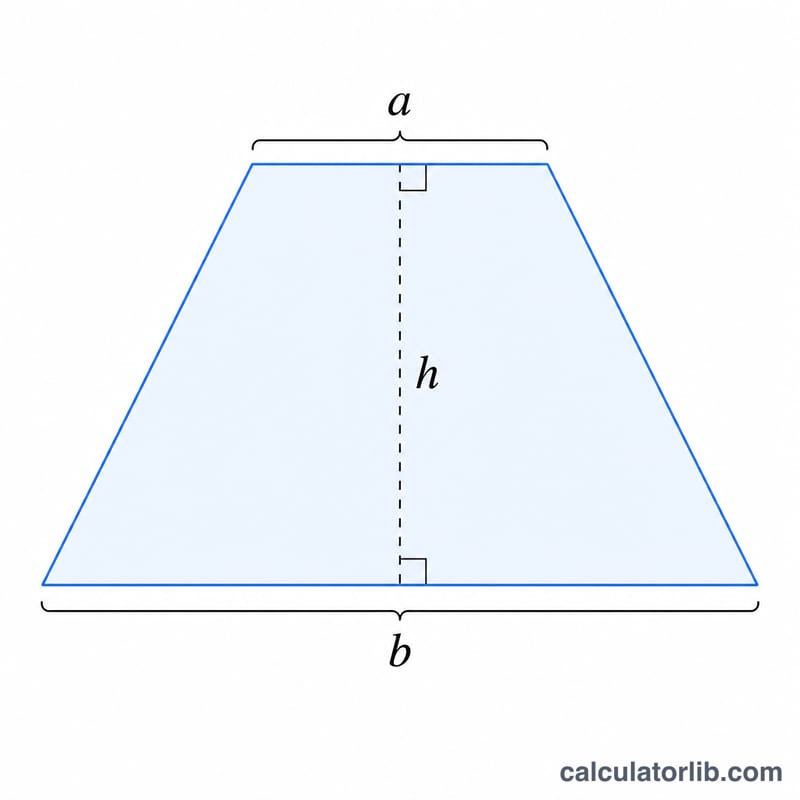
Enter the length of the top base (a), the bottom base (b), and the height (h) — the perpendicular distance between the two bases. The calculator instantly returns the area along with the midline. Use any consistent unit (cm, m, in, ft); the result is in those units squared.
The Formula Explained
The area of any trapezoid, including an isosceles one, is given by:
$$A = \frac{a + b}{2} \times h$$
The term \(\frac{a + b}{2}\) is the average of the two parallel sides — also known as the midline or median of the trapezoid. Multiplying this average width by the height gives the total enclosed area, just as you would for a rectangle of equivalent average width.
Worked Example
Suppose a trapezoid has a top base of 6 units, a bottom base of 10 units, and a height of 4 units. The midline is \(\frac{6 + 10}{2} = 8\) units. Multiply by the height: \(8 \times 4 = 32\) square units. So the area is 32.
FAQ
Do the legs need to be equal for this formula? No — this area formula works for any trapezoid. The "isosceles" property only means the legs are equal, which makes the figure symmetric but does not change how area is computed from the bases and height.
What is the height? The height is the straight-line perpendicular distance between the two parallel bases, not the length of the slanted legs.
Which base is a and which is b? It does not matter — addition is commutative, so swapping \(a\) and \(b\) gives the same area.