
What Is Rounding to the Nearest Thousand?
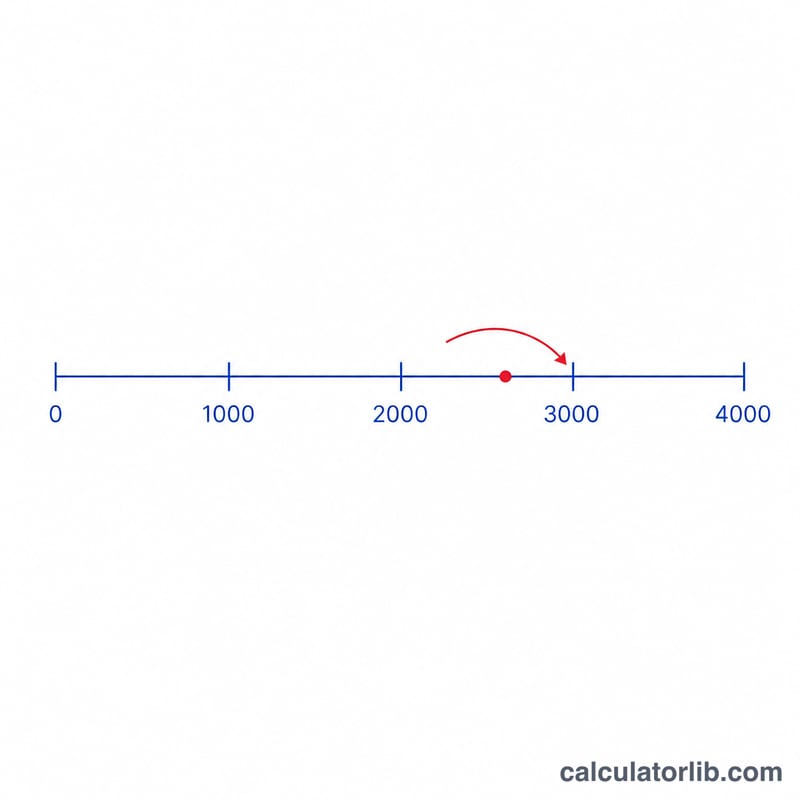
Rounding to the nearest thousand replaces a number with the closest multiple of 1,000. It is a quick way to simplify large figures for estimates, budgets, populations, and reports where exact digits below the thousands place add clutter without adding meaning. This calculator does it instantly for any number you enter.
How to Use This Calculator
Type the number you want to round into the input box and submit. The calculator returns the value rounded to the nearest 1,000 along with the original number for comparison. It accepts whole numbers and decimals, and works for very large values as well.
The Formula Explained
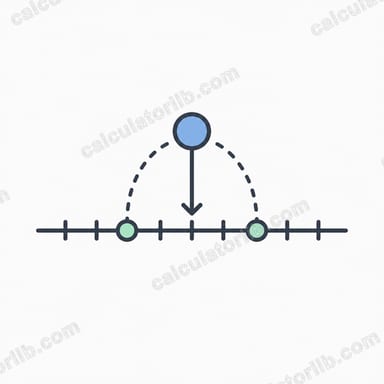
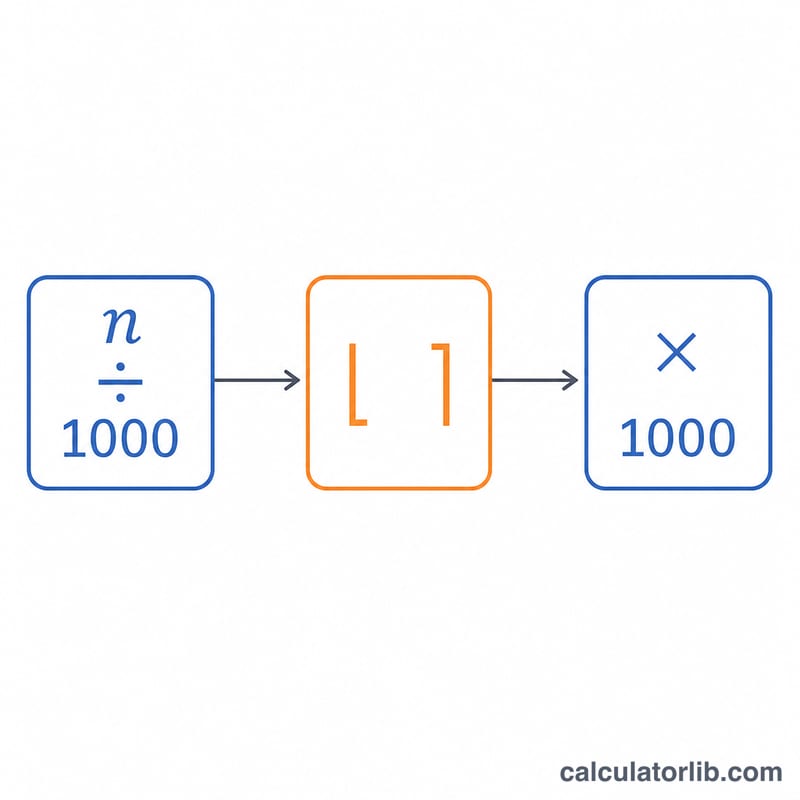
The rule is $$\text{Rounded} = \left\lfloor \frac{\text{Number}}{1000} \right\rceil \times 1000$$ First divide the number by 1,000 to move the thousands place into the ones place. Then round to the nearest whole number using standard rounding (0.5 and above rounds up). Finally multiply by 1,000 to shift the value back. The decisive digit is the hundreds digit: if it is 5 or more, you round up; if it is 4 or less, you round down.
Worked Example
Take 12,345. Divide by 1,000 to get 12.345. Round 12.345 to the nearest whole number to get 12. Multiply by 1,000 to get 12,000.
$$\left\lfloor \frac{12345}{1000} \right\rceil \times 1000 = 12 \times 1000 = 12000$$
Because the hundreds digit (3) is less than 5, the number rounds down. By contrast, 12,500 rounds up to 13,000 because the hundreds digit is exactly 5.
FAQ
What happens at exactly 500? A value ending in exactly 500 (like 2,500) rounds up to the next thousand (3,000), following the common "round half up" convention.
Does it work with negative numbers? Yes. For example, \(-1600\) rounds to \(-2000\).
Can I round decimals? Yes. 1,234.9 still rounds to 1,000 because only the hundreds and below determine the result.