
What It Does
The Round to the Nearest Dollar Calculator takes any monetary amount and rounds it to the closest whole dollar. This is handy for budgeting, estimating, tax forms (many of which let you round to whole dollars), and quick mental-math checks where the cents simply don't matter.
How to Use It
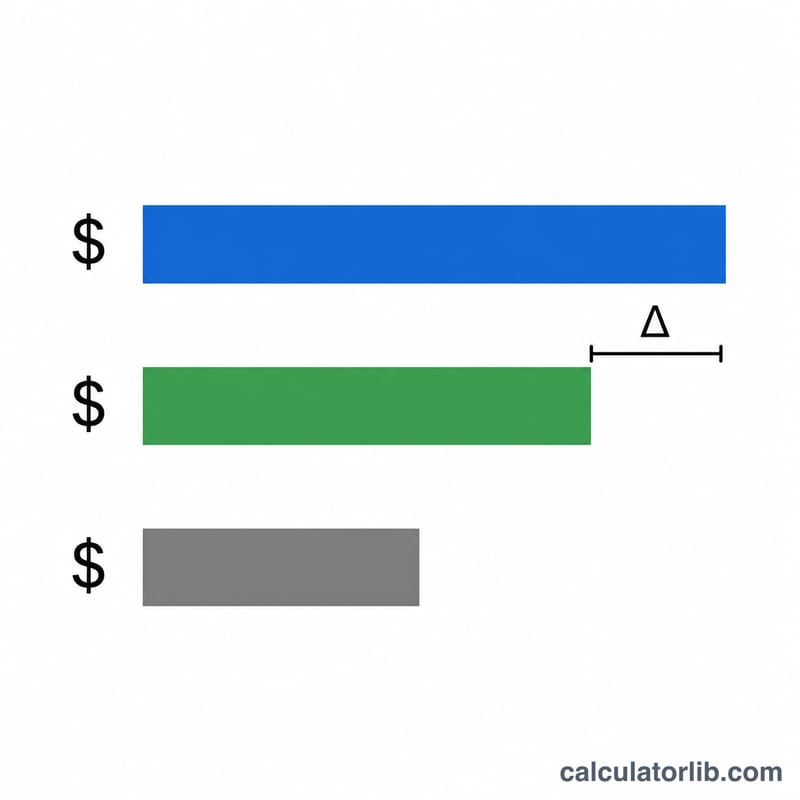
Type your amount into the field — for example $12.49 or $1,250.50 — and the calculator returns the rounded whole-dollar value, restates your original amount, and shows the difference between the two so you can see exactly how much was added or removed by rounding.
The Formula
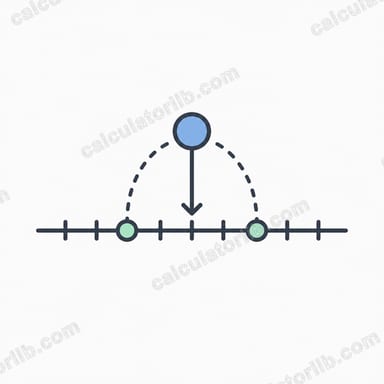
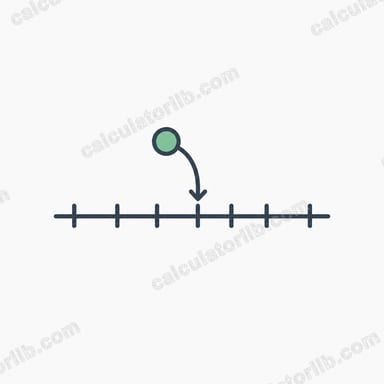
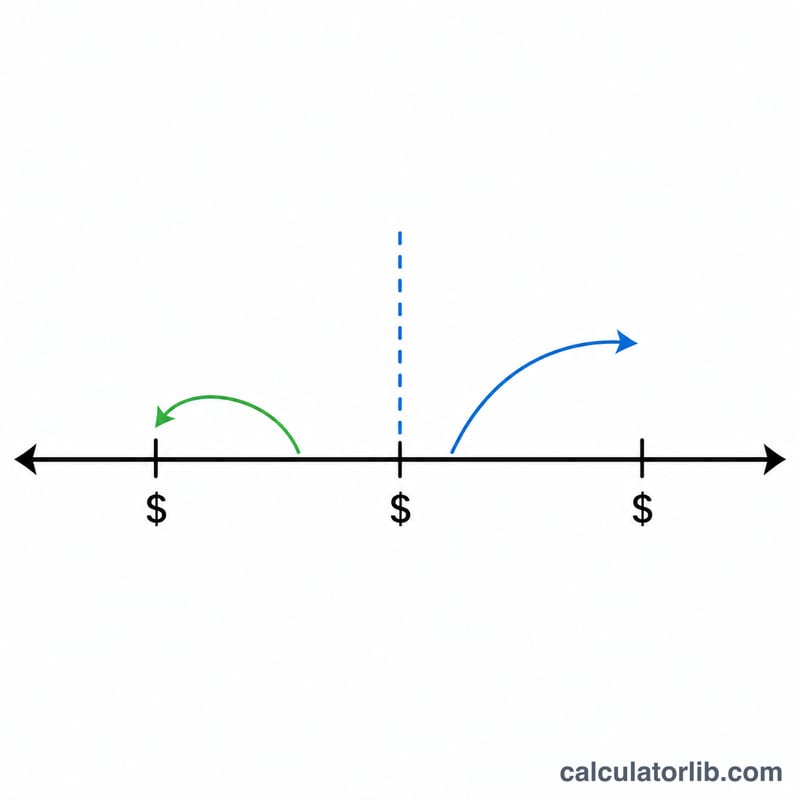
The math is the standard rounding rule: result = round(x). If the fractional (cents) portion is 0.50 or greater, the amount rounds up to the next dollar; if it is less than 0.50, it rounds down. The difference is calculated as rounded − original, which is positive when rounding up and negative when rounding down.
$$\text{Rounded} = \left\lfloor \text{Amount (\$)} + 0.5 \right\rfloor$$Worked Example
Suppose you have $12.49. The cents portion is 0.49, which is less than 0.50, so it rounds down to $12. The difference is \(12 - 12.49 = -\$0.49\). Now take $12.50: the cents are exactly 0.50, so it rounds up to $13, a difference of \(+\$0.50\).
FAQ
What happens at exactly 50 cents? Amounts ending in .50 round up to the next whole dollar (standard "round half up" behavior).
Does it handle negative amounts? Yes — a value like −4.50 rounds to −4 using the same nearest-integer rule.
Can I use it for tax rounding? It follows the common nearest-dollar convention used on many forms, but always verify your specific jurisdiction's rounding instructions.