

What Is the Rule of 40?
The Rule of 40 is a popular benchmark used by SaaS and other high-growth software companies to balance growth against profitability. It states that a healthy company's annual revenue growth rate plus its profit margin should equal or exceed 40%. A score of 40 or higher generally signals an efficient, well-balanced business; a lower score suggests the company may be growing too slowly relative to its losses, or vice versa.

How to Use This Calculator
Enter your year-over-year revenue growth rate as a percentage and your profit margin as a percentage. The profit margin can be any consistent measure your team uses — EBITDA margin, free cash flow margin, or operating margin — as long as you apply it the same way each period. The calculator adds the two figures and tells you whether you pass the 40% threshold.
The Formula Explained
The math is intentionally simple:
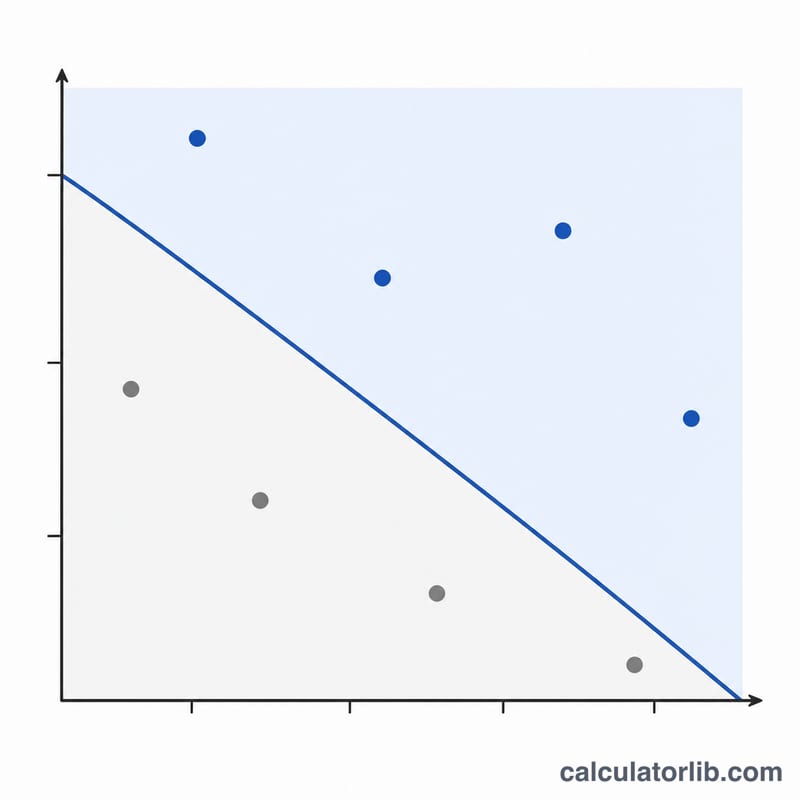
$$\text{Rule of 40} = \text{Revenue Growth Rate \%} + \text{Profit Margin \%}$$A company growing revenue 30% with a 15% margin scores 45 and passes. A company growing 60% but burning cash at a -25% margin still scores 35 and fails. The rule rewards companies that trade growth for profit (or profit for growth) in a balanced way.
Worked Example
Suppose a SaaS startup grows revenue 35% year over year and posts a profit margin of 8%. Its Rule of 40 score is
$$35 + 8 = 43$$Because 43 is greater than 40, the company passes the benchmark and is considered efficiently balanced.
FAQ
Does the Rule of 40 apply to early-stage startups? It is most meaningful for companies with $1M+ in annual recurring revenue. Very early companies often have volatile numbers that make the rule less reliable.
Which profit margin should I use? Many investors prefer EBITDA or free cash flow margin, but consistency matters more than the specific metric. Use the same definition across periods.
Is a higher score always better? Generally yes, but extremely high scores can sometimes mean a company is under-investing in growth. The rule is a directional guide, not a strict rule.