

What This Calculator Does
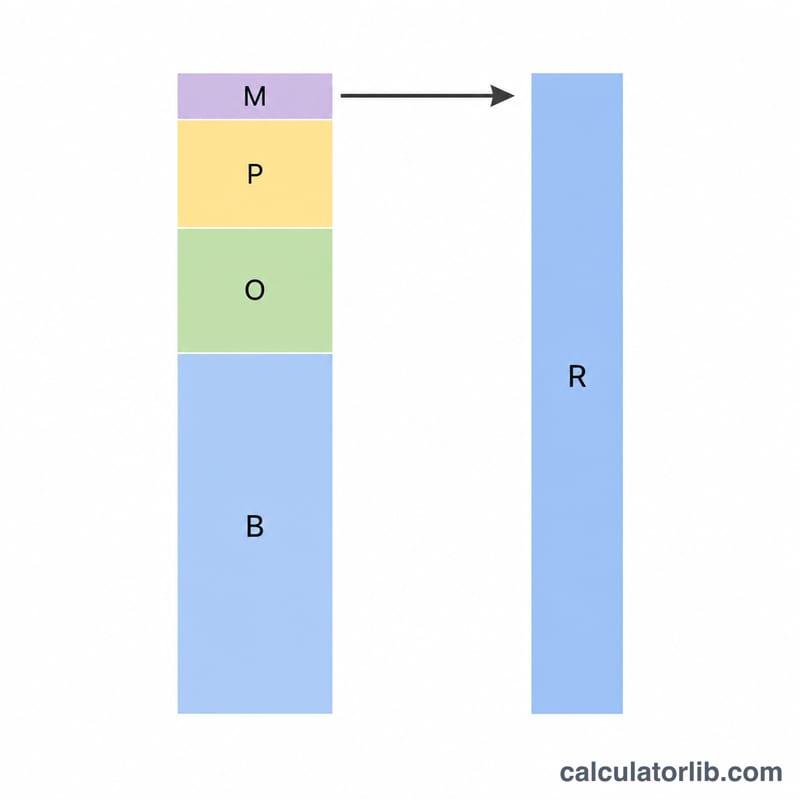
This tool helps US workers compare a traditional W-2 salaried job with self-employed 1099 contracting. As an employee, your true value to a company is more than your salary — it also includes benefits (health insurance, retirement match, paid leave) and the employer's share of payroll taxes. When you become a contractor, you have to cover all of those costs yourself, so your hourly rate must be high enough to make you whole.
How to Use It
Enter your current annual W-2 salary, the dollar value of your benefits, your employer's payroll-tax burden as a percentage (the employer FICA share is 7.65%, but add unemployment insurance and other costs for a fuller picture), and the number of hours you expect to actually bill in a year. Note that billable hours are usually far fewer than 2,080 — vacation, admin, sales, and gaps between contracts all reduce them. The calculator returns the hourly rate you need to charge to match your total cost of employment.
The Formula Explained
The math is straightforward: contractor_rate = (salary + benefits + employer_taxes) / billable_hours, where employer_taxes = salary × tax rate ÷ 100. We sum your full cost as an employee, then spread it across the hours you can realistically invoice.
$$\text{Hourly Rate} = \frac{\text{Total Cost}}{\text{Billable Hours}}$$
$$\text{Total Cost} = \text{Salary} + \text{Benefits} + \text{Salary} \times \frac{\text{Employer Tax \%}}{100}$$
Worked Example
Suppose your salary is $80,000, benefits are worth $12,000, the employer tax burden is 7.65%, and you bill 1,800 hours a year. Employer taxes = \(\$80{,}000 \times 0.0765 = \$6{,}120\). Total cost = \(\$80{,}000 + \$12{,}000 + \$6{,}120 = \$98{,}120\). Divide by 1,800 hours and you get about $54.51 per hour. Charging less means a pay cut once you account for lost benefits and the self-employment tax you now owe.
$$\text{Hourly Rate} = \frac{\$98{,}120}{1{,}800} \approx \$54.51$$
FAQ
Should I charge even more than this rate? Often yes. This figure only breaks even with employment. Contractors also pay both halves of self-employment tax, fund their own equipment, and absorb the risk of unpaid gaps, so a markup of 25–50% is common.
What employer tax rate should I use? 7.65% covers Social Security and Medicare. Add roughly 1–3% more for federal and state unemployment insurance and workers' comp.
How many billable hours are realistic? Full-time is 2,080 hours, but most independent contractors bill 1,500–1,800 hours after accounting for non-billable time.