
What is the Ratio Sharing Calculator?
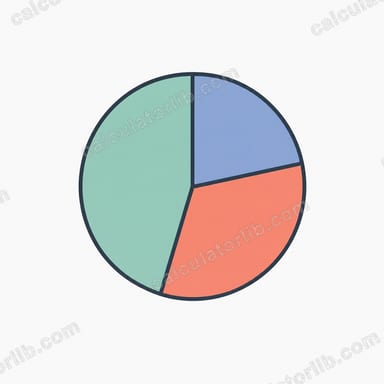
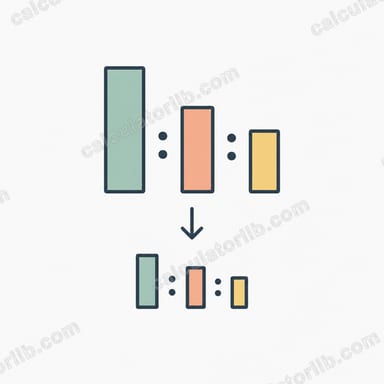
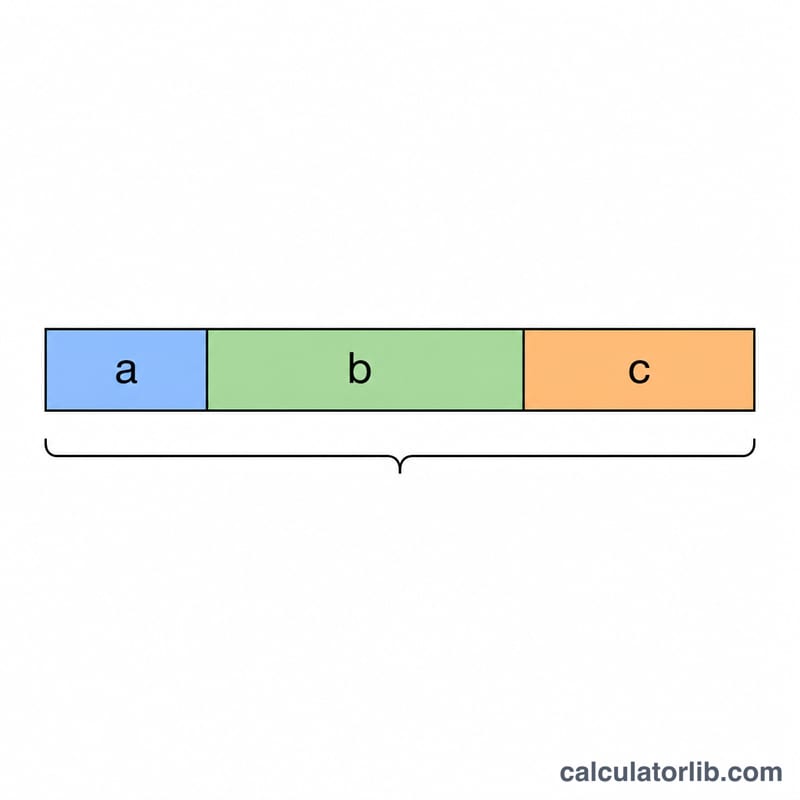
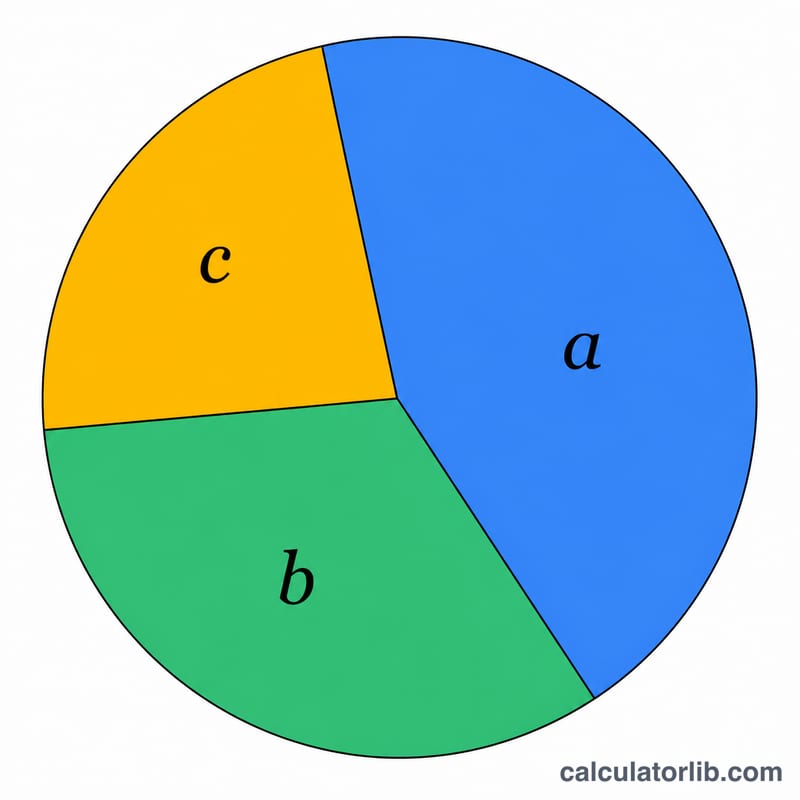
This tool divides a single total amount into three shares according to a ratio written as a:b:c. It is widely used to split money, profits, ingredients, time, or resources fairly when each party deserves a different proportion. Enter the total and the three ratio weights, and the calculator returns each share instantly.
How to use it
Type the total you want to divide (for example a bill, a prize pool, or a quantity). Then enter the three parts of the ratio. The parts can be whole numbers like 2:3:5 or decimals like 1.5:2:0.5 — only their relative size matters. The calculator adds the parts together and scales the total accordingly.
The formula explained
The core equation is:
$$\text{share}_i = \text{total} \times \frac{\text{part}_i}{a + b + c}$$
First the sum of the ratio weights is computed \((a + b + c)\). Each individual share is the total multiplied by that part's weight divided by the sum. Because every share uses the same denominator, the three shares always add back up to the original total.
Worked example
Suppose you want to split £100 in the ratio 2:3:5. The sum of weights is \(2 + 3 + 5 = 10\). $$\text{Share A} = 100 \times \frac{2}{10} = 20$$ $$\text{Share B} = 100 \times \frac{3}{10} = 30$$ $$\text{Share C} = 100 \times \frac{5}{10} = 50$$ The three shares (20, 30, 50) add up to 100, confirming the split is correct.
FAQ
Can I use decimal ratios? Yes. Ratios like 1.5:2.5:1 work fine — the calculator normalises them by their sum.
What if I only need to split into two parts? Set the third part to 0; that share becomes zero and the remaining total splits between the other two.
Do the shares always equal the total? Yes, the shares are guaranteed to sum to the original total because they share a common denominator.