

What Is Time and a Half?
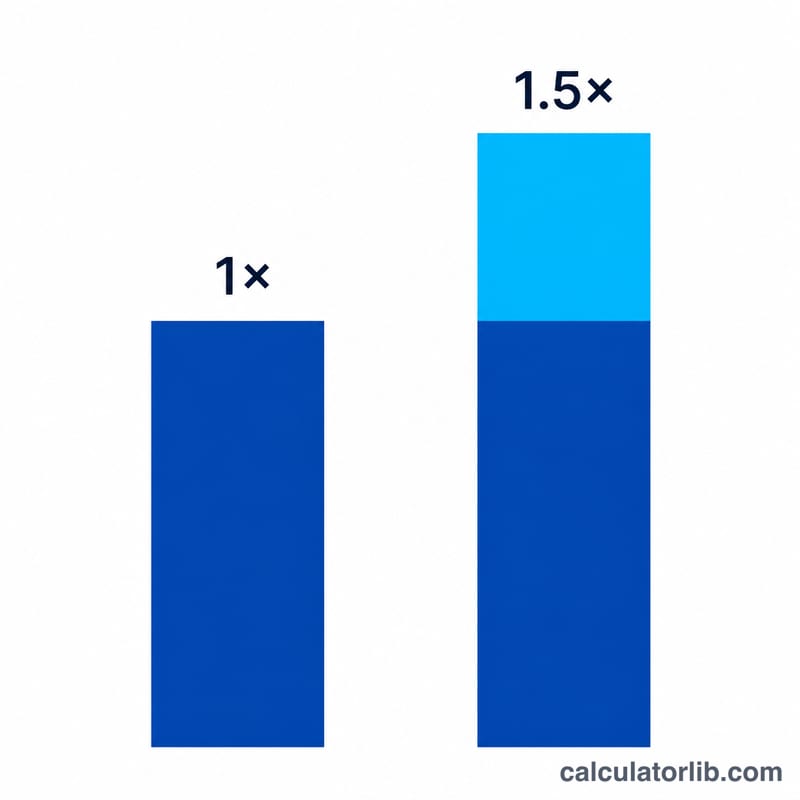
"Time and a half" is a common overtime pay rate equal to 1.5 times your regular hourly wage. In many places, including under the US Fair Labor Standards Act (FLSA), non-exempt employees must be paid at least time and a half for hours worked beyond 40 in a workweek. This calculator helps you quickly figure out your overtime rate and total overtime earnings.
How to Use the Calculator
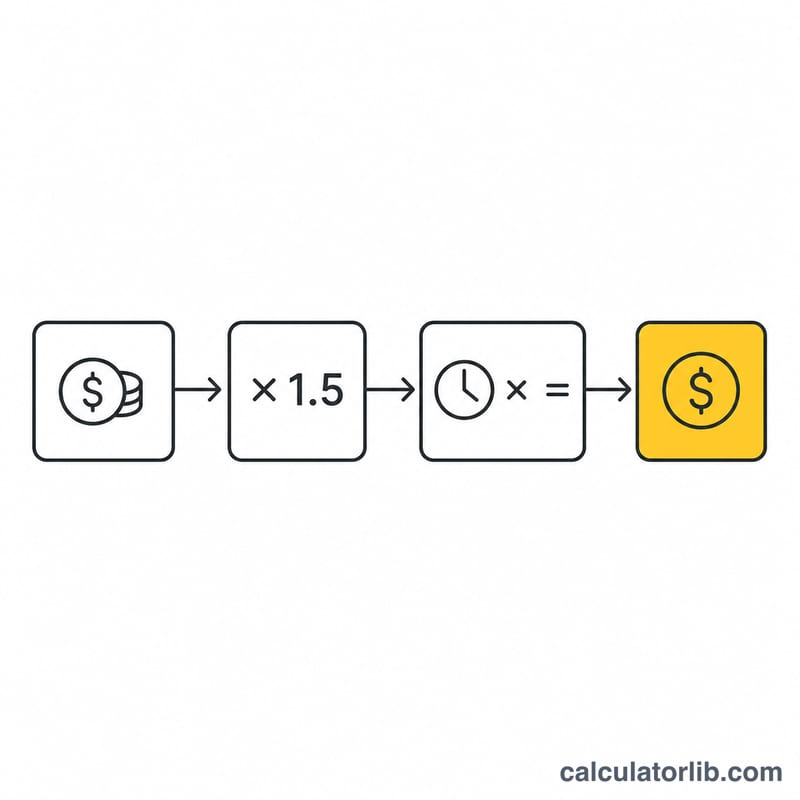
Enter your regular hourly rate and the number of overtime hours you worked. The calculator multiplies your rate by 1.5 to get the time-and-a-half rate, then multiplies that by your overtime hours to show your total overtime pay.
The Formula Explained
The math is simple: first compute the overtime rate as \(\text{Hourly Rate} \times 1.5\). Then multiply that rate by the number of overtime hours:
$$\text{Overtime Pay} = \left(\text{Hourly Rate} \times 1.5\right) \times \text{Overtime Hours}$$For example, a $20/hour rate becomes $30/hour at time and a half.
Worked Example
Suppose you earn $20.00 per hour and work 10 overtime hours. Your time-and-a-half rate is \(20 \times 1.5 = \$30.00\)/hour. Your total overtime pay is
$$30 \times 10 = \$300.00$$FAQ
Is time and a half the same everywhere? No. Overtime rules vary by country, state, and employer. This tool uses the standard 1.5× multiplier but always check your local labor laws.
Does it include my regular pay? No — it shows only the overtime portion. Add your regular pay for total earnings.
What counts as overtime? Often hours beyond 40 per week, but some jurisdictions use daily thresholds. Confirm with your employer or labor authority.