What This Calculator Does
Compute the actual diameter, circumference, and revolutions per mile from a tire's size code, and compare two tire sizes to see how the swap affects ride height, speedometer accuracy, and odometer readings. Useful when shopping for replacement tires, plus-sizing wheels, or fitting larger off-road tires.
Reading a Tire Size Code
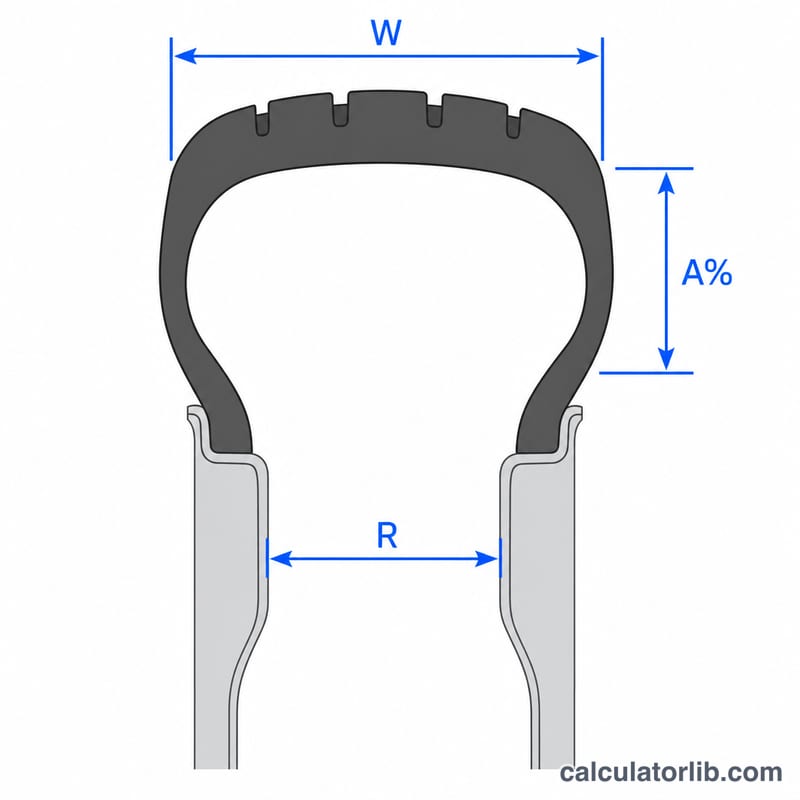
The standard P-metric code, e.g. 215/55R17:
- 215 — section width in millimeters (the tire's tread/sidewall width)
- 55 — aspect ratio (sidewall height as a percentage of width). 55 means sidewall = 55% of 215 = 118.25 mm.
- R — radial construction (almost universal today)
- 17 — rim (wheel) diameter in inches
The Math
Sidewall Height = Width × (Aspect / 100) (in mm)
Total Diameter = (Rim × 25.4) + 2 × Sidewall (in mm)
$$D = R \cdot 25.4 + 2 \cdot W \cdot \frac{A}{100}$$Circumference = \(\pi\) × Total Diameter
Revolutions per Mile = (1,609,344 mm/mi) / Circumference
$$\text{revs/mi} = \frac{1{,}609{,}344}{\pi \cdot D}$$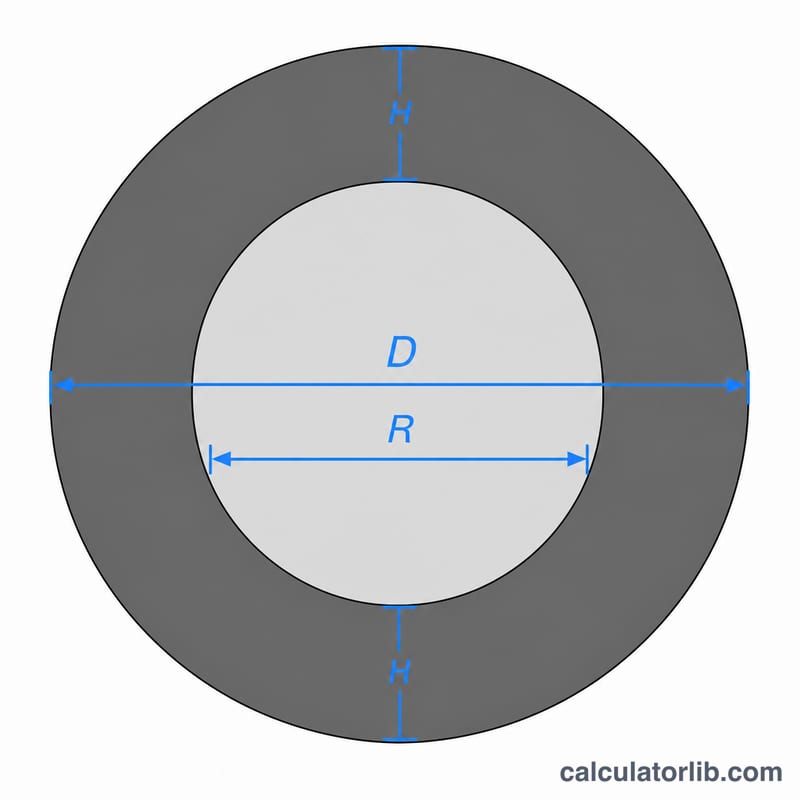
Worked Example
215/55R17:
- Sidewall = \(215 \times 0.55 = 118.25\) mm
- Diameter = \((17 \times 25.4) + 2 \times 118.25 = 431.8 + 236.5 = 668.3\) mm = 26.31 in
- Circumference = \(\pi \times 668.3 = 2{,}099.5\) mm = 82.66 in
- Revs/mile = \(1{,}609{,}344 / 2{,}099.5 \approx\) 766 rev/mi
Why Tire Size Matters
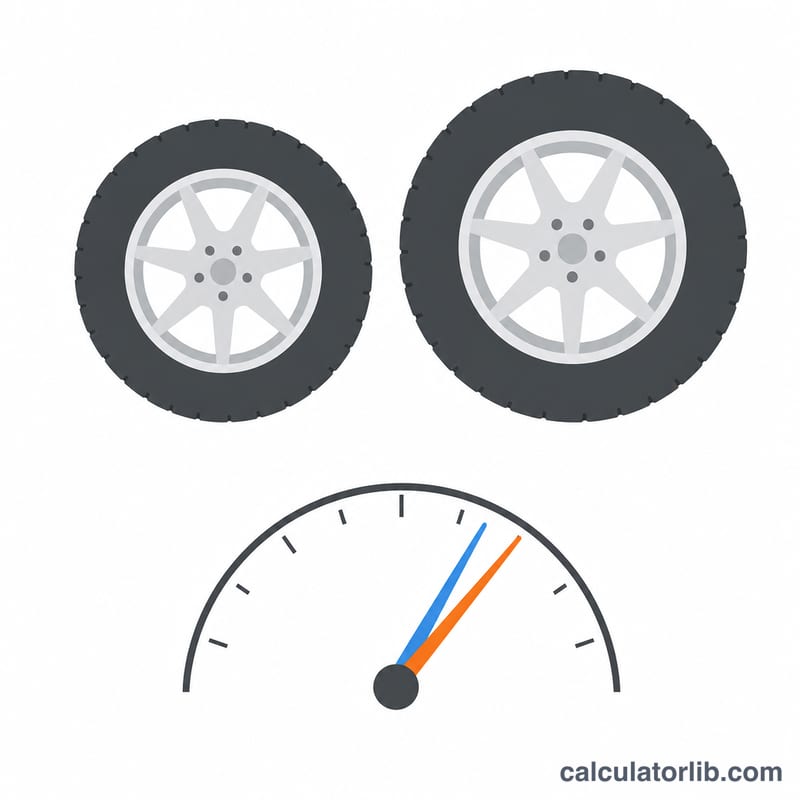
- Speedometer accuracy. A taller tire spins fewer revs per mile, so the speedometer (calibrated to original tire) reads slow. A 5% larger diameter makes 60 mph indicated equal 63 mph actual.
- Odometer drift. Same effect — tires 5% larger record 5% fewer miles than actual. Affects warranty, lease mileage, fuel economy reporting.
- Gear ratio impact. Bigger tires effectively raise the final drive ratio, slowing acceleration and lowering RPM at highway speed (better fuel economy, worse 0–60).
- Clearance. Replacement tires need to fit the wheel well, especially at full steering lock and full suspension compression.
The general rule: stay within ±3% of the original tire diameter to avoid major issues. Larger swaps need speedometer recalibration.
Plus-sizing
"Plus-sizing" means going up in rim diameter while keeping the same overall tire diameter — wider tire, shorter sidewall. A "plus-1" swap from 215/55R17 → 225/45R18 keeps the diameter close while improving steering response. The aspect ratio compensates for the larger rim.
Caveats
- Manufacturer tolerance. Real tires vary ±3% from the calculated diameter. Tread design and inflation pressure also affect rolling diameter.
- Load and speed ratings. The calculator ignores tire load index and speed rating — both matter for safe replacement.
- European metric size: sometimes written as 7.50R16 (width in inches, no aspect — assumes 100%). Convert to P-metric before using this calc.