
What the Torus Volume Calculator Does
A torus is a doughnut-shaped surface formed by sweeping a circle (the tube) around a central axis. This calculator computes the geometric properties of a torus from just two measurements: the major radius (R) and the minor radius (r). In a single step it returns the volume, surface area, inner and outer radius, centerline length, and cross-sectional area — everything you need for engineering, manufacturing, or maths problems involving ring-shaped objects.
The Two Inputs You Provide
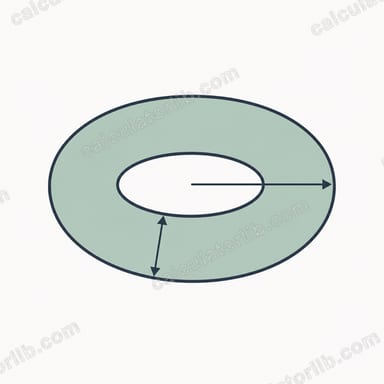
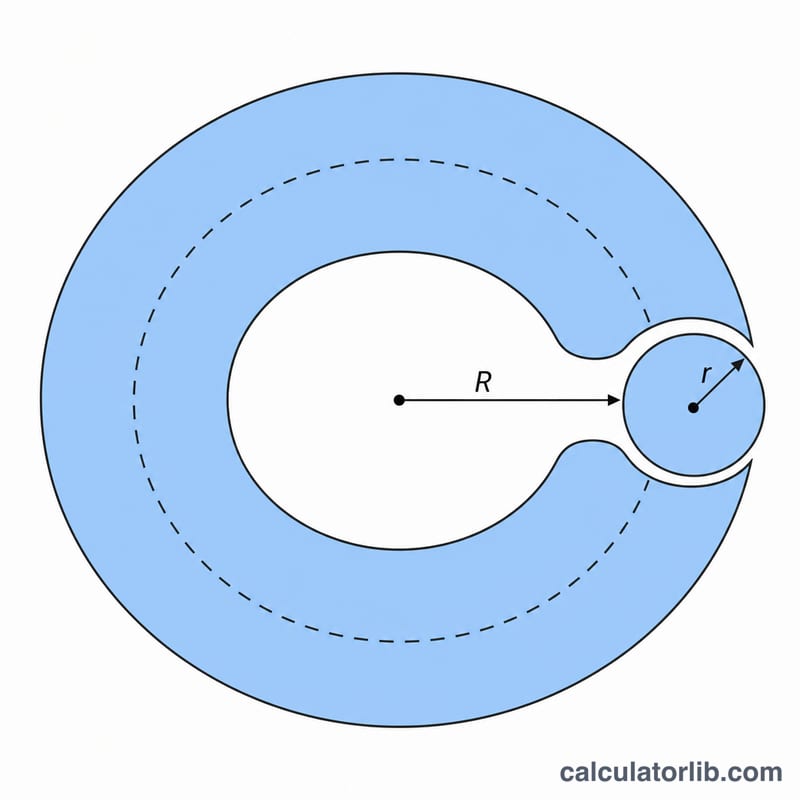
- Major Radius (R): the distance from the center of the whole torus to the center of the tube.
- Minor Radius (r): the radius of the tube itself (its cross-section).
Both values must use the same unit (e.g. cm). All results then follow in those units, with areas squared and volumes cubed.
The Formulas Used
The calculator applies the standard torus equations:
- Volume: V = 2π²Rr²
- Surface area: A = 4π²Rr
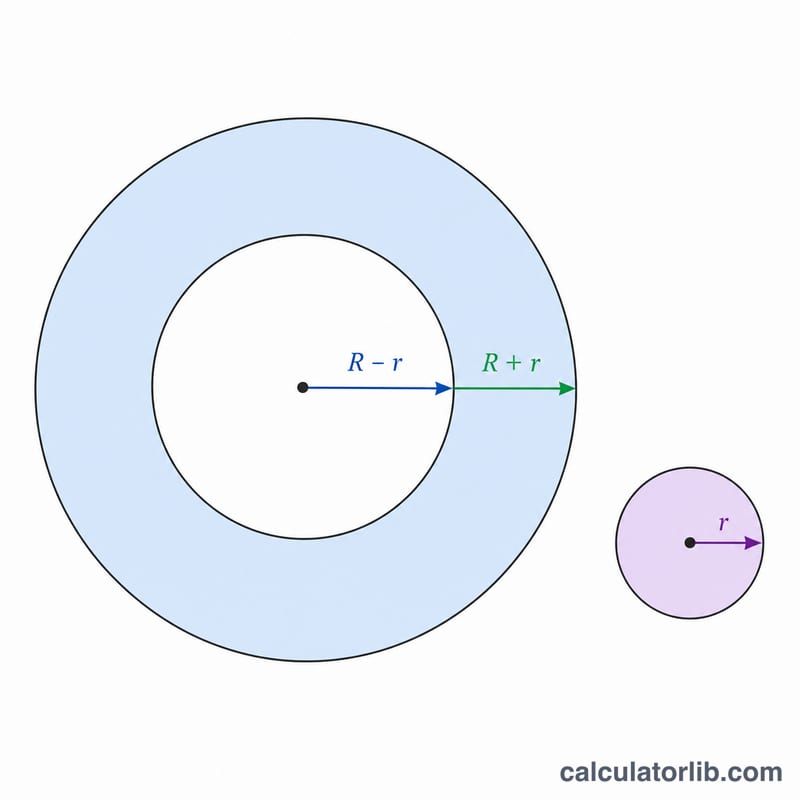
- Inner radius: R − r
- Outer radius: R + r
- Centerline length: 2πR (the circumference traced by the tube's center)
- Cross-sectional area: πr² (the area of one tube slice)
Worked Example
Suppose R = 10 and r = 3.
- Volume = 2 × π² × 10 × 3² = 2 × 9.8696 × 10 × 9 ≈ 1776.5 cubic units
- Surface area = 4 × π² × 10 × 3 = 4 × 9.8696 × 30 ≈ 1184.4 square units
- Inner radius = 10 − 3 = 7
- Outer radius = 10 + 3 = 13
- Centerline length = 2π × 10 ≈ 62.83
- Cross-sectional area = π × 3² ≈ 28.27
Frequently Asked Questions
What is the difference between major and minor radius? The major radius (R) measures from the torus center to the tube center, while the minor radius (r) measures the thickness of the tube. R is always larger than r for a standard ring torus.
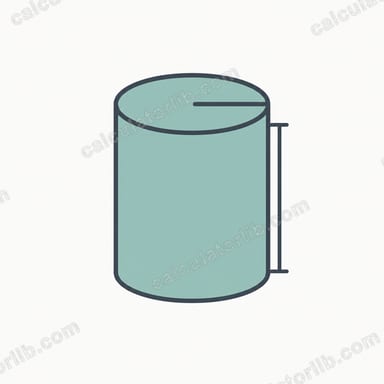
Why is the volume the same as a cylinder of length 2πR? By Pappus's theorem, the volume equals the tube's cross-sectional area (πr²) multiplied by the distance its center travels (2πR), giving 2π²Rr².
What if r is greater than R? The inner radius (R − r) becomes negative, meaning the tube overlaps itself (a self-intersecting "horn" or "spindle" torus). The formulas still compute, but the geometry no longer represents a simple doughnut.