
What Is the Trench Volume Calculator?
This tool estimates how much material you need to excavate from a trench. Whether you're laying a drainage pipe, running utility lines, pouring a footing, or installing irrigation, knowing the excavation volume in cubic yards helps you order the right amount of fill, gravel, or concrete and estimate spoil disposal and equipment time.
How to Use It
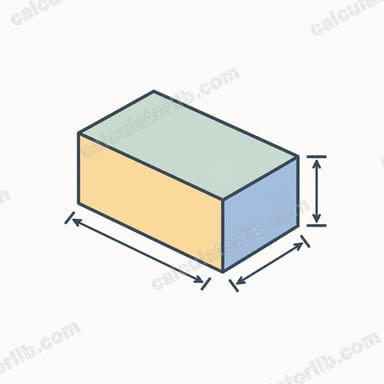
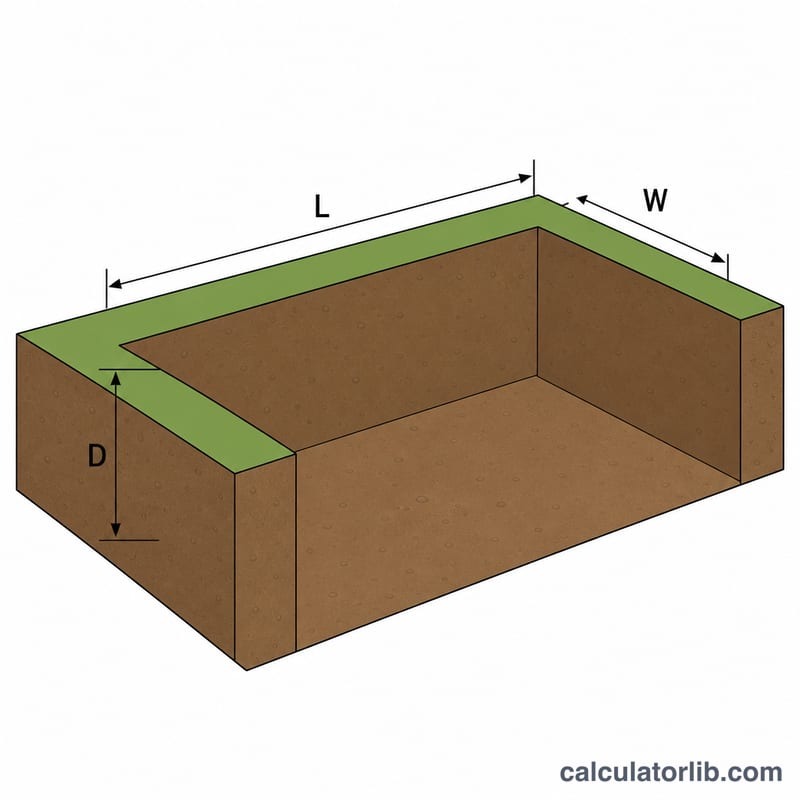
Enter the trench length, width, and depth in feet. The calculator multiplies them to get the volume in cubic feet, then converts to cubic yards (the standard unit ordered from suppliers) and cubic meters. For a trench with varying depth, use the average depth.
The Formula Explained
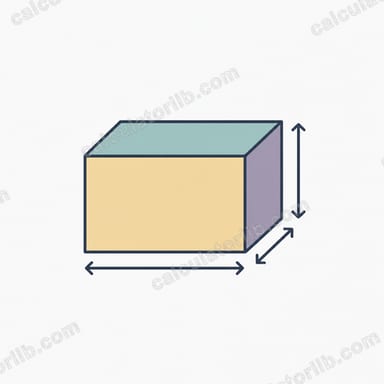
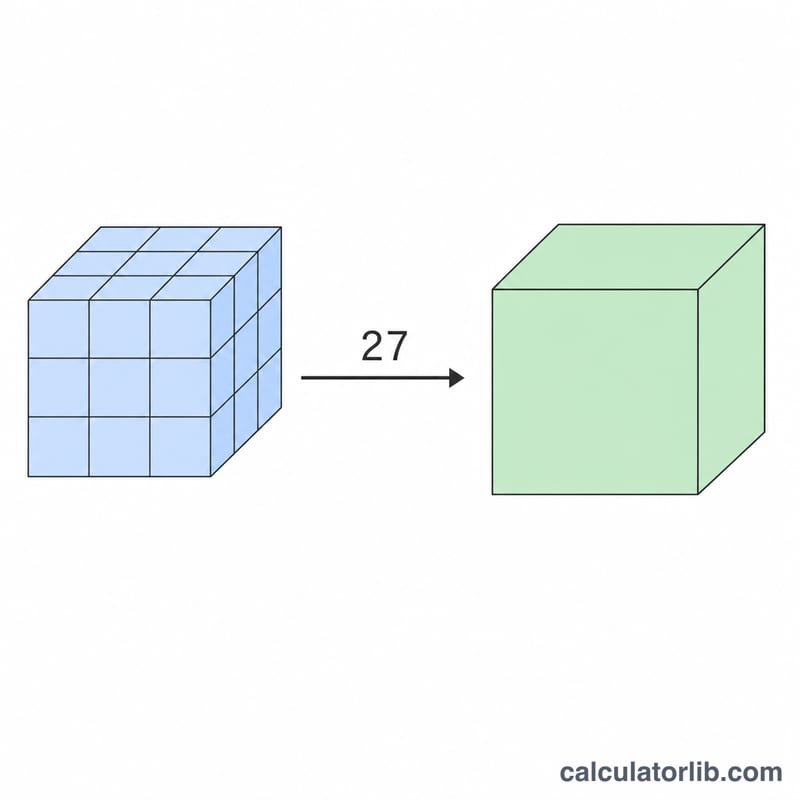
Trench volume is a simple rectangular box (prism): $$V = L \times W \times D$$ Because materials are sold by the cubic yard, divide the cubic-foot result by 27 (a cubic yard is \(3\text{ ft} \times 3\text{ ft} \times 3\text{ ft} = 27\text{ ft}^3\)). To get cubic meters, multiply cubic feet by \(0.0283168\).
Worked Example
Suppose a trench is 50 ft long, 2 ft wide, and 3 ft deep. $$\text{Volume} = 50 \times 2 \times 3 = 300 \text{ cubic feet}$$ In cubic yards: \(300 \div 27 \approx 11.11\) cubic yards. In cubic meters: \(300 \times 0.0283168 \approx 8.495 \text{ m}^3\). You'd order roughly 12 cubic yards of backfill to be safe.
FAQ
Why divide by 27? Because one cubic yard equals 27 cubic feet, this converts the foot-based volume into the unit suppliers use.
Should I add extra for compaction or over-dig? Yes. Add roughly 10–20% for over-excavation, compaction, and waste so you don't run short.
What if my measurements are in inches? Convert to feet first by dividing inches by 12 before entering the values.