
What Is USPS Dimensional Weight?
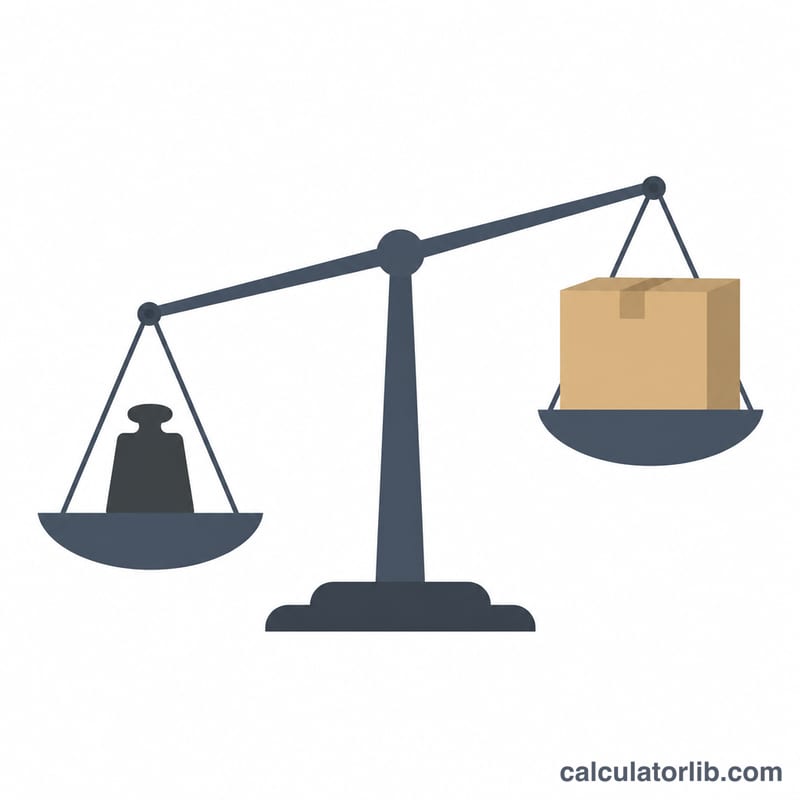
This tool applies to US domestic shipping (USPS). Dimensional weight (DIM weight) is a pricing technique that charges large, lightweight packages based on the space they occupy rather than only their actual weight. Carriers compute it from a package's volume divided by a fixed DIM divisor. The price you pay is based on the billable weight — the greater of the actual weight and the dimensional weight.
The Formula
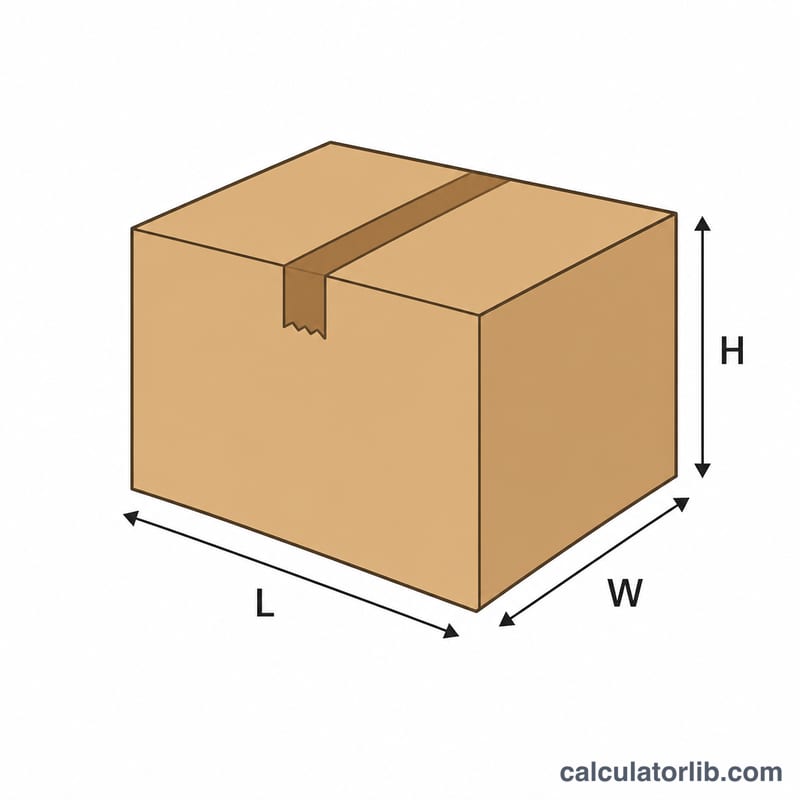
The dimensional weight is the cubic size of the box divided by the divisor, then rounded up to the next whole pound:
$$\text{DIM Weight} = \left\lceil \frac{L \times W \times H}{\text{Divisor}} \right\rceil$$Where \(L\), \(W\) and \(H\) are the length, width and height in inches, and the divisor is typically \(166\) for USPS retail/zone-based services. The billable weight is then:
$$\text{Billable} = \max(\lceil \text{Actual} \rceil,\; \text{DIM Weight})$$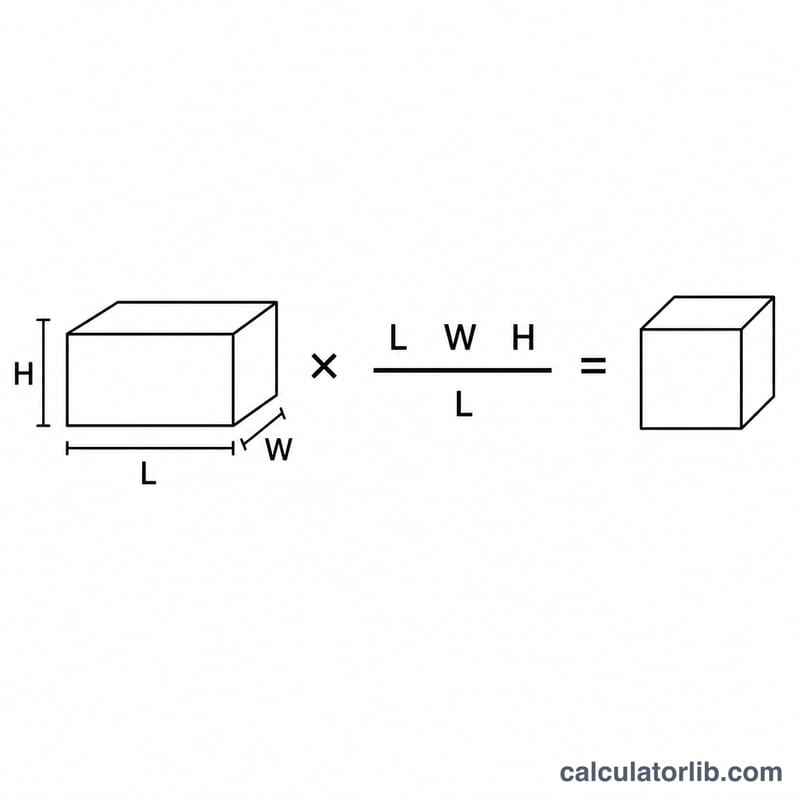
How To Use It
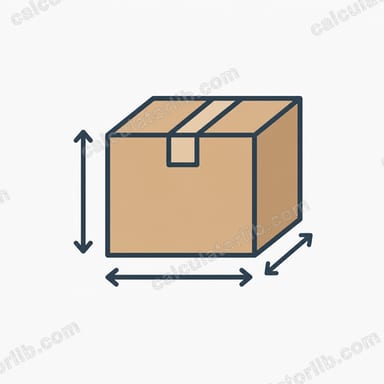
Measure your package at its longest points, enter the length, width and height in inches, the actual scale weight in pounds, and the DIM divisor your service uses (default \(166\)). The calculator returns the cubic size, the raw and rounded dimensional weight, and your final billable weight.
Worked Example
A box measuring \(20 \times 15 \times 10\) inches weighing 6 lb, with divisor 166:
$$\text{Cubic size} = 20 \times 15 \times 10 = 3000\ \text{cu in}$$$$\text{DIM} = \left\lceil \frac{3000}{166} \right\rceil = \lceil 18.07 \rceil = 19\ \text{lb}$$Since \(19 > 6\), the billable weight is \(19\) lb.
FAQ
What divisor should I use? USPS commonly uses 166 for cubic-pricing zone calculations. Always confirm the divisor for your specific service and rate card.
When does dimensional weight apply? Generally for packages exceeding one cubic foot (1,728 cu in), but rules vary by service. This calculator computes DIM weight regardless so you can compare.
Why is my weight rounded up? Carriers round both dimensional and actual weight up to the next whole pound for billing.