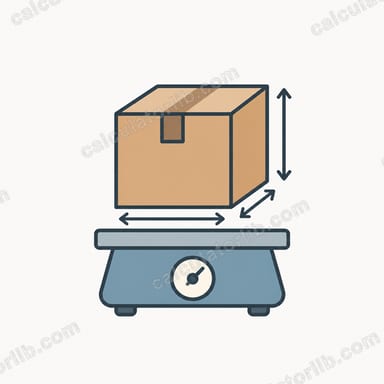

What is volumetric weight?
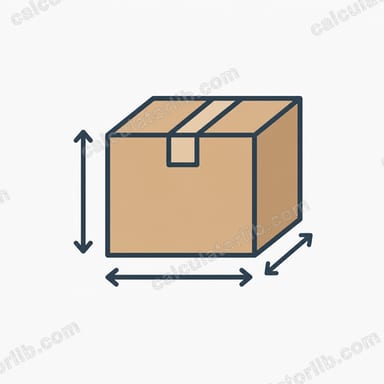
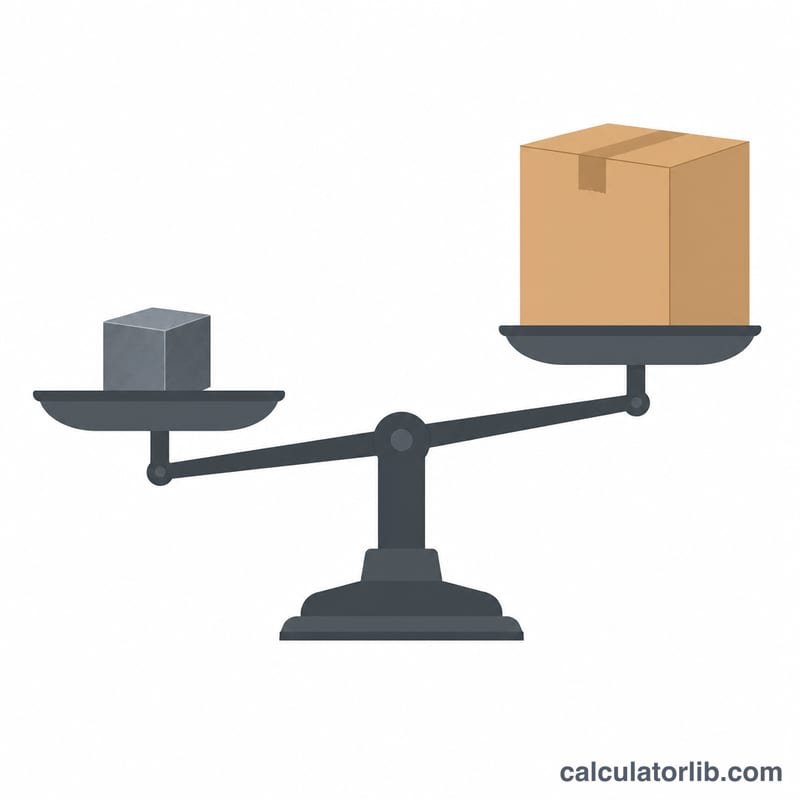
Volumetric weight (also called dimensional or DIM weight) is a pricing technique used by freight and parcel carriers to charge for the space a shipment occupies rather than only its scale weight. A large but light box (think pillows or empty containers) takes up cargo room that could carry heavier goods, so carriers convert the package volume into an equivalent weight. The final bill is based on the greater of the volumetric weight and the actual weight. This calculator computes the volumetric side using internationally recognised conversion factors, so it applies to shipments worldwide.
How to use it
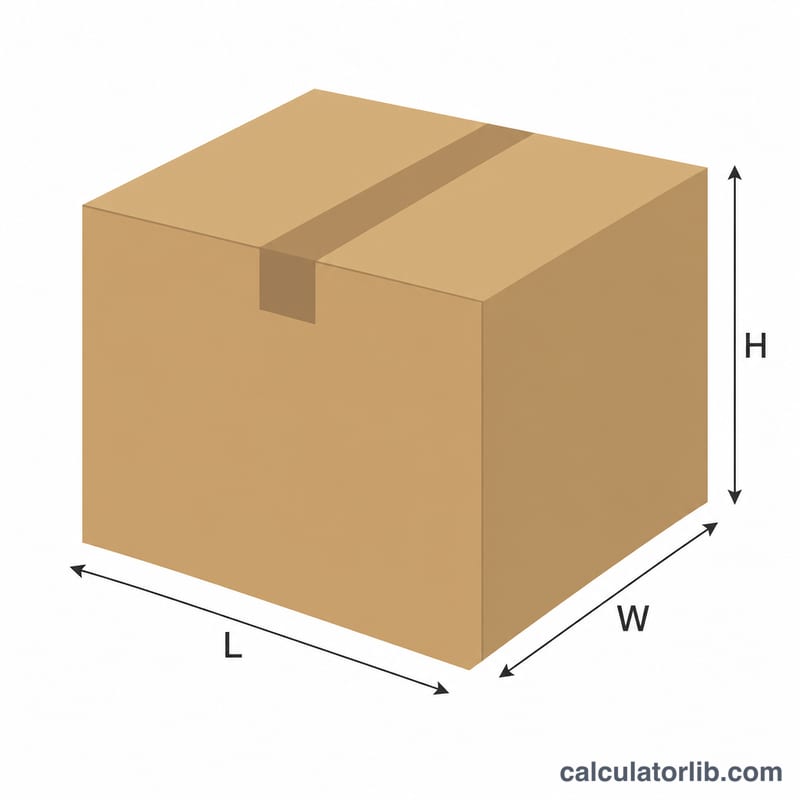
Pick the cargo type that matches your service. Each option carries a conversion factor: Truck (1 m3 = 280 kg), Sea (1 m3 = 1000 kg), Air at 5000 cm3 = 1 kg (common for many international/IATA carriers), or Air at 6000 cm3 = 1 kg (common for domestic Japan/China air freight). Enter the package length, width and height in centimetres. The tool returns the raw volumetric weight plus values rounded up to the nearest 0.5 kg and 1 kg, since carriers always round chargeable weight up.
The formula explained
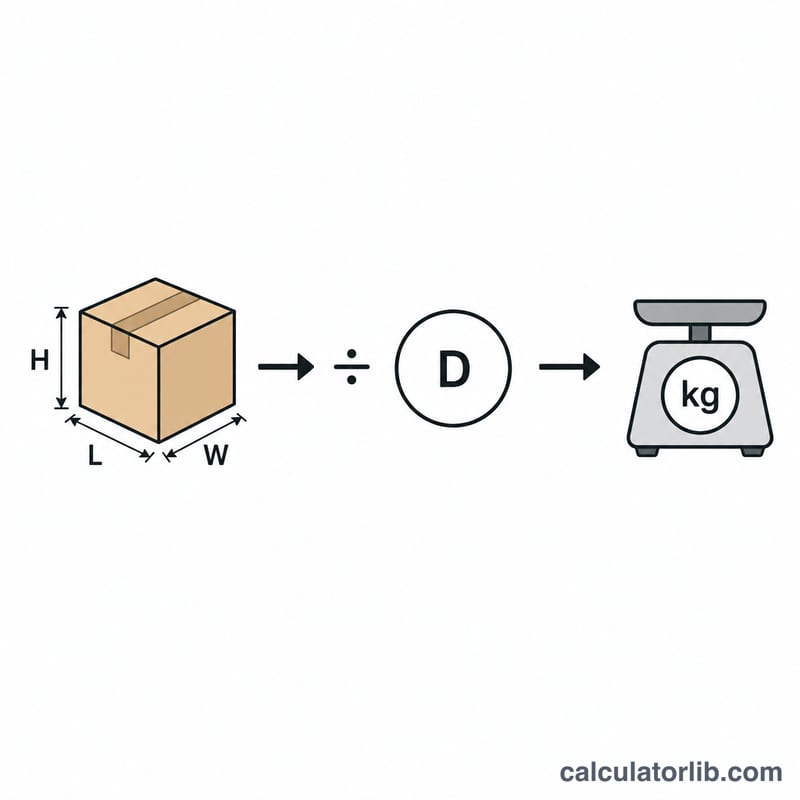
First the volume is computed as L x W x H in cubic centimetres. Each carrier option defines D, the number of cm3 that weigh 1 kg. The weight is simply volume divided by D.
$$W = \frac{\text{Length (cm)} \times \text{Width (cm)} \times \text{Height (cm)}}{\text{Factor}}$$For trucks, \(D = 1{,}000{,}000 / 280 \approx 3571.43\), which is the same as multiplying the volume in cubic metres by 280 kg/m3.
Worked example
A box of 25 x 30 x 10 cm has a volume of 7,500 cm3. Using the Truck factor (D about 3571.43):
$$7{,}500 / 3571.43 = 2.1 \text{ kg}$$Rounded up to 0.5 kg that is 2.5 kg; rounded up to 1 kg that is 3 kg. The same box on Air 6000 (D = 6000) gives \(7{,}500 / 6000 = 1.25\) kg, rounding to 1.5 kg or 2 kg.
FAQ
Which weight will I actually be charged? The carrier bills the larger of this volumetric weight and your shipment's real (scale) weight.
Why are there two air factors? Many international carriers follow the IATA 5000 cm3 = 1 kg rule, while domestic air freight in Japan and China often uses 6000 cm3 = 1 kg. Check your carrier's tariff.
What if a dimension is zero? The volume becomes zero, so all weights are zero. Enter all three dimensions for a meaningful result.