
What Is the Pyramid Volume Calculator?
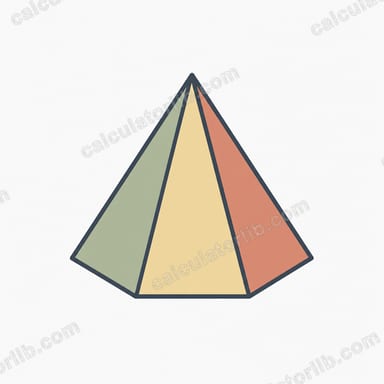
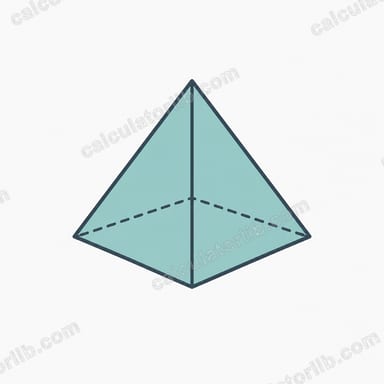
This tool computes the volume of any pyramid given the area of its base and its perpendicular height. Because the formula uses the base area directly, it works for a pyramid with any base shape — square, rectangular, triangular, pentagonal, or any polygon — as long as you know how much area that base covers. The result is expressed in cubic units consistent with your inputs.
How to Use It
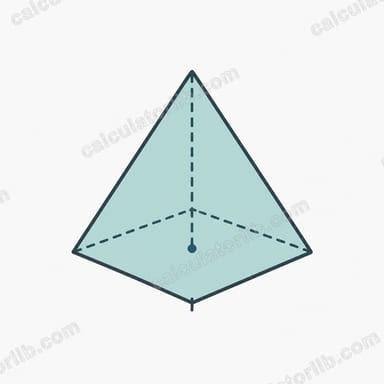
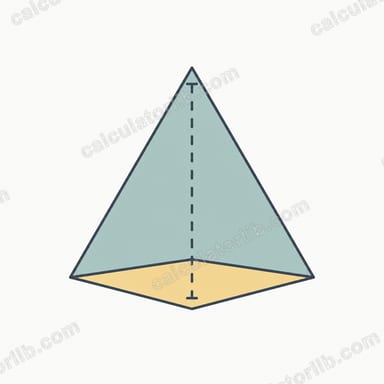
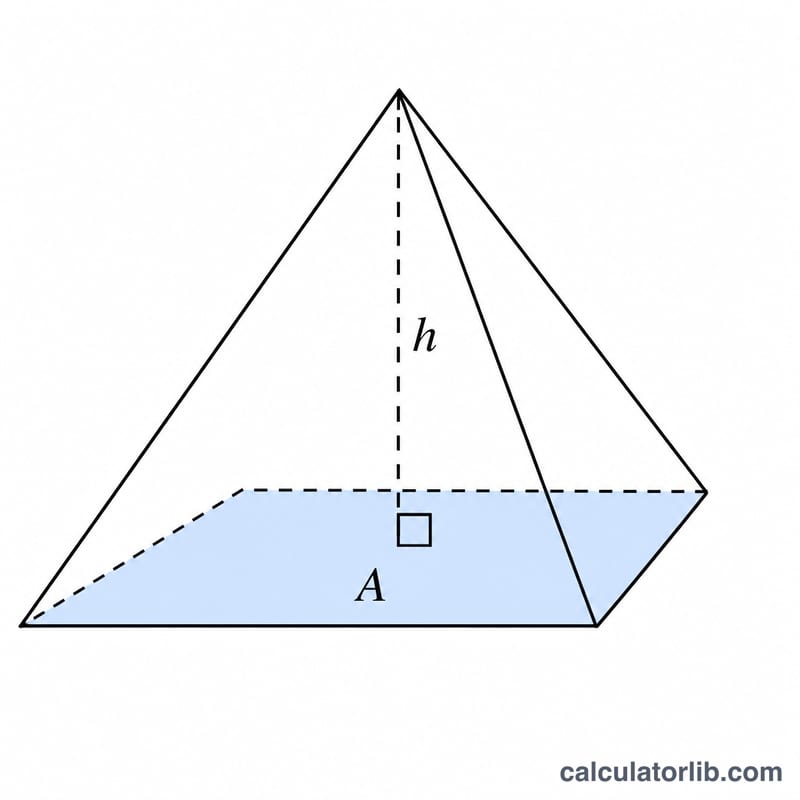
Enter two values: the base area (the area of the flat polygon the pyramid sits on) and the height (the straight-line distance from the apex down to the base plane, not the slant height). Make sure both measurements use compatible units. If the base area is in square metres and the height is in metres, the volume comes out in cubic metres. Press calculate to see the volume instantly.
The Formula Explained
The volume of a pyramid is one third of the product of its base area and height: $$V = \frac{1}{3} \times A_{\text{base}} \times h$$ The factor of one third reflects a fundamental geometric fact — a pyramid fills exactly one third of the prism that shares its base and height. This relationship holds for every pyramid regardless of base shape, which is why a single formula covers them all.
Worked Example
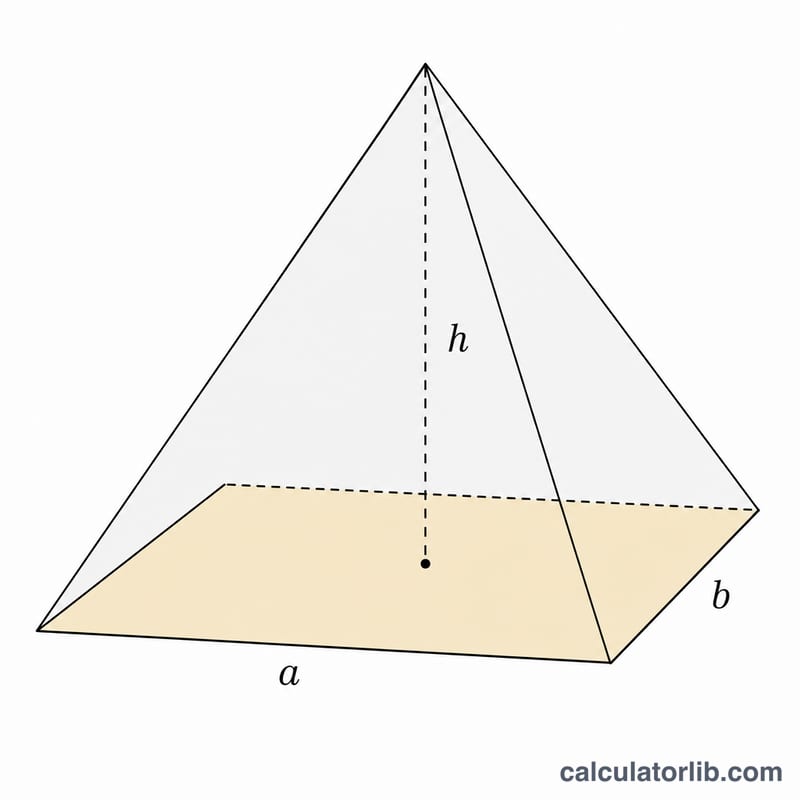
Suppose a pyramid has a square base measuring 6 by 6, so the base area is 36 square units, and its height is 10 units. Then $$V = \frac{1}{3} \times 36 \times 10 = \frac{1}{3} \times 360 = 120 \text{ cubic units}$$ If instead the base area were 24 and the height 9, the volume would be \(\frac{1}{3} \times 24 \times 9 = 72\) cubic units.
FAQ
Should I use slant height or vertical height? Always use the vertical (perpendicular) height from the apex to the base. Slant height gives the wrong volume.
What if my base is not a square? No problem — just compute the area of whatever shape the base is and enter that. The formula works for any base.
What units does the result use? The volume is in cubic units matching your inputs. For example, base area in cm² and height in cm yield a volume in cm³.