
What Is Crawl Ratio?
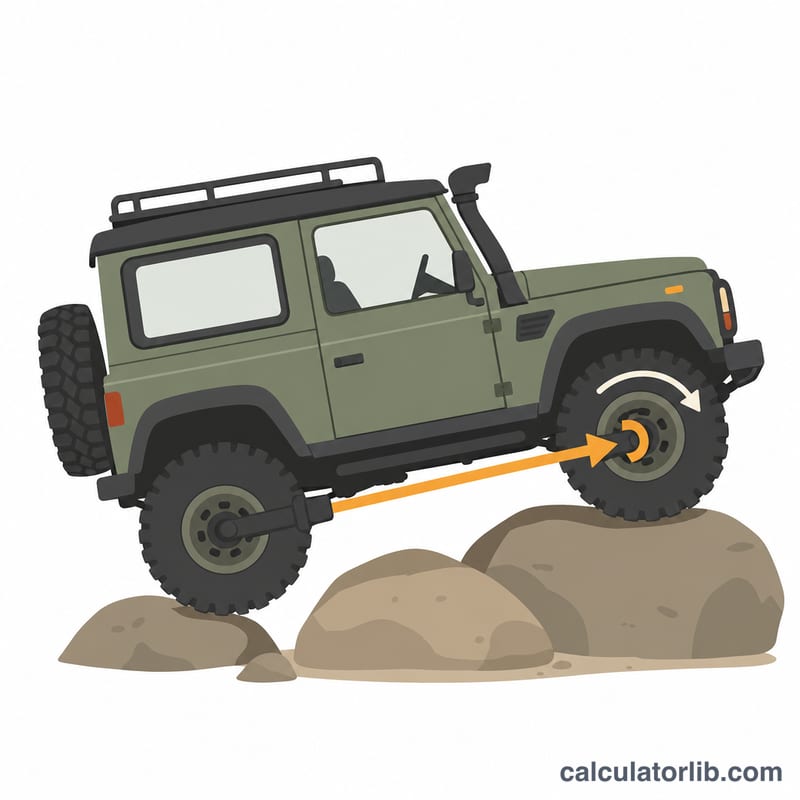
Crawl ratio is the total gear reduction your 4x4 vehicle achieves in its lowest gear with low range engaged. It describes how much the engine's rotation is multiplied for torque before reaching the wheels. A higher crawl ratio means the vehicle moves more slowly and with more torque — ideal for rock crawling, steep climbs, and precise control over difficult terrain.
How to Use This Calculator
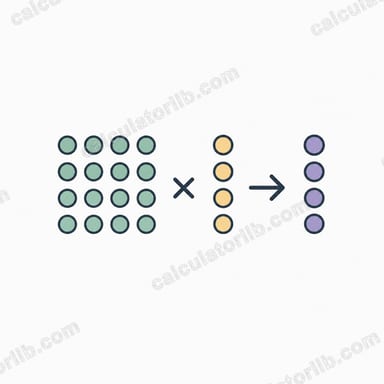
Enter three numbers from your drivetrain spec sheet: the transmission's lowest (first) gear ratio, the transfer case low-range ratio, and the axle (differential) ring-and-pinion ratio. The calculator multiplies them together to produce your overall crawl ratio, expressed as a value to 1 (for example, 44:1).
The Formula Explained
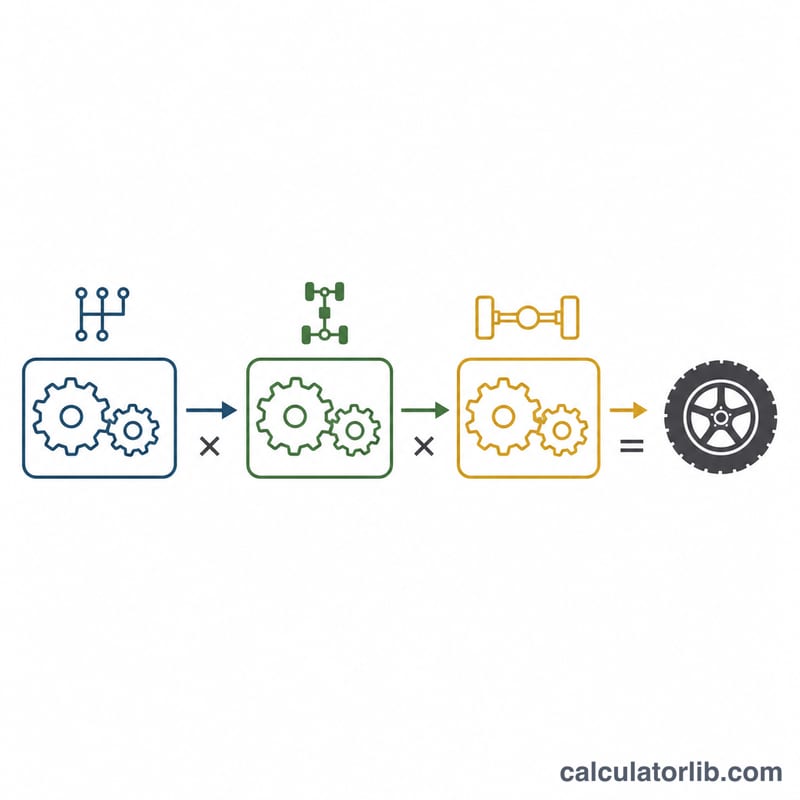
The formula is simply the product of the three reduction stages:
$$\text{Crawl Ratio} = \text{Transmission Ratio} \times \text{Transfer Case Ratio} \times \text{Axle Ratio}$$
Each stage reduces wheel speed and multiplies torque, so multiplying them gives the cumulative effect from crankshaft to wheel.
Worked Example
Suppose your transmission first gear is 4.0:1, your transfer case low range is 2.72:1, and your axle gears are 4.10:1. The crawl ratio is $$4.0 \times 2.72 \times 4.10 = 44.61\text{:}1$$ Many off-roaders target a crawl ratio between 40:1 and 80:1 for serious trail use.
FAQ
What is a good crawl ratio? For casual trails, 30–45:1 works well. Dedicated rock crawlers often aim for 60:1 or higher for maximum control.
Does tire size affect crawl ratio? Tire size doesn't change the gear-multiplication crawl ratio itself, but larger tires effectively reduce torque at the ground, so people often re-gear axles to compensate.
What if my vehicle has no low-range transfer case? Use 1.0 for the transfer case ratio (a 2WD or single-speed setup), and the formula still applies.