
What Is Cross Price Elasticity of Demand?
Cross price elasticity of demand (CPED) measures how the quantity demanded of one good (Good A) responds to a change in the price of another good (Good B). It is a core microeconomics concept used to determine the relationship between two products: whether they are substitutes, complements, or unrelated.
How to Use This Calculator
Enter the initial and new quantity demanded for Good A, then enter the initial and new price for Good B. The calculator converts each pair into a percentage change and divides them to produce the elasticity coefficient. It also classifies the relationship automatically.
The Formula Explained
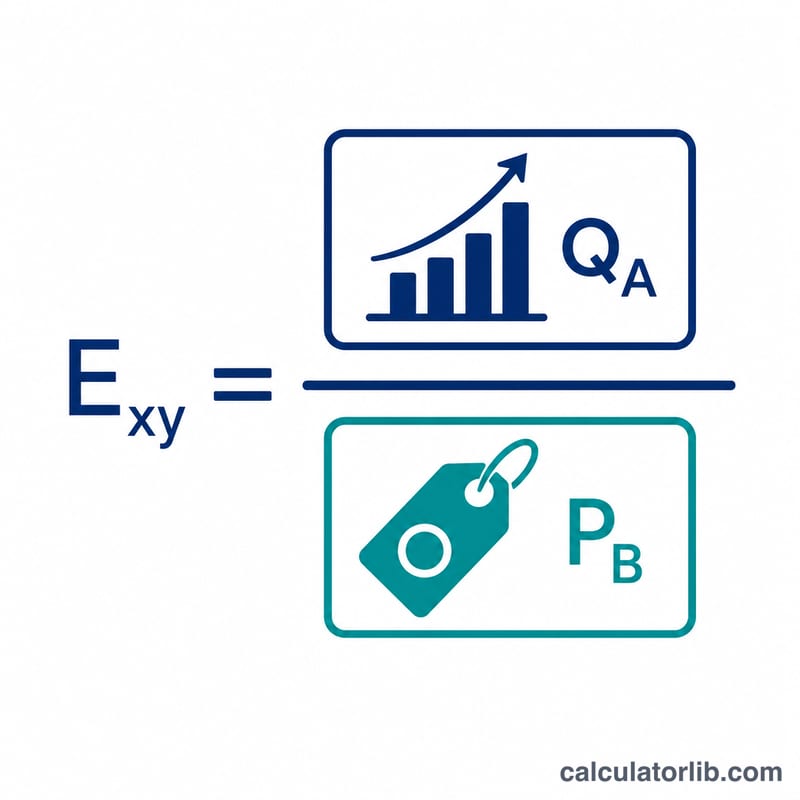
The formula is
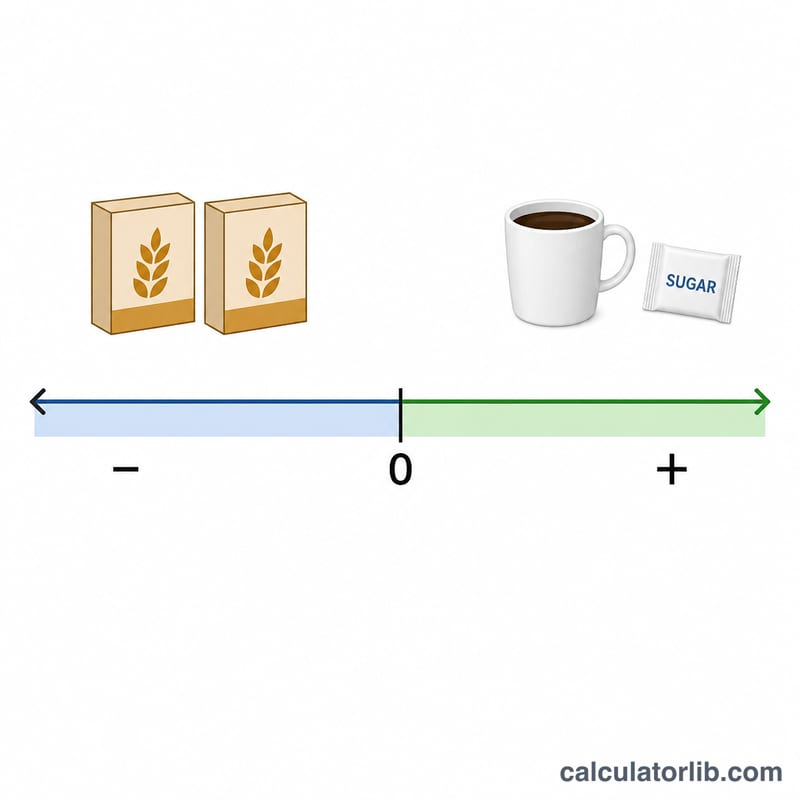
$$E_{AB} = \dfrac{\dfrac{\text{New Qty A} - \text{Initial Qty A}}{\text{Initial Qty A}} \times 100}{\dfrac{\text{New Price B} - \text{Initial Price B}}{\text{Initial Price B}} \times 100}$$A positive value means the goods are substitutes (e.g. tea and coffee) — when B gets pricier, people buy more A. A negative value means the goods are complements (e.g. printers and ink) — when B gets pricier, people buy less A. A value near zero means the goods are unrelated.
Worked Example
Suppose the quantity of Good A rises from 100 to 120 units while the price of Good B rises from $10 to $12. The quantity change is \(\frac{120-100}{100} = +20\%\). The price change is \(\frac{12-10}{10} = +20\%\).
$$\text{CPED} = \frac{20\%}{20\%} = 1.0$$indicating the goods are substitutes.
FAQ
What does a CPED of 0 mean? The two goods are independent — a price change in B has no effect on demand for A.
Are higher positive values stronger substitutes? Yes. The larger the positive coefficient, the more strongly the goods substitute for each other.
Why is my result negative? A negative coefficient indicates complementary goods that are typically consumed together.